
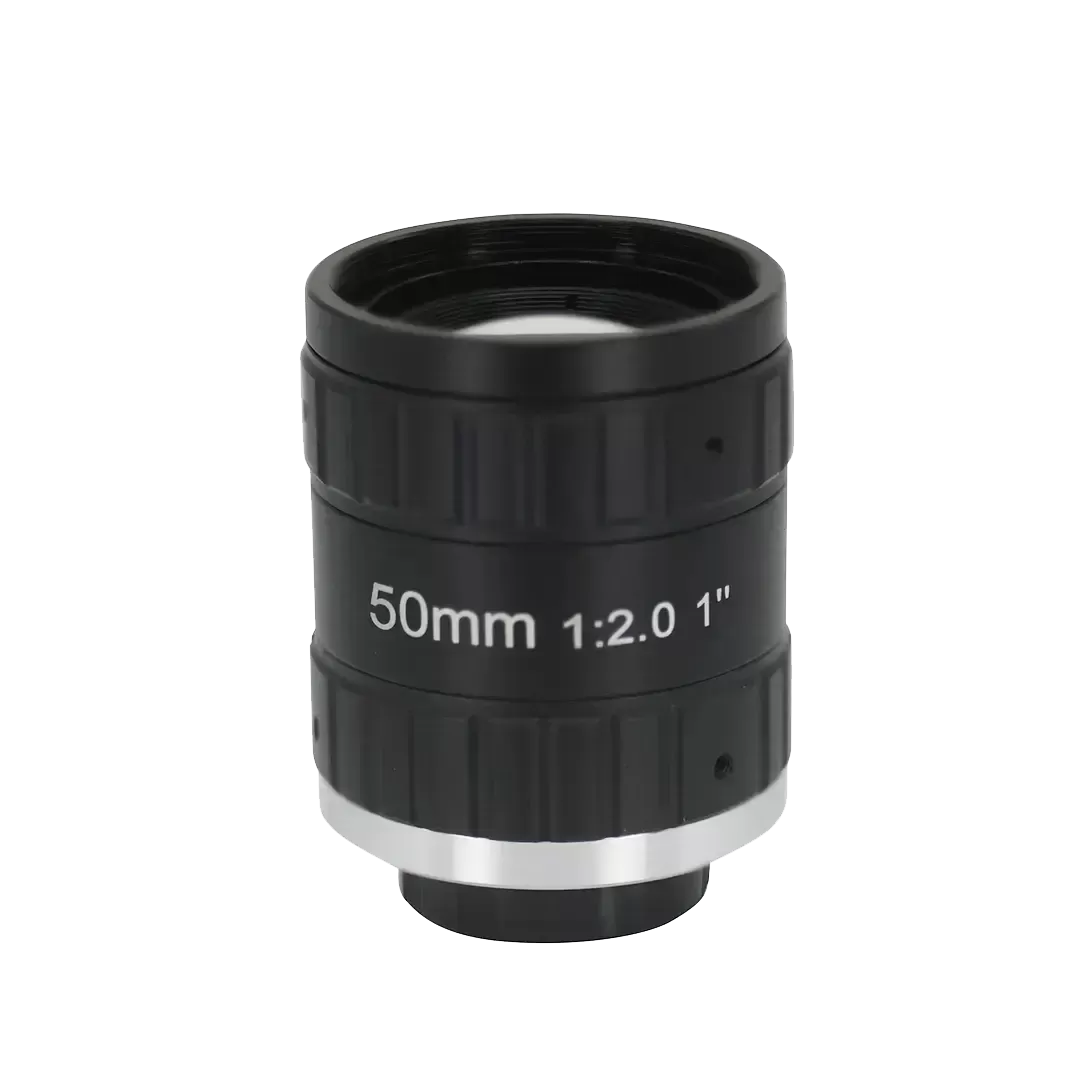
Industrial imaging systems operate in environments where optical stability, repeatable light throughput, and spatial resolution dictate overall inspection yield. Within factory automation architectures, image sensors capture photons, but the optical assembly dictates the fidelity, contrast, and geometric accuracy of the incoming wavefront. The deployment of an FA manual iris lens remains an indispensable standard for fixed-working-distance inspection lines, automated metrology systems, and robotic positioning arrays where mechanical drift must be completely eliminated.
Automated optical inspection systems often encounter continuous operational cycles, mechanical vibration from conveyor tracks, and ambient thermal variations. While motorized lenses serve dynamic-focus environments, fixed mechanical configurations provide superior optical consistency over multi-million-cycle production runs. Understanding the fundamental optical mechanics, aberration handling, and sensor-matching dynamics of these lenses is necessary for systems engineers designing next-generation automated quality verification stations.
Optical Mechanics: Depth of Field, Diffraction, and Throughput
The manual iris mechanism serves as the primary gateway for regulating optical flux and managing system aberrations. Adjusting the internal diaphragm alters the effective numerical aperture (NA), setting off a series of optical trade-offs between depth of field (DoF) and diffraction-limited spatial resolution.
Industrial environments rarely provide perfectly planar subjects. Dimensional components, circuit board assemblies, and machined fasteners present multi-tiered surfaces that require adequate depth of focus. Stopping down the lens—increasing the f-number (e.g., from f/1.8 to f/8)—narrows the cone of light reaching the sensor. This shallow convergence angle widens the acceptable circle of confusion, thereby extending the in-focus vertical envelope. Manual aperture adjustment allows integration technicians to dial in the exact threshold where all inspection targets across varying surface heights maintain crisp edge definitions.
Stopping down a lens indefinitely degrades maximum resolving power due to wave optics. As light passes through an increasingly small aperture, diffraction becomes the dominant limiter of image sharpness. The diameter of the resulting Airy disk scales inversely with aperture diameter:
Large Apertures (Low F-Numbers): The optical system gathers maximum light, which minimizes required sensor exposure times and lowers motion blur on high-speed transfer lines. Lens performance is primarily limited by geometric aberrations, such as spherical aberration and coma.
Mid-Range Apertures (Optimal F-Numbers, typically f/4 to f/5.6): The balance point where geometric aberrations are largely suppressed by the diaphragm without allowing diffraction to soften high-frequency image details.
Small Apertures (High F-Numbers): The Airy disk expands beyond the pixel pitch of high-density modern sensors. When the central peak of the Airy disk overlaps adjacent pixels, high-frequency spatial details—such as microscopic fractures or subtle surface finishes—are lost, regardless of camera megapixel ratings.
Integrating an FA manual iris lens allows optical engineers to lock the aperture precisely at the lens's sweet spot, aligning optical performance with the physical pixel size of the image sensor.
Structural Reliability Under Environmental Vibration and Thermal Drift
Unlike commercial photography lenses, industrial optics face extreme physical demands. Automation machinery incorporates multi-axis servo drives, pneumatic actuators, and mechanical indexing tables that introduce persistent vibrations across varying frequencies. In these contexts, standard friction-based or uncalibrated adjustment mechanisms fail quickly, resulting in focal drift and unnoticed measurement errors.
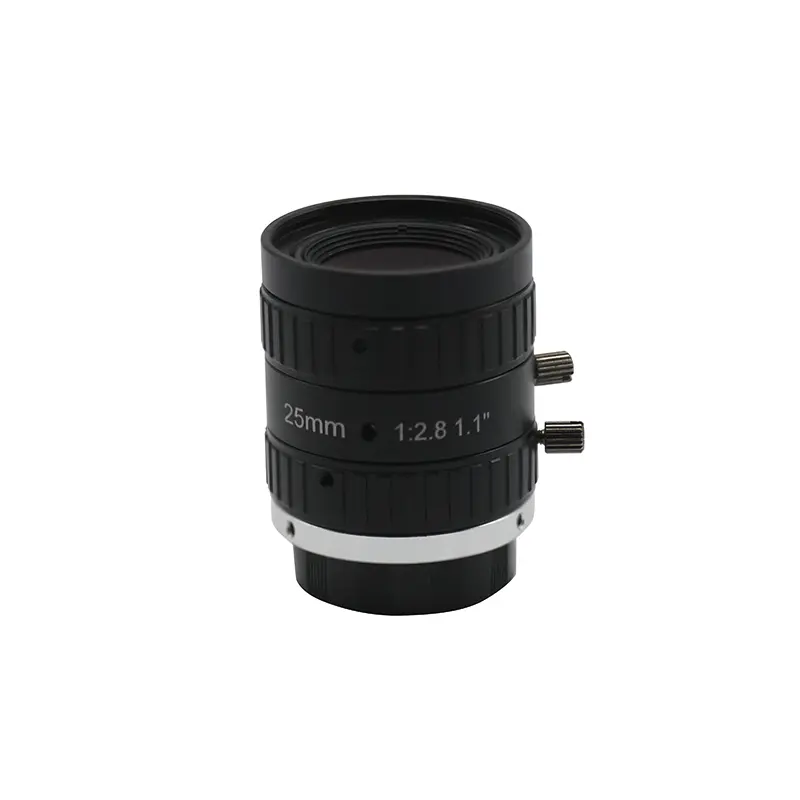
Industrial lenses utilize dedicated locking mechanisms on both the focus and iris rings. Recessed or thumb-screw locks apply uniform radial pressure to mechanical barrel threads, preventing optical groups from shifting position. Once an engineer calibrates the working distance and target illumination profile, both controls are tightened down to ensure long-term mechanical stability. Leading manufacturers such as Jinyuan machine lens barrels out of robust aerospace-grade alloys, balancing lightweight payloads for robot-mounted vision heads with high mechanical stiffness.
Thermal stability forms another critical engineering factor. Factory temperatures fluctuate across shifts and seasons, introducing expansion and contraction inside optical assemblies. Precision optical engineering addresses this through athermalization techniques, selecting matching thermal expansion coefficients across glass types and mechanical housing materials. Maintaining precise air gaps between elements preserves optical axis alignment, centering tolerances, and back-focal length (BFL), ensuring measurement readings do not drift over ambient thermal cycles.
Sensor Matching and Resolution Distribution
Modern machine vision sensors are shifting toward smaller pixel sizes (ranging from 3.45 µm down to 1.85 µm) combined with larger formats, progressing from 1/1.8" and 2/3" toward 1" and 1.1" sensors. To deliver high-contrast output across these pixel densities, the optical system must provide consistent Modulation Transfer Function (MTF) performance from the optical center to the image periphery.
When pairing an FA manual iris lens with high-resolution global shutter CMOS sensors, engineers must evaluate several key optical metrics:
Modulation Transfer Function (MTF): Quantifies the contrast reproduction of spatial frequencies (expressed in line pairs per millimeter, lp/mm). Industrial lenses require flat MTF curves to ensure that algorithm thresholds applied to periphery pixels behave identically to those in the center field.
Relative Illumination and Vignetting: As aperture rings open, off-axis light rays may be clipped by interior barrel stops, leading to optical vignetting. High-performance industrial manual lenses incorporate larger clear apertures across internal elements to preserve illumination uniformity across the sensor periphery.
Chief Ray Angle (CRA) Matching: Modern micro-lensed CMOS sensors exhibit steep sensitivity drop-offs if the angle of incoming light rays deviates too far from perpendicularity. Industrial manual iris lenses are engineered with telecentric or quasi-telecentric exit pupils, directing light at angles that match sensor acceptance cones to prevent color shading and edge-pixel crosstalk.
Optical Distortion Suppression: Barrel or pincushion distortion warps the spatial geometry of acquired images. While software calibration matrices (such as OpenCV or HALCON calibrations) can rectify distortion via algorithm, processing uncorrected optical data introduces interpolation noise and consumes valuable computational cycles. High-grade industrial manual lenses restrict TV distortion to under 0.1%, enabling raw geometric metrology directly from the image plane.
Strategic Implementations Across Modern Automated Facilities
Fixed-illumination, fixed-position visual setups represent the largest deployment footprint for industrial optics. Manual iris systems provide an ideal mix of cost optimization, optical reliability, and precision calibration across diverse operational settings.
Semiconductor and Electronic Component Inspection
In high-density surface mount technology (SMT) lines, components pass beneath cameras at high cycle rates. The task requires detecting minute solder bridge anomalies, pad coplanarity issues, and component placement misalignments. By utilizing an FA manual iris lens, inspection engineers lock in the optimal f-number to clearly resolve miniature 01005 passive components under high-intensity strobe lighting. The mechanical lock ensures that thousands of operational hours pass without the focus shifting away from the critical lead plane.
Pharmaceutical Packaging and Traceability Verification
Packaging operations rely heavily on optical character recognition (OCR) and optical character verification (OCV) to inspect 2D Data Matrix codes, lot tracking text, and expiration dates on moving blister packs. Contrast consistency across varying surface profiles (such as reflective aluminum foils or curved vials) is maintained by physically adjusting and securing the manual diaphragm. The wide aperture settings enable brief exposure durations, freezing line motion without suffering from rolling or global motion artifacts.
Automated Dimensional Metrology and Alignment
Precision manufacturing of automotive components, stamped metal stampings, and injection-molded plastics demands sub-pixel edge detection to verify tolerances within micrometers. In these systems, optical distortion must be kept minimal, and light transmission must remain constant to avoid skewing greyscale thresholding routines. The manual iris allows metrology specialists to adjust light throughput to match the dynamic range of backlighting arrays, preventing pixel blooming along the edge contours of measured parts.
Customization Dimensions for OEM System Integrators
Standard off-the-shelf optical systems may not always satisfy specialized mechanical footprints, harsh washdown requirements, or non-visible spectral bands. Optical customization provides machine builders with distinct competitive advantages in physical integration and image quality.
Customization workflows routinely target several core parameters:
Spectral Coating Optimization: Applying custom anti-reflective broadband coatings optimized for specific bands—such as Short-Wave Infrared (SWIR), Near-Infrared (NIR) for penetrating silicon or biological material, or Ultraviolet (UV) for surface scratch enhancement.
Mechanical Footprint and Threading: Adapting barrel outer dimensions to fit tight spatial restrictions inside robotic end-effectors, or implementing specialized C, CS, or M12 mount connections with custom back-focal arrangements.
Ruggedized Anti-Shock Architectures: Removing variable iris diaphragms entirely in favor of swappable fixed aperture plates, and bonding internal optical glass elements with space-grade epoxies to withstand violent shock loads from mechanical stamping equipment.
Aperture Detents and Indexing: Adding tactile, highly repeatable click-stop adjustments or index markings, allowing system builders to replicate identical optical setups across multi-camera production runs with minimal calibration overhead.
Manufacturers like Jinyuan collaborate closely with system integrators to adapt standard optical architectures into tailored systems, managing the transition from rapid optical prototyping to high-volume manufacturing without sacrificing tight tolerances.
Industrial Vision System Design Checklist
To successfully integrate an FA manual iris lens into a production-ready vision station, engineers should execute a systematic design validation:
Calculate Target Field of View (FoV) and Working Distance (WD): Establish the primary focal length requirements based on spatial mechanical envelopes.
Determine Sensor Pixel Pitch vs. Optical Cutoff: Verify that the spatial cutoff frequency of the lens exceeds the Nyquist frequency of the sensor.
Verify Lighting Strategy vs. Aperture Range: Model whether directional bar lights, coaxial units, or diffuse domes provide adequate illumination at the lens's optimal MTF f-number.
Assess Dynamic Vibrations: Ensure locking screws for both focus and iris rings are readily accessible within the machine enclosure to allow calibration before final mechanical locking.
Frequently Asked Questions
What differentiates an FA manual iris lens from a standard commercial photography lens?
An industrial FA lens is engineered specifically for machine vision environments. It features high-grade optical glass designed for edge-to-edge sharpness, exceptionally low optical distortion, and mechanical locking screws on both the focus and iris rings to resist machine vibration. Commercial lenses often incorporate loose plastic focus mechanisms, non-linear aperture scales, and lack mechanical locking systems, which leads to focus drift and measurement inaccuracies over time.
When should a system designer select a manual iris lens over a motorized or auto-iris lens?
A manual iris lens is ideal for static or controlled environments where the working distance, field of view, and illumination levels remain fixed throughout production. In factory automation setups utilizing calibrated strobe or LED lighting, an auto-iris is unnecessary and introduces extra mechanical points of failure and higher component costs. Motorized lenses are primarily reserved for setups with widely changing working distances or dynamic ambient lighting conditions, such as outdoor traffic surveillance.
How does stopping down the manual iris influence optical diffraction on small-pixel sensors?
Stopping down the iris (higher f-number) increases depth of field and minimizes common optical aberrations such as spherical blur. However, as the physical aperture becomes very small, light waves bend around the edges of the diaphragm, forming Airy disks on the sensor. If the Airy disk diameter exceeds the size of the camera pixels, diffraction limits system sharpness, causing fine details to blur together. Matching the f-number to the sensor's pixel pitch is critical for maintaining true image resolution.
Can an FA manual iris lens resolve inspection tasks in non-visible spectrums like NIR?
Standard manual lenses are typically corrected for the visible spectrum (400 nm to 700 nm). When illuminated with Near-Infrared (such as 850 nm or 940 nm), standard lenses often experience focus shift and severe chromatic aberrations. For NIR inspection applications, engineers should select an optically corrected lens equipped with broad-spectrum anti-reflective coatings, ensuring high light throughput and maintaining focal accuracy without blurring.
What is the typical lifespan and maintenance requirement for a manual iris lens in a continuous manufacturing line?
Because an industrial manual iris lens contains no internal motors or active electronic drive components, its operational lifespan often exceeds that of the camera and illumination hardware. Maintenance is minimal: once the thumbscrews are torqued during system setup, the internal optics remain secure. Routine maintenance is generally limited to periodic cleaning of the external optical surface using cleanroom-grade solvents and lint-free wipes to remove dust, oil, or coolants.
Engineered Solutions for Your Vision Requirements
Specifying vision components demands an exact match between physical optical mechanics, optical glass quality, and sensor performance. Whether designing a standardized visual verification cell or engineering high-volume specialized machinery, partner with an optical manufacturer that understands precision fabrication, rigorous MTF testing, and mechanical reliability.
Jinyuan provides standard catalog architectures alongside full-spectrum optical customization services tailored to your unique industrial requirements. Submit your technical drawings, target working parameters, and sensor specifications to our optical design team today for a comprehensive engineering evaluation and a direct project quotation.