
In modern imaging systems, achieving a wide field of view while maintaining structural compactness presents a significant engineering challenge. Standard lenses often fail to cover the required area without introducing extreme distortion or suffering from severe light drop-off at the image corners. To address these requirements, optical designers frequently turn to specialized board-level optics. The Extra-Wide 2.5mm Mtv Lens represents a widely used optical configuration engineered to provide a broad perspective while maintaining compatibility with standard small-format camera modules.
This article provides an in-depth analysis of the design parameters, physical performance characteristics, and practical integration considerations associated with the Extra-Wide 2.5mm Mtv Lens. By examining sensor compatibility, distortion correction, and mechanical integration, systems engineers can make informed decisions when selecting optical components for their commercial and industrial vision systems.
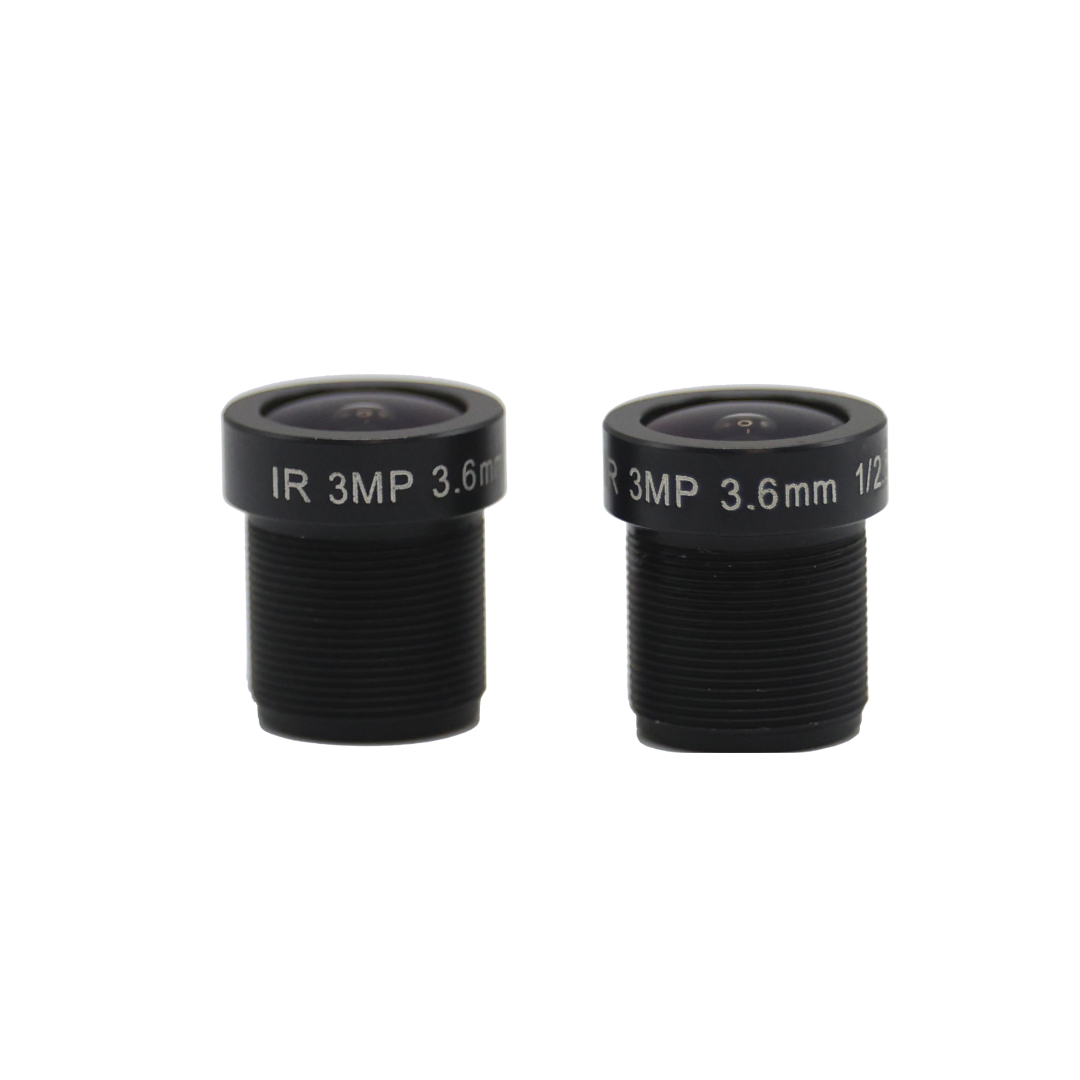
Understanding the Optical Physics of a 2.5mm Focal Length
The focal length of a lens is the primary determinant of its field of view (FOV) when paired with a specific sensor format. A 2.5mm focal length is classified as a short focal length optic, which inherently produces a wide-angle perspective. To understand how the Extra-Wide 2.5mm Mtv Lens performs in a system, one must evaluate how the light rays are refracted and mapped onto the sensor surface.
Field of View and Sensor Format Matching
The actual field of view obtained from an Extra-Wide 2.5mm Mtv Lens depends directly on the active area of the image sensor. The geometric relationship between focal length ($f$) and the sensor dimension ($d$) determines the theoretical angular field of view ($\theta$) through the following formula:
$$\theta = 2 \arctan\left(\frac{d}{2f}\right)$$
When integrated with common sensor formats, the optical output varies as follows:
1/2.7-Inch Sensors: This combination produces a diagonal field of view that typically exceeds 110 degrees, making it suitable for wide-area surveillance and smart home devices.
1/3-Inch Sensors: This pairing yields a diagonal field of view of approximately 95 to 105 degrees, providing a balanced perspective with manageable edge stretching.
1/4-Inch Sensors: With a smaller active sensor area, the field of view narrows to around 70 to 80 degrees, which reduces the wide-angle effect but utilizes the center portion of the glass elements where optical aberrations are lowest.
Selecting the appropriate sensor format is a fundamental step in ensuring that the Extra-Wide 2.5mm Mtv Lens delivers the target coverage without wasting active pixels or causing unnecessary vignetting at the image boundaries.
Managing Barrel Distortion in Wide-Angle Designs
A primary challenge with any wide-angle optic is barrel distortion. Because the lens captures a wide area and compresses it onto a flat, rectangular sensor, the magnification decreases toward the edges of the frame. This optical phenomenon causes straight lines near the borders to curve outward.
In the design of the Extra-Wide 2.5mm Mtv Lens, optical engineers at Jinyuan utilize multi-element glass configurations to control this distortion. Rather than relying solely on digital correction software, which can stretch pixels and degrade edge resolution, the optical path is designed to minimize geometric distortion at the hardware level. This ensures that the captured image retains high fidelity across the entire frame, which is highly beneficial for applications involving automated object recognition or spatial measurements.
Mechanical Specifications of the Mtv Mount Standard
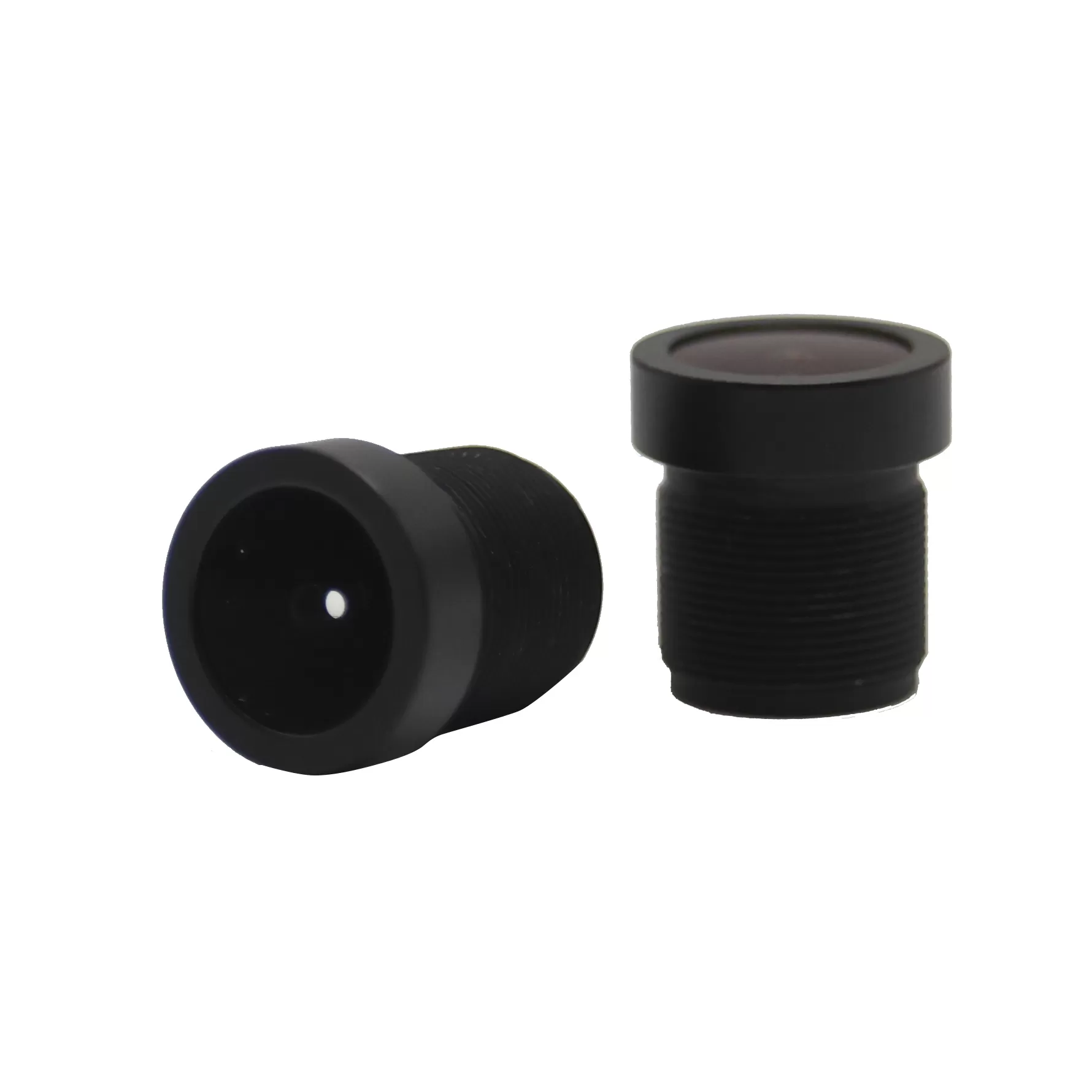
The term "Mtv mount" historically refers to the M12 thread standard, commonly known as an S-mount or board lens mount. This mechanical interface is highly standardized in the security and industrial vision industries due to its compact footprint and reliable threaded design.
Thread Pitch and Physical Dimensions
The Extra-Wide 2.5mm Mtv Lens features an M12 metric thread with a pitch of 0.5 mm (M12 x 0.5). Unlike larger C or CS mount lenses, the S-mount does not incorporate an adjustable iris mechanism in most configurations. Instead, it utilizes a fixed aperture to maintain a small physical profile and reduce mechanical complexity. The barrel of the lens is threaded directly into a matching mount holder positioned over the image sensor.
This threaded design allows for precise focus adjustment. By rotating the lens within the holder, the distance between the rear optical element and the sensor cover glass is altered. Once the correct focus is achieved, a locking ring or adhesive is typically applied to secure the lens in place, ensuring long-term stability even in environments prone to mechanical vibration.
Alignment and Focus Adjustment Procedures
Achieving optimal focus across the entire sensor plane requires precise mechanical alignment. Because wide-angle lenses like the Extra-Wide 2.5mm Mtv Lens have a shallow depth of focus at the sensor plane, even a minor tilt in the lens holder relative to the sensor chip can result in uneven focus, where one side of the image appears sharp while the opposite side is blurred.
During assembly, manufacturers must ensure that the optical axis of the lens is perpendicular to the sensor active area. High-tolerance lens holders, such as those fabricated from zinc alloy or reinforced plastics, are used to prevent mechanical drift. For high-resolution applications, active alignment processes are recommended, where the lens is focused while the camera is actively capturing a test chart, allowing real-time adjustment before final adhesive curing.
Resolving Industry Challenges in Wide-Angle Optical Performance
Implementing wide-angle lenses in demanding outdoor or industrial environments exposes several optical limitations. Standard low-cost optics often suffer from image degradation when subjected to harsh lighting or extreme temperature shifts.
Chromatic Aberration and Color Fringing
Chromatic aberration occurs because different wavelengths of light bend at slightly different angles as they pass through glass. In wide-angle designs, lateral chromatic aberration is particularly troublesome at the periphery of the image, appearing as purple or green color fringing around high-contrast edges.
To mitigate this issue, the lens elements inside the Extra-Wide 2.5mm Mtv Lens from Jinyuan are manufactured using optical glass with varying refractive indices. By pairing crown glass elements with flint glass elements, the design cancels out a significant portion of the dispersion, ensuring that red, green, and blue light waves focus closely on the same point. This results in cleaner edges and improved color accuracy, which is highly valuable for license plate recognition and detail-oriented surveillance.
Light Transmission and Relative Illumination at the Edges
Another physical limitation of wide-angle lenses is the reduction of light intensity toward the corners of the sensor, a phenomenon governed by the cosine fourth law ($I = I_0 \cos^4 \theta$). For an extra-wide lens, the angle of incidence ($\theta$) at the corners of the sensor is large, which can cause significant corner darkening, or vignetting, if left unaddressed.
To counteract this loss of light, the Extra-Wide 2.5mm Mtv Lens utilizes a design that increases the size of the front lens elements relative to the rear elements. This pupil aberration design allows more off-axis light rays to enter the lens system, improving the relative illumination at the edges of the sensor. Additionally, multi-layer anti-reflective coatings are applied to all glass surfaces to maximize total light transmission and minimize internal reflections that cause ghosting and flare.
Practical Industrial and Commercial Applications
The combination of a wide field of view, compact physical dimensions, and a standardized mechanical interface makes this optic highly versatile across several commercial sectors.
Security and Surveillance Infrastructures
In security applications, covering large areas with a minimal number of cameras is a primary method for reducing system costs. An Extra-Wide 2.5mm Mtv Lens allows a single camera mounted in a corner to monitor an entire room without blind spots. This is particularly valuable in retail environments, office buildings, and residential entryways where comprehensive situational awareness is required.
Intelligent Transportation and Automotive Systems
Vehicular applications demand durable, wide-angle optics that can withstand constant vibration and fluctuating temperatures. This lens configuration is frequently integrated into dash cameras, blind-spot monitoring systems, and cabin monitoring cameras. The wide field of view ensures that adjacent lanes and pedestrian pathways are captured, providing reliable visual documentation for safety and insurance purposes.
Industrial Automation and Robotic Vision
In manufacturing facilities, robots require visual feedback to navigate environments and locate objects. Compact vision systems mounted on robotic arms or automated guided vehicles (AGVs) utilize the Extra-Wide 2.5mm Mtv Lens to gain a broad view of their immediate surroundings. The small form factor of the M12 mount ensures that the camera system does not add significant weight or bulk to moving components.
Sourcing and Customization Strategies with Jinyuan
When sourcing optical components for volume production, selecting a standard off-the-shelf lens may not always meet the precise requirements of a custom enclosure or a specific sensor board design. Jinyuan provides engineering support and manufacturing capabilities to customize the Extra-Wide 2.5mm Mtv Lens to meet specific project demands.
Customization options include adjustments to the mechanical barrel length to fit proprietary camera housings, the integration of specific bandpass filters (such as 650nm IR-cut filters for daytime color accuracy or dual-band filters for day/night applications), and the selection of specialized glass materials to meet extreme operating temperature requirements. By working closely with Jinyuan during the initial design phase, systems integrators can ensure that the optical assembly interfaces seamlessly with their hardware, reducing development cycles and improving overall performance.
Frequently Asked Questions
Q1: What is the difference between an Mtv lens and a standard M12 lens?
A1: Historically, the term "Mtv lens" was used to describe board lenses designed for micro-television and early CCTV board cameras. Today, it is functionally identical to a standard M12 mount lens, featuring an M12x0.5 thread. The terms are often used interchangeably in the industry to describe S-mount board optics.
Q2: Can the Extra-Wide 2.5mm Mtv Lens be used with day/night security cameras?
A2: Yes. However, for effective day/night operation, the lens must be IR-corrected. Standard glass lenses focus infrared light at a different point than visible light, causing out-of-focus images at night. An IR-corrected 2.5mm lens ensures that both visible and near-infrared spectrums focus on the same sensor plane, maintaining sharp images under both sunlight and IR illumination.
Q3: How does focal length affect the depth of field (DOF) in this lens?
A3: Short focal length lenses, such as a 2.5mm lens, inherently possess a very deep depth of field. This means that once the lens is focused on a mid-range distance, objects from a few centimeters away up to infinity will remain acceptably sharp. This characteristic is highly beneficial for surveillance and automotive applications where manual focusing is not feasible.
Q4: Why does my 2.5mm lens show dark corners when installed on my camera?
A4: Dark corners, or vignetting, typically occur when the lens is paired with an image sensor that is larger than the lens's designed maximum optical format. For example, if an Extra-Wide 2.5mm Mtv Lens designed for a 1/3-inch sensor is mounted on a 1/2-inch sensor, the sensor's outer corners will extend beyond the lens's light cone, resulting in dark corners. Always verify that the sensor format does not exceed the lens specifications.
Q5: What materials are used in the construction of the lens elements?
A5: Depending on the performance requirements and environmental conditions, these lenses can be constructed using all-glass elements, all-plastic (PMMA/OKP) elements, or a hybrid combination. For high-reliability and industrial applications, Jinyuan recommends all-glass designs, as glass offers superior thermal stability, higher light transmission, and resistance to scratching and environmental degradation over time.
Request a Technical Consultation with Jinyuan
Selecting the correct optical parameters for your imaging system requires a careful balance of optical performance, mechanical fit, and cost constraints. Jinyuan offers a range of high-performance lens options and custom manufacturing services tailored to your specific application requirements.
If you are developing a new camera module, upgrading an existing product line, or require custom modifications to the Extra-Wide 2.5mm Mtv Lens, our engineering team is available to assist you. Contact our sales department to submit your specifications, request technical drawings, or obtain a quote for production quantities.