
Optical systems operating across diverse spectral wavelengths face a physical challenge: chromatic dispersion. The refractive index of optical glass varies depending on the wavelength of light passing through it. Short wavelengths, such as blue light, refract more sharply than longer wavelengths, such as red or near-infrared (NIR) light. This dispersion means that a lens focused for visible light will experience a shift in its focal point when illuminated by infrared light. When security cameras or industrial inspection systems switch from daytime visible light to nighttime infrared illumination, this shift causes blurred images. The focal plane moves backward along the optical axis, leading to soft focus and lost detail. To address this issue, an optical system must incorporate a specialized Ir Correction Lens to align both spectral bands onto a single sensor plane. Jinyuan develops optical components that balance these focal variances, ensuring consistent resolution around the clock.
The Physics of Focus Shift in Multi-Spectral Optical Systems
To understand why compensation is necessary, one must examine the behavior of light as it passes through a refractive medium. The mathematical relationship governing this behavior is represented by the Sellmeier equation, which defines the refractive index of a glass substrate as a function of wavelength. Because the refractive index decreases as the wavelength increases, near-infrared light (typically 750 nm to 950 nm) bends less than visible light (400 nm to 700 nm) when passing through a standard spherical lens element.
This difference in refraction results in longitudinal chromatic aberration (LCA), where different colors focus at different points along the optical axis. In a standard optical assembly, the focal distance for infrared light is longer than that for visible light. The distance between these two focal planes is known as the focus shift. If a sensor is positioned at the visible light focal plane, any infrared light entering the system will form an out-of-focus blur circle on the sensor, severely degrading image contrast and spatial resolution.
Correcting this shift requires combining multiple lens elements with opposing dispersion characteristics. By utilizing both positive and negative lens elements made from specialized optical glasses, designers can force both visible and infrared wavelengths to converge at the same physical point on the imaging sensor. This allows the system to maintain sharp focus without requiring mechanical adjustment when switching between daytime illumination and nighttime infrared illumination.
How an Ir Correction Lens Achieves Optical Convergence
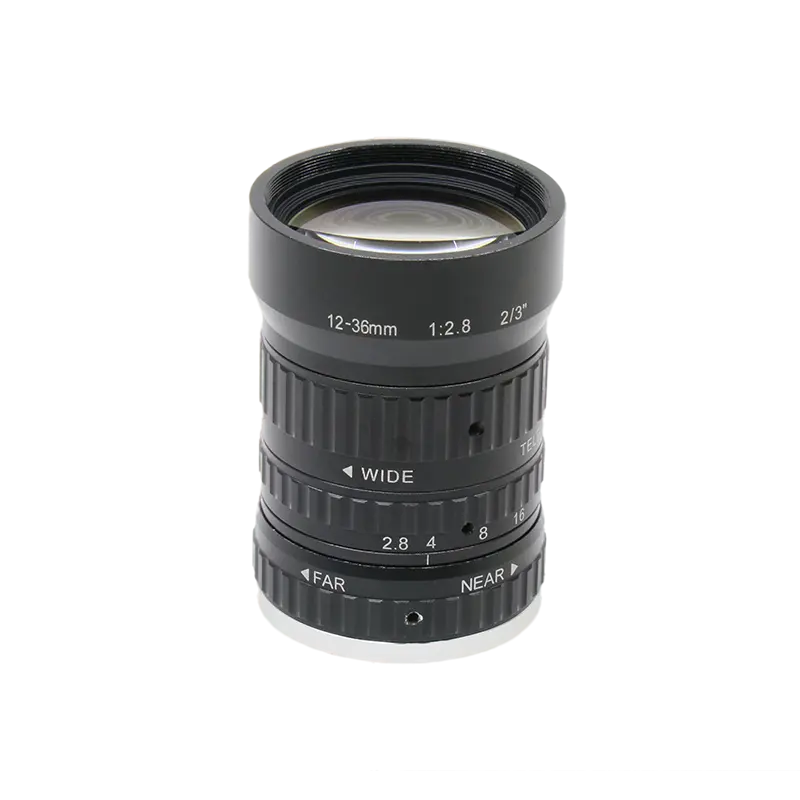
Achieving focus correction across multiple spectrums requires precise material selection and advanced optical design. The primary method involves pairing glasses with different Abbe numbers, which measure the material's dispersion. A classic achromatic doublet pairs a low-dispersion crown glass element with a high-dispersion flint glass element to bring two distinct wavelengths into focus at the same plane. However, standard achromatic doublets only correct for two wavelengths within the visible spectrum, leaving the infrared spectrum uncorrected.
To extend correction into the near-infrared band, optical engineers design apochromatic or super-achromatic systems. These designs utilize anomalous dispersion glass, such as extra-low dispersion (ED) glass or fluorite-type materials. These advanced materials have unique refractive index curves that allow for the correction of three or more wavelengths simultaneously. By integrating these materials, an Ir Correction Lens can bring visible light (such as blue and red wavelengths) and near-infrared light (such as 850 nm or 940 nm) to a single focal plane.
Beyond the choice of glass substrates, thin-film optical coatings play a key role in system performance. Standard anti-reflective (AR) coatings are engineered to minimize reflections within the visible spectrum. When infrared light passes through these standard coatings, high reflectance can occur, leading to internal reflections, ghosting, and reduced light transmission. Jinyuan designs and applies custom broadband anti-reflective (BBAR) coatings that maintain high transmission and low reflectance across a wide spectral range, typically from 400 nm to 1000 nm, ensuring maximum light reaches the sensor in low-light environments.
Industrial and Surveillance Applications for Corrected Optics
The requirement for continuous, multi-spectral imaging spans several industries where automated analysis or high-precision monitoring is necessary. These systems rely on corrected optics to maintain data accuracy across changing lighting conditions.
Intelligent Transportation Systems (ITS): Traffic monitoring and toll collection cameras operate continuously under varying light. During the day, they capture high-resolution color images of vehicles and drivers. At night, they switch to 850nm or 940nm infrared illumination to capture license plates without creating glare for drivers. Utilizing a corrected lens prevents focus drift, ensuring license plate recognition algorithms function reliably regardless of the time of day.
Industrial Machine Vision: In automated manufacturing, inspection systems often employ multi-spectral illumination to detect surface and subsurface characteristics. For example, a system might use visible light to inspect the print quality of packaging, followed by infrared light to inspect the seal integrity or fill level through a plastic container. A corrected lens assembly allows a single camera to perform both inspections without refocusing, simplifying system design.
Perimeter Security and Surveillance: High-definition security cameras require clear imaging in both day and night modes. If a camera uses a non-corrected lens, the image will lose clarity when the infrared cut filter is removed and the infrared illuminators turn on. Corrected optics preserve image detail, allowing analytics software to perform accurate facial recognition, license plate capture, and intrusion detection in dark environments.
Precision Agriculture and Remote Sensing: Multi-spectral cameras mounted on aerial drones monitor crop health by measuring the reflectance of green light and near-infrared light. Because crop analysis relies on comparing these spectral bands, any focus mismatch would lead to registration errors and inaccurate data. Corrected lens systems ensure that all spectral bands map precisely to the same pixels on the imaging sensor.
Engineering Challenges in Designing Corrected Systems
Designing and manufacturing an effective Ir Correction Lens involves overcoming several physical and environmental challenges. These variables must be balanced to ensure consistent performance in real-world environments.
Thermal Focus Drift
Outdoor optical systems are subjected to substantial temperature variations, often ranging from -20°C to +60°C. Temperature changes cause optical glass elements to expand or contract, altering their radii of curvature. Additionally, the refractive index of glass changes with temperature, a phenomenon defined by the thermal coefficient of refractive index (dn/dT). The mechanical housing of the lens, typically made of aluminum or brass, also expands and contracts, changing the spacing between elements.
To maintain focus stability across these temperature ranges, Jinyuan utilizes passive athermalization in both optical and mechanical designs. This design methodology involves pairing optical glasses with positive dn/dT values with glasses having negative dn/dT values, while selecting housing materials with expansion coefficients that compensate for optical changes. This ensures the focal plane remains stable on the sensor without requiring active motorized focusing mechanisms.
Aperture and Aberration Control
Nighttime imaging requires large apertures, such as F1.2 or F1.4, to capture as much ambient or infrared light as possible. However, optical aberrations, particularly spherical aberration and coma, increase significantly as the aperture widens. Correcting chromatic aberration across a wide spectral band while maintaining a large aperture requires complex optical configurations, often incorporating aspherical lens elements.
Aspherical surfaces allow designers to correct spherical aberrations with fewer lens elements, reducing the overall weight and size of the lens assembly. Jinyuan utilizes precision glass molding and grinding techniques to manufacture high-accuracy aspherical surfaces, enabling large-aperture lenses to deliver sharp, contrast-rich images across the entire field of view.
Mechanical Tolerances and Assembly Precision
The manufacturing tolerances for multi-spectral lenses are demanding. Because the alignment of multiple glass elements directly impacts how different wavelengths converge, even minor decentration or tilt of a single lens element can introduce asymmetrical aberrations, such as astigmatism or coma, across the sensor. Jinyuan utilizes automated centration alignment systems and MTF (Modulation Transfer Function) testing equipment to measure and adjust each lens assembly. This ensures that every manufactured lens meets specified optical performance standards across both visible and infrared spectrums.
Parameters for Custom Lens Specification
When selecting or customizing an optical assembly, engineering teams must evaluate several design parameters to ensure compatibility with their imaging sensors and environmental requirements:
Spectral Correction Bandwidth: Specify the exact wavelengths that must focus on the same plane. Standard options include dual-band correction (e.g., 450-650 nm and 850 nm) or continuous broadband correction (e.g., 400-1000 nm).
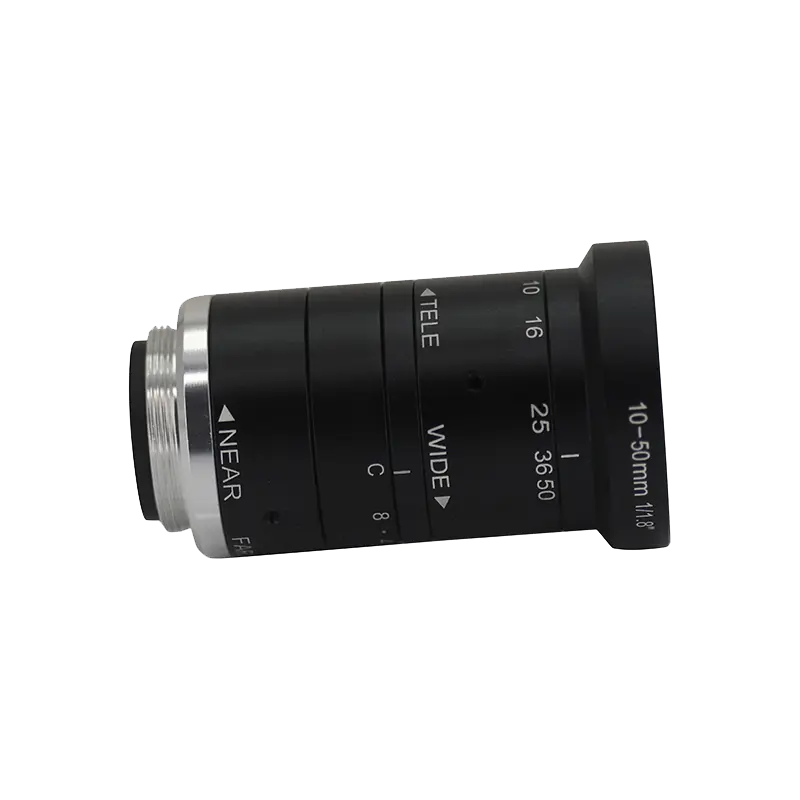
Sensor Format and Resolution: The lens must produce an image circle large enough to cover the sensor diagonal (e.g., 1/1.8", 2/3", or 1" formats) without vignetting, while delivering optical resolution matched to the pixel size of high-megapixel sensors.
Focal Length and Aperture: Determine the field of view required for the application and the maximum aperture needed to meet low-light performance goals.
Mechanical Interface: Match the lens mount to the camera system, with common options including standard C-mount, CS-mount, or S-mount (M12) threads.
By analyzing these specifications, Jinyuan works alongside OEM partners to develop customized optical solutions that integrate seamlessly into specialized hardware platforms.
Frequently Asked Questions
Q1: Why does focus shift occur when shifting from daylight to infrared illumination?
A1: Focus shift occurs because the refractive index of glass varies with the wavelength of light. Since infrared light has a longer wavelength than visible light, it refracts less when passing through standard glass elements. This causes the focal point of the infrared light to fall behind the focal point of visible light, resulting in a blurry image when switching illumination sources.
Q2: Can standard anti-reflective coatings support an Ir Correction Lens?
A2: No, standard anti-reflective coatings are optimized only for visible wavelengths (400 nm to 700 nm). When used with near-infrared light, these coatings can cause high surface reflections, leading to ghosting, flare, and reduced light transmission. Corrected lenses require specialized broadband anti-reflective coatings that function across both visible and infrared spectrums.
Q3: How does Jinyuan ensure thermal stability in outdoor applications?
A3: Jinyuan utilizes passive athermalization, which involves choosing optical glasses with compensating thermal properties (dn/dT) and matching them with mechanical housing materials that have compatible thermal expansion coefficients. This balances out physical changes caused by temperature fluctuations, keeping the focus stable without motorized adjustments.
Q4: What is the difference between an achromatic doublet and an Ir Correction Lens?
A4: An achromatic doublet corrects chromatic aberration for two wavelengths, typically blue and red, within the visible spectrum. An infrared-corrected lens utilizes advanced optical glasses, such as extra-low dispersion (ED) glass, to correct for three or more wavelengths, extending this correction into the near-infrared spectrum (e.g., 850 nm or 940 nm).
Q5: Can these lenses be customized for specific spectral bands?
A5: Yes, optical systems can be engineered to correct for specific wavebands depending on the application. Jinyuan can customize the optical design and coatings to accommodate specific near-infrared (NIR) wavelengths, short-wave infrared (SWIR) bands, or multi-band laser illumination according to your project requirements.
Project Collaboration and Inquiries
For industrial, security, or scientific systems requiring consistent optical performance across visible and near-infrared spectrums, precision engineering is paramount. Jinyuan provides customized optical design and manufacturing services to match specific sensor configurations, wavelength bands, and environmental challenges. To discuss system specifications, request optical datasheets, or coordinate with design engineers, please submit your detailed project requirements through our inquiry portal.