
For security system integrators and infrastructure project managers, the choice of optical components directly determines the effectiveness of a surveillance installation. Among the various lens types available, the Cctv Manual Zoom Lens occupies a distinct position, offering a balance of operational flexibility and mechanical reliability that automated systems often fail to deliver. This article examines the technical characteristics, application suitability, and selection criteria for these precision optical devices, drawing on field experience and optical engineering principles.
Optical Architecture and Mechanical Design of the Cctv Manual Zoom Lens
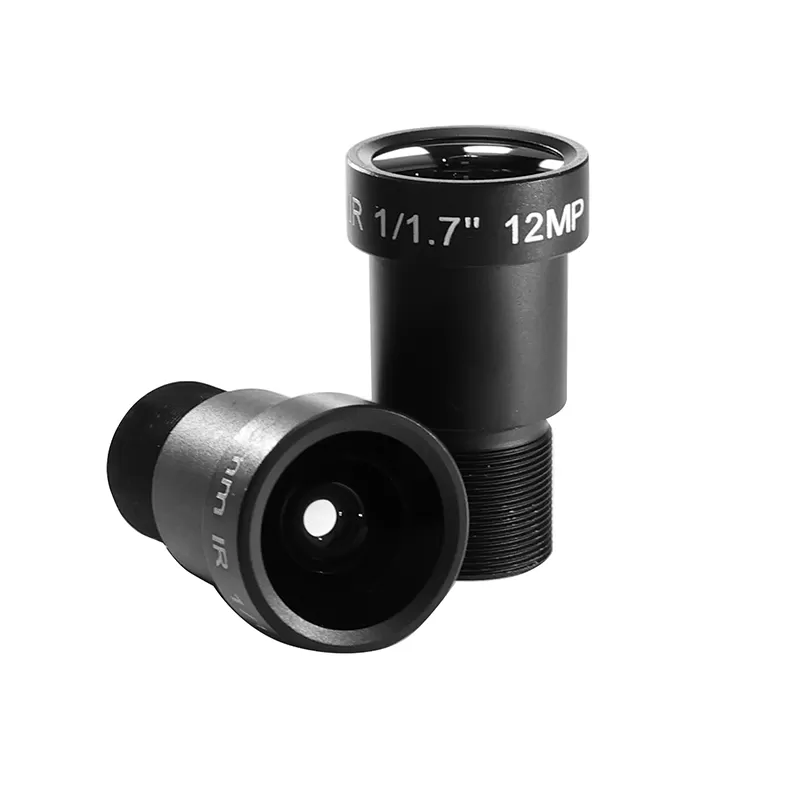
A Cctv Manual Zoom Lens is defined by its dual adjustment mechanisms: a variator group that changes focal length and a compensator group that maintains image plane position. Unlike motorised variants, these adjustments are performed via precision helicoid threads or cam grooves, operated directly by the user. The mechanical interface typically includes geared rings for focus and zoom, compatible with standard follow-focus systems or manual operation.
Key optical parameters that define performance include:
Focal length range – Commonly available in ratios such as 8-80mm, 10-200mm, or 12.5-75mm, covering wide-angle to telephoto perspectives.
Maximum aperture (f-number) – Ranging from f/1.4 to f/3.0, influencing low-light capability and depth of field control.
Image circle diameter – Must match the sensor format, typically 1/2.8", 1/1.8", or 2/3" for professional CCTV cameras.
Back focal distance – Critical for maintaining focus across the zoom range and ensuring compatibility with camera mounts (C-mount, CS-mount).
The absence of electric motors and control boards in a manual zoom lens translates into several engineering advantages. There is no heat generation from actuators, no electromagnetic interference with nearby sensitive equipment, and no reliance on firmware that may become obsolete. For installations in extreme temperatures or high-vibration environments, the purely mechanical construction of a Cctv Manual Zoom Lens offers superior mean time between failures (MTBF) compared to electronically controlled counterparts.
Application Scenarios Where Manual Zoom Excels
While automated zoom lenses are widely adopted in consumer and general-security markets, the manual variant remains the preferred choice for specific professional use cases. Understanding these scenarios helps procurement specialists and system designers make informed decisions.
Critical Infrastructure Monitoring
Power substations, railway signalling yards, and water treatment facilities require cameras that operate continuously without software glitches or motor jams. A Cctv Manual Zoom Lens allows technicians to set the desired field of view during installation and leave it untouched for years. The zoom and focus locks prevent accidental misalignment, a common issue with motorised units that may drift due to vibration or power surges.
Remote and Harsh Environment Deployment
Offshore platforms, desert border checkpoints, and Arctic research stations present extreme temperature swings and corrosive salt spray. The simplified mechanical design of a manual zoom lens minimises the number of ingress points for moisture and dust. Sealed helicoids and metal-on-metal contact surfaces ensure consistent operation across a -40°C to +70°C range, a specification that many motorised lenses cannot guarantee without active heating or cooling systems.
Forensic and Evidential Recording
In legal and investigative contexts, the repeatability of optical settings is paramount. A manual zoom lens provides positive stops and calibrated markings for focal length and focus distance. Operators can document exact settings for each surveillance session, ensuring that any recorded footage is admissible and verifiable. This traceability is difficult to achieve with auto-focus systems that may change parameters unpredictably.
Comparative Analysis: Manual vs. Motorised Zoom
The decision between a manual and a motorised zoom lens often hinges on project priorities. The following comparison clarifies the trade-offs without oversimplifying the engineering realities.
Response speed – Motorised lenses can adjust focal length in seconds under remote control, suitable for pan-tilt-zoom (PTZ) applications. A Cctv Manual Zoom Lens requires physical access and manual adjustment, which is acceptable for fixed-installation scenarios where field of view is predetermined.
Cost structure – The absence of stepper motors, encoder ICs, and flexible printed circuits makes the manual variant significantly more affordable, both in initial purchase and long-term maintenance. For multi-camera arrays covering large perimeters, the cumulative cost saving is substantial.
Power consumption – A manual zoom lens draws zero electrical current, a critical advantage for solar-powered or battery-backed surveillance nodes. Every milliwatt saved extends the operational window during mains outages.
Reliability metrics – Field data from infrastructure projects indicate that manual zoom lenses have a failure rate approximately one-third that of comparable motorised models over a five-year service life. The predominant failure mode in motorised units is the ribbon cable connecting the zoom motor to the control board—a component entirely absent in the manual design.
Selecting the Right Cctv Manual Zoom Lens: Critical Parameters
Procurement decisions should be guided by a systematic evaluation of technical specifications, matched to the operational requirements of the surveillance system.
Sensor Format Matching
The lens's image circle must comfortably cover the camera sensor's diagonal. Using a lens designed for a smaller sensor on a larger format results in vignetting, while oversizing the lens adds unnecessary weight and cost. For 4K IP cameras with 1/1.8" sensors, a lens with an image circle of at least 9mm diameter is advisable.
Resolution Capability
Modern CCTV sensors exceed 8 megapixels, demanding lenses with resolving power to match. Look for specifications indicating MTF (Modulation Transfer Function) values at 150 lp/mm or higher. A Cctv Manual Zoom Lens from reputable optical houses, such as Jinyuan, typically provides MTF charts that validate performance across the entire zoom range.
Iris Control Options
Manual zoom lenses are available with fixed, manual, or auto-iris variants. For environments with fluctuating light levels—such as tunnels or loading bays—a manual iris with a lock screw allows the installer to set the optimum aperture and secure it, avoiding the hunting behaviour of auto-iris systems.
Mechanical Interface
Check the lens mount compatibility (C-mount, CS-mount, or custom flange) and the availability of focus/zoom gear rings. Many professional installations use remote back-focus adjustment tools; ensuring that the lens has a locking screw for the back-focus mechanism simplifies the installation process.
Frequently Asked Questions About Cctv Manual Zoom Lenses
What is the primary advantage of a manual zoom lens over a fixed-focal lens?
A manual zoom lens provides the installer with the ability to fine-tune the field of view during commissioning, accommodating site-specific constraints such as pole distances, obstructions, and coverage overlaps. Fixed-focal lenses offer a single perspective, which may necessitate additional camera units to achieve the same coverage.
Can a Cctv Manual Zoom Lens be used with autofocus cameras?
Yes, most CCTV cameras with autofocus capability support manual lenses through a "one-push AF" or "manual focus" mode. However, the autofocus function will not operate continuously; it must be triggered manually by the user. For applications requiring dynamic refocusing, a motorised zoom lens with continuous autofocus is more appropriate.
How do I maintain focus accuracy across the entire zoom range?
This is achieved through a process called back-focus adjustment. After installing the lens, rotate the back-focus ring (usually located near the mount) while observing a test chart at the telephoto end. Once sharp, lock the ring and verify focus at the wide-angle end. A high-quality Cctv Manual Zoom Lens will maintain focus throughout the range if the back-focus is correctly set.
What is the typical service life of a manual zoom lens in continuous operation?
With proper care—periodic cleaning of external glass surfaces and avoiding excessive force on adjustment rings—a manual zoom lens can operate for over a decade without degradation in optical performance. The primary wear items are the lubricants in the helicoid threads, which can be reapplied by service technicians if necessary.
Are there IR-corrected manual zoom lenses for night vision applications?
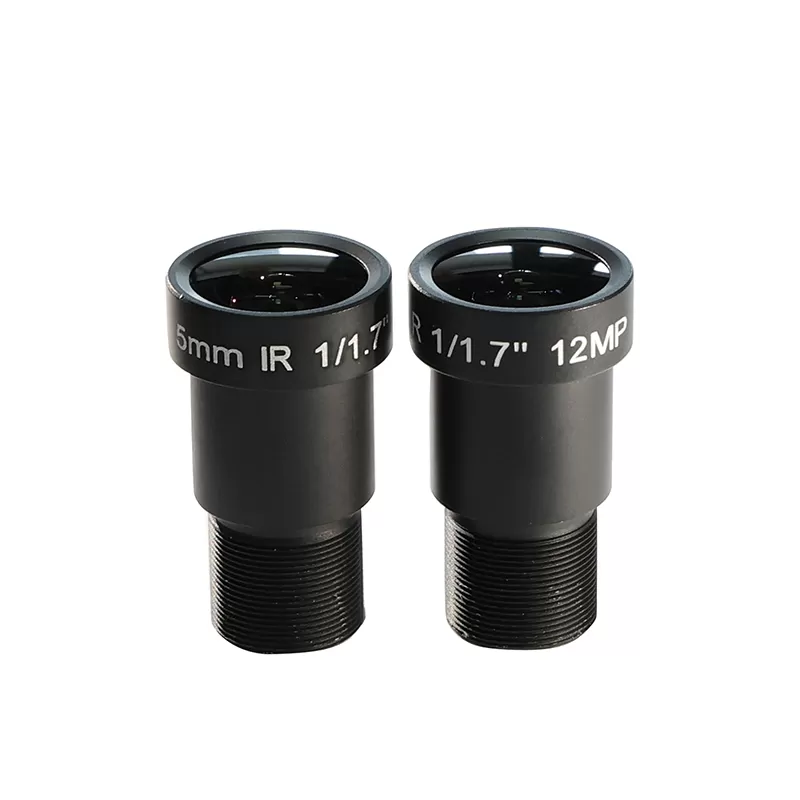
Yes, many manufacturers, including Jinyuan, offer manual zoom lenses with IR correction, ensuring that the focal plane remains consistent across visible and near-infrared wavelengths. These lenses are identifiable by their IR designation and are essential for cameras using 850nm or 940nm illuminators.
Integration and System-Level Considerations
Deploying a Cctv Manual Zoom Lens requires attention to the overall system architecture. The lens should be paired with a camera that offers manual shutter speed control, as automatic exposure adjustments can interact unpredictably with the fixed aperture of a manual iris lens. Additionally, the housing or enclosure must provide sufficient clearance for the lens's physical length, particularly at the telephoto end where the barrel extends.
For multi-sensor panoramic systems, matching the colour rendition and contrast characteristics of all lenses ensures seamless stitching of images. Leading optical suppliers provide batch testing data to guarantee consistency across units, a practice that Jinyuan implements as part of its quality assurance protocol.
From a maintenance perspective, the simplicity of the manual zoom lens reduces the spare parts inventory required. A basic toolkit with hex wrenches and a lens cleaning kit is sufficient for most field adjustments. Training requirements for installation teams are minimal, as the focus and zoom operations are intuitive and visually verifiable through the camera's monitor.
The economic argument for manual zoom lenses becomes stronger when considering total cost of ownership. Lower initial purchase price, reduced power infrastructure, and negligible repair costs combine to deliver a compelling return on investment, particularly in large-scale deployments exceeding 50 camera stations.
For project-specific optical requirements, including custom focal ranges or specialised coatings, the engineering team at Jinyuan provides consultation services. Detailed datasheets, MTF curves, and mechanical drawings are available upon request. To discuss your surveillance application and receive a tailored quotation, please contact the sales engineering department via email at clair-li@jylens.com / allen-zhang@jylens.com. Include your system specifications, sensor format, and environmental conditions for a comprehensive response.