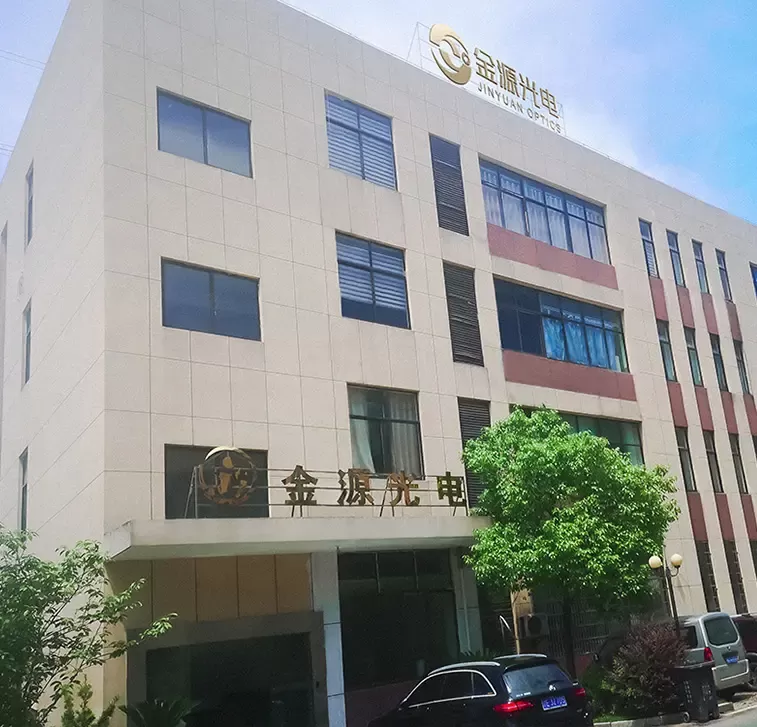

In the demanding fields of industrial imaging, high-power laser systems, and medical instrumentation, the choice of a lens manufacturing partner directly impacts system performance, yield, and long-term reliability. While many suppliers exist, only a specialized China Fa Lens Factory with vertically integrated capabilities can consistently deliver optics meeting sub-micron tolerances and laser-grade surface finishes. This analysis walks through eight critical engineering dimensions, common procurement pain points, and how Jinyuan's fabrication framework addresses them—providing procurement managers and optical engineers with actionable evaluation criteria.
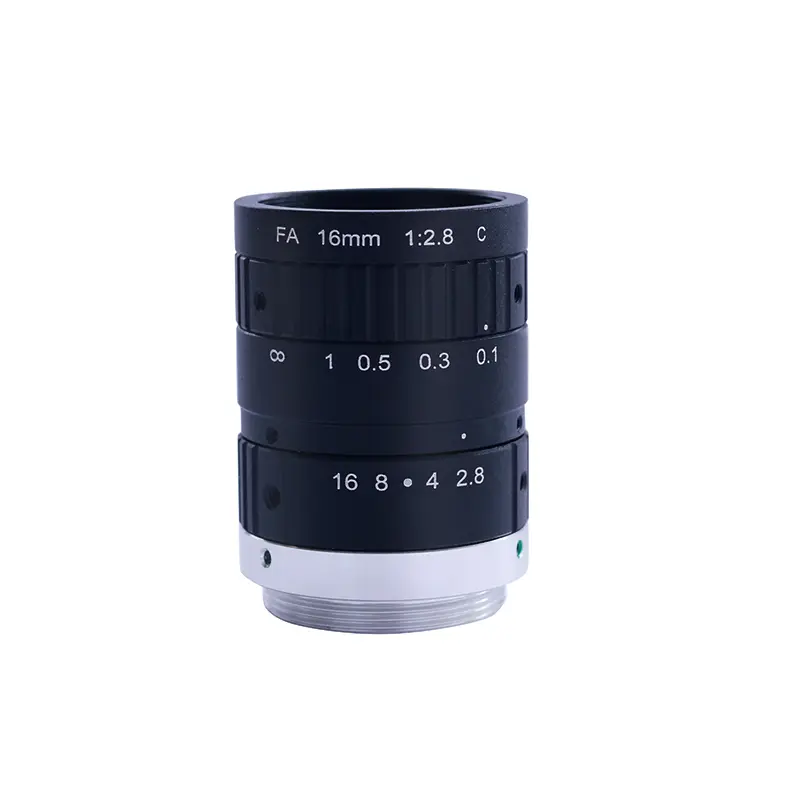
1. Core Optical Fabrication Technologies Inside a Modern China Fa Lens Factory
A genuine precision optical manufacturer distinguishes itself through process depth. Standard grinding and polishing are no longer sufficient for modern applications like LIDAR, semiconductor inspection, or high-resolution endoscopy. The following capabilities separate a commodity supplier from a true engineering partner.
1.1 Advanced Polishing & Figuring Methods
Computer Numerical Control (CNC) Polishing: Deterministic finishing for spherical and aspheric surfaces, achieving irregularity < λ/10 at 632.8nm.
Magnetorheological Finishing (MRF): Eliminates subsurface damage on brittle materials (sapphire, ZnSe, germanium).
Ion Beam Figuring (IBF): For ultra-precise space optics and high-power laser lenses requiring RMS roughness <0.5nm.
1.2 Single-Point Diamond Turning (SPDT)
For rapid prototyping of freeform optics and metal mirrors, SPDT offers diffraction-limited performance without expensive tooling. A full-service China Fa Lens Factory like Jinyuan maintains multi-axis diamond turning centers capable of producing off-axis parabolas, diffractive elements, and microlens arrays with form accuracy ≤0.1μm.
2. Optical Coating Systems: From AR to High-Laser-Damage Threshold
Over 40% of lens performance is determined by thin-film coatings. Industrial buyers need to evaluate not just spectral specs but also environmental durability and laser resistance.
Anti-reflection (AR) coatings: Broadband (400-700nm, R<0.5%) or dual-band (1064nm/532nm, R<0.2%).
High-reflection mirrors: R>99.95% at specific wavelengths for cavity resonators.
Diamond-like carbon (DLC): For scratch-resistant windows in ruggedized sensors.
Metallization: Gold, aluminum, or silver coatings for IR optics (3-12μm).
Jinyuan's in-house coating facility uses plasma-assisted reactive magnetron sputtering (PARMS) with real-time optical monitoring, guaranteeing layer thickness accuracy ±1% and adherence to MIL-C-675 or MIL-F-48616 standards.
3. Metrology & Quality Assurance Infrastructure
Precision is meaningless without traceable measurement. A reliable China Fa Lens Factory must invest in non-contact metrology tools and environmental control. Below are standard and advanced QA instruments:
Interferometers (Zygo, 4D): Surface form error (PV, RMS) and radius of curvature.
White light profilometers: 3D surface roughness and edge chipping analysis.
MTF (Modulation Transfer Function) test benches: For assembled lens systems up to 300mm diameter.
Spectrophotometers: Transmittance/reflectance from UV (200nm) to SWIR (2500nm).
Centration error gauges (OptiCentric): Tilt and decenter of cemented or air-spaced doublets.
Each production batch at Jinyuan includes a full dimensional report (CMM for mechanical references) and a certificate of conformance to ISO 10110 or ASME B46.1. Statistical process control (SPC) data is provided upon request—essential for medical and aerospace validation.
4. Solving Chronic B2B Sourcing Pain Points
Procurement professionals often face four persistent challenges when sourcing custom optics internationally. Below we map each issue to a specific engineering solution.
Pain Point 1: Inconsistent Quality Across Batches
Solution: Automated CNCs with closed-loop metrology feedback. At Jinyuan, each polishing run is linked to an interferometric test station; out-of-tolerance parts are automatically flagged and reworked within the same cell. This yields <1.5% field defect rate for high-volume orders of plano-convex lenses.
Pain Point 2: Long Prototyping Cycles (12+ weeks)
Solution: Hybrid digital tooling. Using diamond-turned masters for short-run injection molding in 3 weeks, or direct SPDT for metal optics in 10 working days. This has reduced first-article lead times by 55% compared to conventional grinding routes.
Pain Point 3: Misaligned Tolerances (Over-specified or Underspecified)
Solution: Engineering review of GD&T at RFQ stage. Many customers receive optics that either fail (too loose a tolerance) or cost 3x more than needed (unnecessarily tight specs). Jinyuan provides DFM (Design for Manufacturability) feedback—suggesting, for example, replacing a complex asphere with a singlet doublet at 1/4 the cost.
Pain Point 4: Lack of Traceability in Raw Materials
Solution: Full material pedigree from Schott, Ohara, CDGM, or Corning. Certificate of analysis (CoA) including refractive index homogeneity, stress birefringence, and bubble class is attached to each purchase order.
5. Application Verticals Demanding Custom Fa Lenses
Understanding where your components will be deployed determines material selection, coatings, and test parameters. Below are three high-growth sectors that rely heavily on a qualified China Fa Lens Factory for competitive supply.
5.1 High-Power Laser Optics (1kW – 20kW)
Fiber laser cutting heads, laser welding systems, and directed energy weapons require lenses with anti-damage coatings (>15 J/cm² @ 1064nm, 10ns pulse) and low absorption substrates (fused silica or YAG). Thermal lensing is minimized through optimized lens mount design and edge thickness control.
5.2 Machine Vision & Industrial Inspection
Telecentric lenses, macro lenses, and line-scan imaging require high contrast (MTF > 0.4 at 100 lp/mm) and chromatic aberration correction. Aspheric elements enable compact designs for robotic 3D vision systems.
5.3 Medical Endoscopy & Dental Imaging
Rod lenses, GRIN lenses, and arthroscopes rely on biocompatible materials (medical grade stainless steel housing, sapphire windows) and autoclave-resistant cementing. Regulatory support (ISO 13485) is mandatory—Jinyuan operates a separate cleanroom for medical optical assemblies.
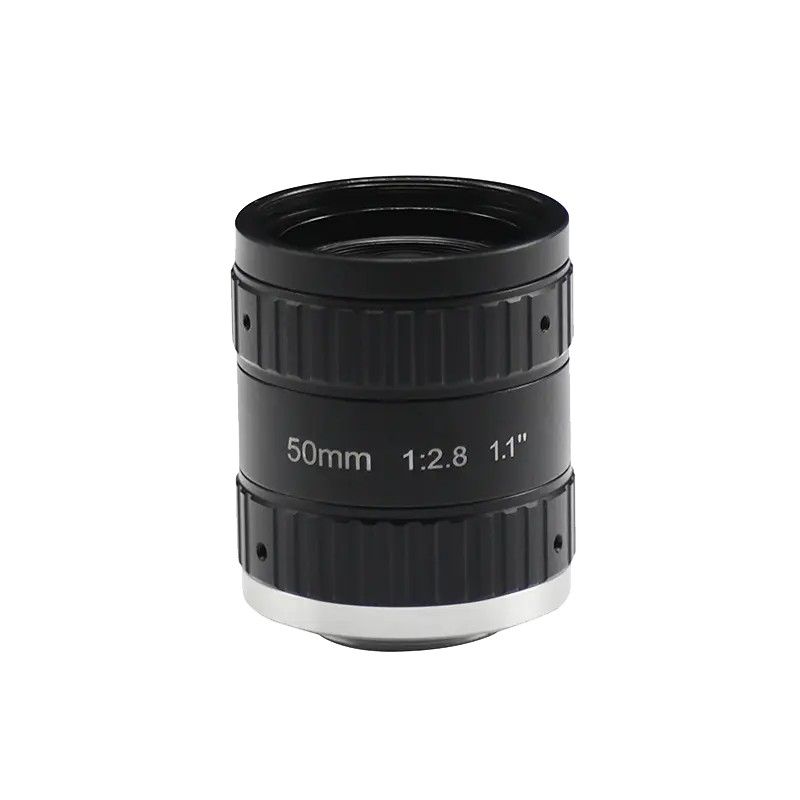
6. Prototyping vs. Mass Production: What a China Fa Lens Factory Offers at Each Stage
A common oversight is assuming the same process works for 10 units and 10,000 units. Advanced suppliers run two parallel workflows:
NPI (New Product Introduction) line: Rapid tooling, SPDT-generated masters, and small-batch (5-200 pieces) with full quality documentation. Typical lead time 15-25 days for lenses ≤50mm diameter.
High-volume replication: Precision glass molding (PGM) for aspheres, injection molding of optical polymer, or traditional pitch polishing with automated edging. Volume capacity up to 500,000 lenses/month for standard plano-convex shapes.
For many customers, the transition from development to production is where quality slips. Jinyuan holds identical tooling references and inspection criteria (golden sample matching) to ensure first mass-production batch matches the prototype's optical performance.
7. Material Selection Guide for Custom Lenses
Choosing the right glass or crystal requires balancing transmission, refractive index homogeneity, thermal stability, and cost. Below is a practical reference for optical engineers.
Visible & NIR (400-1000nm): N-BK7 (low cost, high homogeneity), B270 (for thin elements), or low-Tg glasses (for precision molding).
UV (250-400nm): Fused silica (Corning 7980, transmission >99%@266nm) or CaF₂ (for excimer laser optics).
MWIR (3-5μm): Sapphire (hardness, chemical resistance), or MgF₂.
LWIR (8-12μm): Germanium (high index, thermally sensitive), ZnSe (low absorption), or Chalcogenide glass (cost-effective for IR imaging).
Jinyuan maintains a bonded inventory of these substrates, reducing material lead times by 3-6 weeks compared to suppliers who order per project.
8. Why Large OEMs and System Integrators Return to Jinyuan
Beyond technical capabilities, a lasting B2B partnership relies on transparency, reliability, and continuous improvement. Jinyuan has been manufacturing precision optical components since 2008, with three production facilities and over 150 experienced technicians. Key differentiators include:
On-site metrology lab calibrated to NIST traceable standards.
Subscription-based lens design support (Zemax, CodeV analyses for customer projects).
Contractual on-time delivery rate >97% for 2022–2025.
Flexible risk-sharing: partial tooling fee waived for annual volume commitments.
Whether you need high-damage-threshold lenses for a pulsed laser or distortion-free macro lenses for a wafer inspection tool, Jinyuan delivers documented performance. As a specialized China Fa Lens Factory, we focus on solving real engineering problems—not publishing glossy brochures.
Frequently Asked Questions (FAQ)
Q1: What is the typical minimum order quantity (MOQ) for custom lenses from Jinyuan?
A1: For prototype-grade optics (non-stock designs), our MOQ is 10 pieces per type. For high-volume replication (precision molding or pitch polishing), we recommend 500 pieces per year to amortize tooling costs. However, we accommodate lower volumes (<100 pieces) for medical or R&D projects with a modest engineering fee.
Q2: What optical tolerances can a China Fa Lens Factory realistically hold?
A2: Based on Jinyuan's production records: Diameter tolerance ±0.01mm, center thickness ±0.02mm, surface irregularity λ/10 at 633nm (PV), centration error ≤1 arcminute, and scratch-dig per 40-20 (MIL-PRF-13830B). For aspheres, form error <0.5μm PV. These are standard metrology values, no theoretical "limit"—we confirm every batch with certified test reports.
Q3: How does Jinyuan ensure coating durability for high-humidity or industrial environments?
A3: All coatings pass environmental testing per MIL-C-48497A: adhesion (tape test), humidity (24h at 49°C, 95-100% RH), salt spray, and moderate abrasion (eraser test). For industrial laser optics, we perform laser damage threshold (LIDT) testing at 1064nm, 10ns pulses per ISO 21254.
Q4: Can you provide optical design support if I only have system-level requirements?
A4: Yes. Jinyuan's optical engineering team performs feasibility studies, tolerance analysis, and stray light simulations using Zemax OpticStudio. Simply share your working distance, aperture, field of view, and required MTF, and we deliver a custom lens prescription within 7-10 business days — no upfront NRE charges for initial concept analysis.
Q5: What export documentation and certifications does Jinyuan provide for EU/US customers?
A5: We supply commercial invoice, packing list, COO (Certificate of Origin), and if requested, a Form E or EUR.1 for preferential duties. Our quality management complies with ISO 9001:2015 and we are in process for ISO 13485:2016 (medical devices). Most of our shipments to the US, Germany, and Japan use DDP service, so customers do not handle customs clearance.
Ready to Engineer Your Next Optical System with a Trusted Partner?
Stop relying on generic catalogs or brokers who lack metrology depth. Whether you need high-tolerance spherical lenses, diamond-turned freeform optics, or coated windows for harsh environments, Jinyuan offers the technical infrastructure of a modern China Fa Lens Factory plus the responsiveness of a dedicated engineering team. Send your optical drawing (step file, DXG, or even a sketch with key parameters) for a same-day feasibility review and quotation.
Contact Jinyuan’s B2B optical solutions desk:
Email: clair-li@jylens.com / allen-zhang@jylens.com
Web form:
Visit the “Custom Inquiry” page on the official Jinyuan website (specify
material, diameter, coating, and target application). For urgent technical
discussions, request a Zoom/Teams meeting with our optical engineer
directly.
Take the next step — request your production-ready quote within 48 hours.