
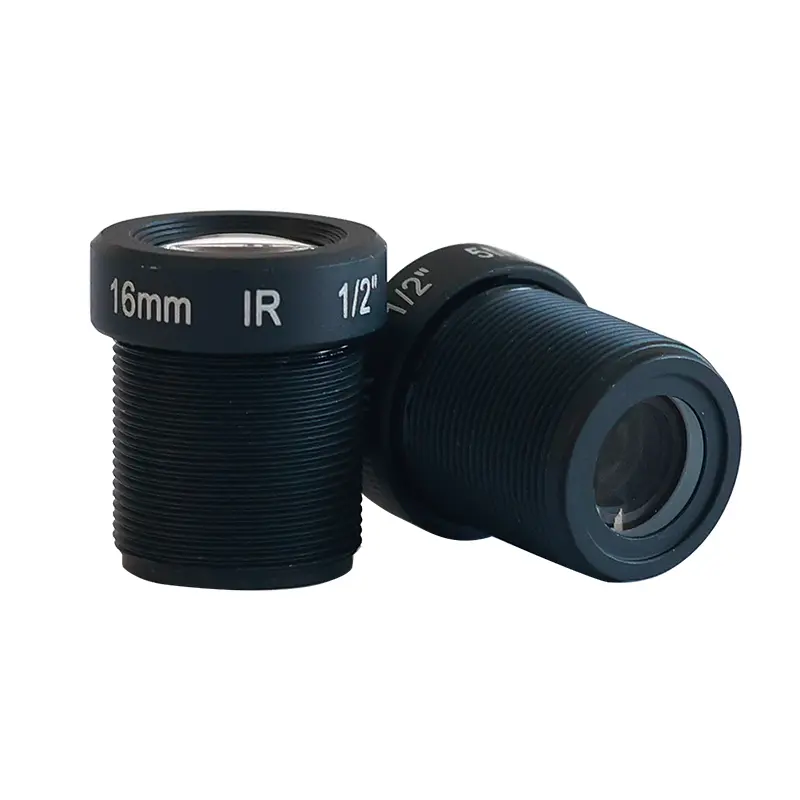
In the field of optical system design, the demand for compact, high-resolution imaging components has grown steadily. Small-format sensors, particularly those utilized in embedded vision, security, and industrial automation, require optics that can match their physical and pixel-level specifications. The M12 lens format, historically referred to as the MTV lens or S-mount lens, represents a standardized interface with an M12 x 0.5 thread. When pairing these compact interfaces with modern, high-density sensors, selecting a precise 5megapixel Mtv Lens is necessary to ensure the optical system does not become the primary bottleneck in resolution performance.
This article analyzes the underlying optical physics, mechanical construction, common system integration challenges, and practical deployment of high-resolution S-mount lenses, highlighting how Jinyuan addresses these engineering requirements.
Optical Physics and Resolving Power of High-Resolution S-Mount Lenses
To understand why a 5megapixel Mtv Lens is required for high-resolution sensors, one must evaluate the concept of spatial frequency and pixel pitch. When a sensor manufacturer packs five million pixels onto a small silicon area, such as a 1/2.5-inch or 1/2.7-inch format, the individual pixel size decreases significantly. A typical 5-megapixel sensor in these formats features a pixel pitch ranging from approximately 1.67 micrometers to 2.2 micrometers.
The Nyquist Limit and Lens MTF
According to sampling theory, the maximum spatial frequency that a sensor can resolve without aliasing is defined by its Nyquist limit. The calculation is expressed as follows:
Nyquist Frequency (lp/mm) = 1000 / (2 * Pixel Pitch in micrometers)
For a sensor with a 2.2-micrometer pixel pitch, the Nyquist frequency is approximately 227 line pairs per millimeter (lp/mm).
For a sensor with a 1.67-micrometer pixel pitch, the Nyquist frequency increases to approximately 299 lp/mm.
To capture clear images, the lens must project an optical image with sufficient contrast at these high spatial frequencies. This contrast is measured by the Modulation Transfer Function (MTF). A standard resolution S-mount lens designed for older 1-megapixel or 2-megapixel sensors often exhibits an MTF that drops to near zero well before reaching 200 lp/mm. Placing such a lens on a 5-megapixel sensor results in a soft, blurry image, rendering the extra pixels useless. A qualified 5megapixel Mtv Lens is engineered to maintain high contrast at these elevated spatial frequencies, ensuring that the sensor's resolving capabilities are fully utilized.
Aperture, Focal Length, and Diffraction Limits
The physical aperture of the lens determines both light-gathering capability and the diffraction limit. The diffraction-limited cutoff frequency of an optical system is inversely proportional to the wavelength of light and the F-number of the lens. As the F-number increases (a smaller physical aperture), diffraction blur increases, which can limit the effective resolution of a high-megapixel system. Standard designs for a 5megapixel Mtv Lens balance this by maintaining F-numbers between F1.6 and F2.8. This balance provides sufficient light throughput for low-light scenarios while keeping the spot size of the lens within the boundaries of the small pixel pitch.
Mechanical and Optical Architecture of S-Mount Lenses
The mechanical footprint of an M12 lens limits the physical space available for optical elements. Designing a high-resolution lens within these tight dimensional constraints requires advanced manufacturing tolerances and precise material selection.
Glass Elements versus Plastic Elements
Low-cost S-mount optics often rely on injected molded plastic elements. While cost-effective, plastic elements suffer from a high coefficient of thermal expansion and are prone to birefringence. Under varying operating temperatures, a plastic lens can undergo focus drift, compromising the clarity of a high-resolution system.
To maintain stable performance, high-quality optics manufactured by Jinyuan utilize all-glass optical designs or hybrid glass-plastic designs. Optical glass, such as lanthanum-doped glass, offers high refractive indices and low dispersion properties. This allows optical designers to design shorter lens assemblies with fewer elements while maintaining control over chromatic aberrations.
The Role of Multi-Layer Coatings
With multiple glass-to-air interfaces within a compact lens assembly, internal reflections can cause ghosting and flare, reducing overall image contrast. Applying Broadband Anti-Reflective (BBAR) coatings to each glass element is standard practice for high-resolution optics. These coatings are designed to minimize reflection across the visible spectrum (400 nm to 700 nm) and, in many cases, extend into the Near-Infrared (NIR) spectrum up to 950 nm for day/night imaging applications. High transmission rates ensure that the contrast of high-frequency details is preserved as light passes through the lens assembly to the sensor active area.
Addressing Common System Integration Challenges
Integrating a 5megapixel Mtv Lens into an embedded vision system or industrial camera housing presents several engineering challenges that must be addressed during the design phase.
Chief Ray Angle (CRA) Matching
CMOS image sensors are equipped with micro-lenses over each pixel to direct incoming light into the photodiode. These micro-lenses are optimized for a specific angle of incidence, known as the Chief Ray Angle (CRA). If the exit pupil of the lens is positioned such that the light rays hit the sensor at angles exceeding the sensor’s CRA, several issues arise:
Lens Shading (Vignetting): The corners of the image appear significantly darker than the center because light fails to reach the active area of the outer photodiodes.
Color Crosstalk: In color sensors, misdirected light can spill into adjacent pixels of different colors, causing color shifts and spatial color inaccuracies near the image periphery.
To avoid these issues, optical engineers must ensure the CRA profile of the 5megapixel Mtv Lens matches or is slightly less than the CRA profile specified by the sensor manufacturer. Jinyuan provides detailed CRA curves for its optical products to simplify this compatibility check during system integration.
Thermal Focus Drift
In outdoor surveillance, automotive monitoring, and high-temperature industrial environments, ambient temperatures can fluctuate from -20°C to over +75°C. As the temperature changes, the lens barrel and the optical elements expand or contract. If the mechanical housing of the lens is made from low-grade plastics, the focus position can shift away from the sensor plane, causing defocusing.
Using metal barrels (such as aluminum or brass) combined with athermalized optical designs ensures that the focus plane remains stable across a wide temperature range. This structural design is standard in Jinyuan high-resolution S-mount lenses designed for industrial and outdoor deployments.
Geometric Distortion Control
Wide-angle lenses are prone to geometric distortion, commonly appearing as barrel distortion. In applications such as barcode scanning, optical character recognition (OCR), and dimensional inspection, geometric distortion introduces measurement errors. While software correction can rectify distortion, it requires processing resources and can introduce interpolation artifacts that degrade image resolution. Designing a low-distortion 5megapixel Mtv Lens using aspherical elements helps minimize optical distortion at the physical level, reducing the need for heavy digital correction.
Industrial and Commercial Application Fields
The compact size and high resolving power of the M12 format make these lenses suitable for a wide variety of modern applications.
Machine Vision and Automated Inspection
On automated production lines, cameras are used to inspect solder joints on printed circuit boards (PCBs), verify package labels, and sort components. Space is often limited within these machines, making standard C-mount lenses too bulky. A compact S-mount lens combined with a 5-megapixel sensor provides the necessary spatial resolution to detect micro-defects while maintaining a small camera footprint.
Intelligent Transportation Systems (ITS)
Traffic monitoring and automated license plate recognition (ALPR) systems require high-resolution imaging to capture clear details of fast-moving vehicles across multiple lanes. These systems operate under variable lighting conditions, from bright sunlight to night-time infrared illumination. A 5megapixel Mtv Lens with an integrated IR-corrective optical design ensures that the image remains sharp under both visible and NIR illumination, preventing the shift in focus that occurs when shifting light sources.
Embedded IoT and Smart Devices
From facial recognition access control gates to automated retail checkout kiosks, embedded vision systems rely on small, high-resolution camera modules. These modules must operate reliably over long periods without requiring manual focus adjustments. The robust mechanical construction of S-mount optics makes them highly suitable for these high-use, long-lifecycle devices.
Optical Specifications of a Typical High-Performance S-Mount Lens
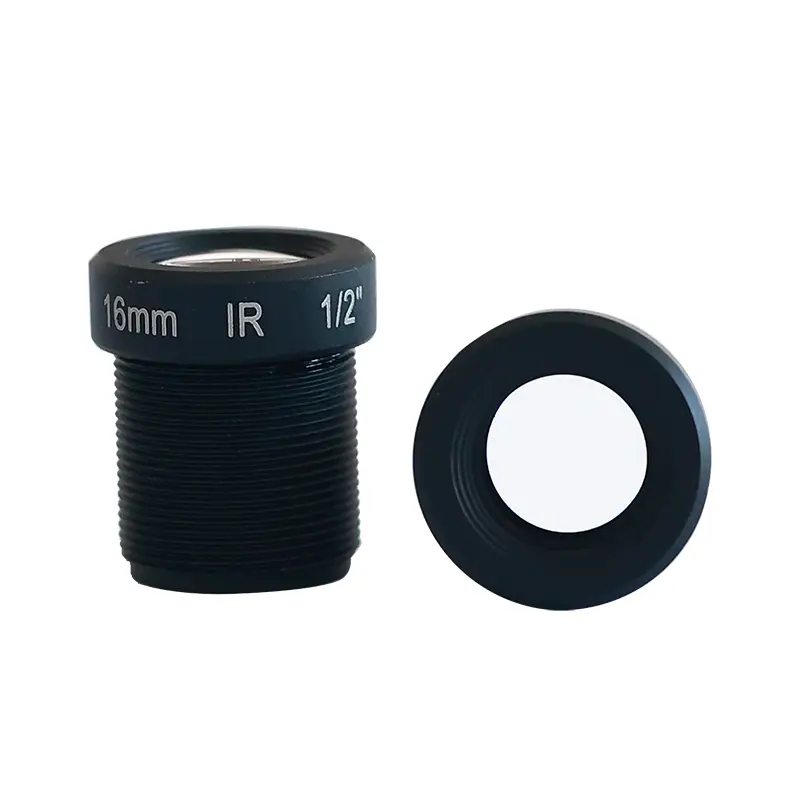
The following table outlines the typical optical and mechanical specifications found in a professional-grade 5-megapixel S-mount lens assembly, such as those provided by Jinyuan:
| Parameter | Typical Specification | Design Significance |
|---|---|---|
| Optical Resolution | 5 Megapixels (up to 250 lp/mm) | Matches pixel pitches down to 1.8 micrometers without contrast loss. |
| Mount Type | M12 x 0.5 (S-Mount / MTV) | Standardized compact threaded mounting interface. |
| Sensor Compatibility | 1/2.5", 1/2.7", 1/3" | Covers standard small-format CMOS image sensors. |
| Lens Construction | All-Glass elements, Metal Barrel | Prevents thermal drift and ensures mechanical durability. |
| Optical Distortion | < 1.5% (Non-fisheye designs) | Minimizes spatial errors for inspection and scanning. |
| Coating | Broadband Anti-Reflective (BBAR) | Enhances transmission and controls flare/ghosting. |
Frequently Asked Questions
Q1: Can I use a 5megapixel Mtv Lens on a lower-resolution sensor, such as a 2-megapixel sensor?
A1: Yes, using a higher-resolution lens on a lower-resolution sensor is fully compatible and often results in improved image contrast, especially at the corners of the image. The lens will easily resolve the larger pixel pitch of the lower-resolution sensor.
Q2: What is the physical difference between an MTV lens and an S-mount lens?
A2: There is no functional difference. "MTV lens" is a legacy industry term that originated during the analog CCTV era to describe board-level lenses with an M12 thread. Today, the industry widely refers to this interface as an "S-mount" or "M12 lens."
Q3: Why is infrared correction important for these lenses in security applications?
A3: Different wavelengths of light refract at different angles when passing through glass. If a lens is not IR-corrected, the focal point under infrared light at night will differ from the focal point under daytime visible light, leading to out-of-focus night imagery. An IR-corrected lens uses specific glass formulations to align these focal points to the same plane.
Q4: How do I prevent S-mount lenses from loosening due to vibration?
A4: Because S-mount lenses are threaded directly into a holder, mechanical vibrations can cause them to lose focus. In industrial settings, this is typically addressed by using a locking nut or a locking set screw on the side of the lens holder to secure the lens in its final focused position.
Q5: What happens if the lens Chief Ray Angle (CRA) does not match the sensor CRA?
A5: A significant mismatch between the lens and sensor CRA leads to vignetting (dark corners) and color crosstalk or shading at the outer edges of the image. Ensuring that the lens exit pupil matches the sensor design requirements is necessary to avoid these optical artifacts.
Request Custom Optical Solutions
Selecting the correct optical components requires careful consideration of focal lengths, sensor formats, mechanical dimensions, and environmental conditions. If you are designing a new vision system or require a customized 5megapixel Mtv Lens tailored to your specific sensor configuration and performance targets, please contact the engineering team at Jinyuan to discuss your project requirements and receive a detailed technical consultation.