
Q1: What is an M12 interface large-format security camera lens?
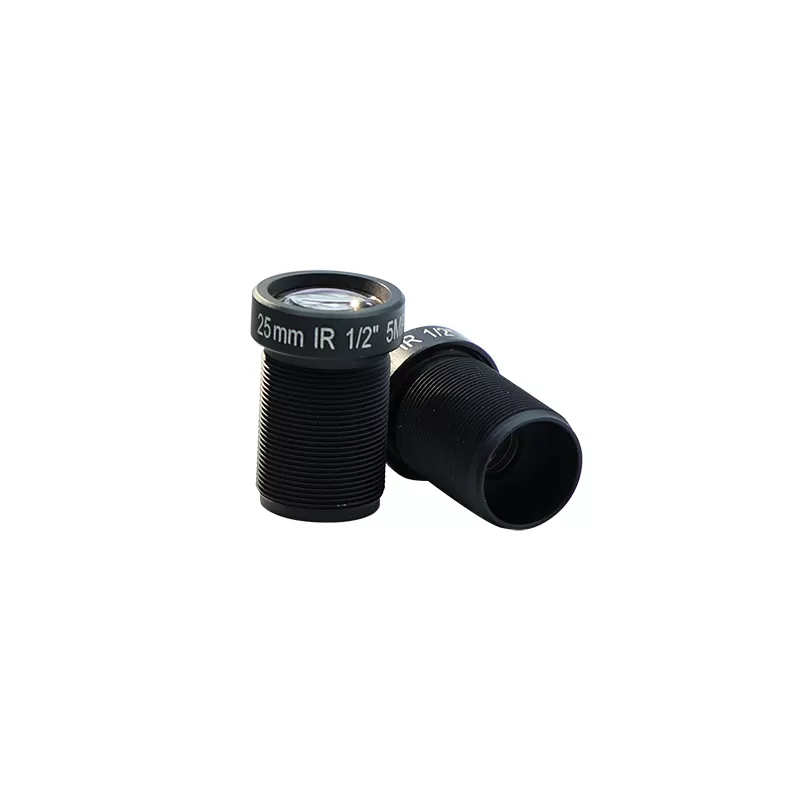
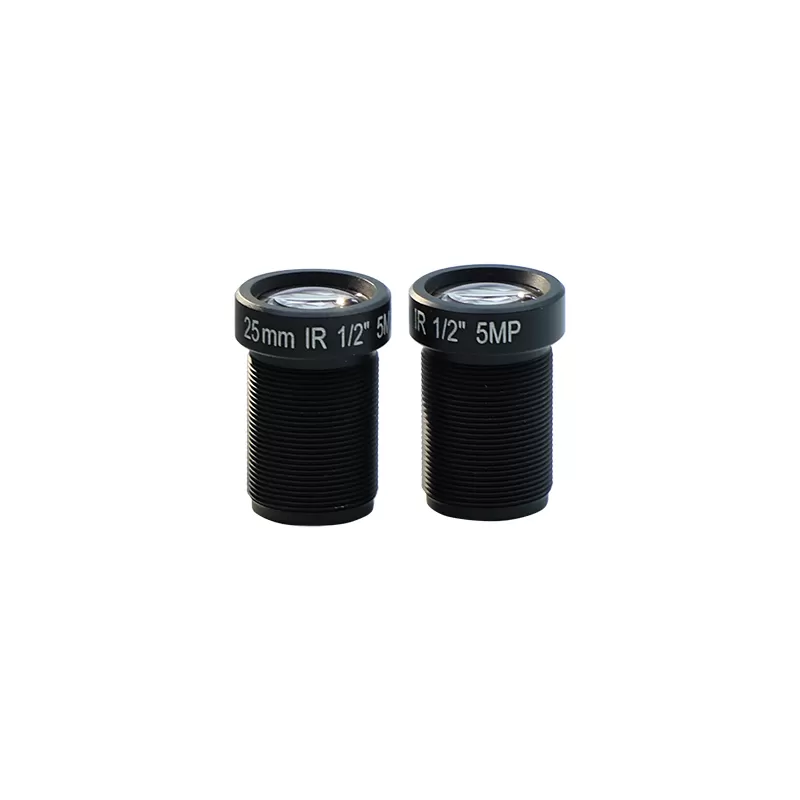
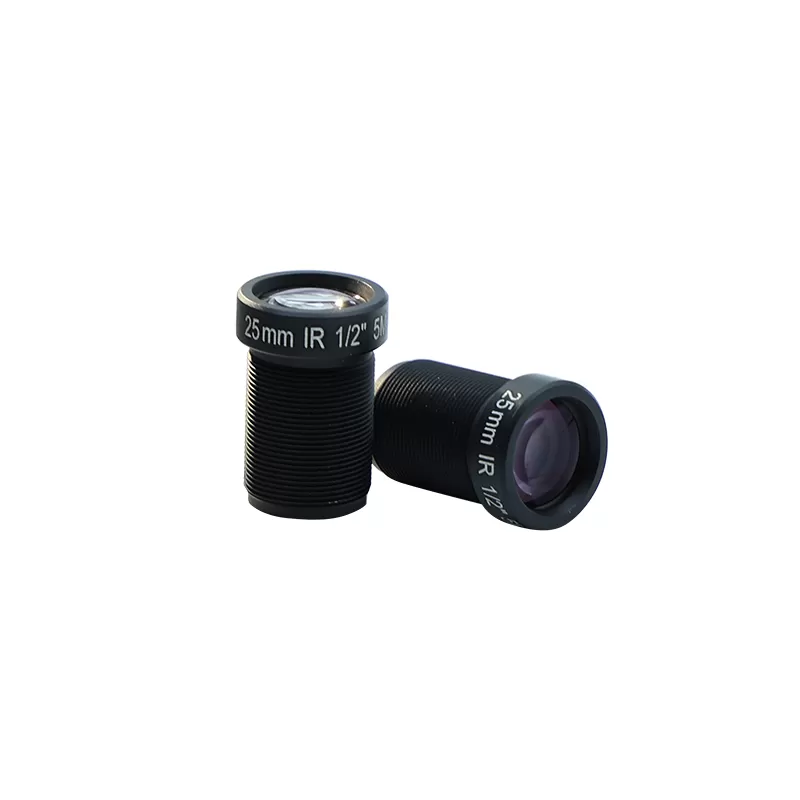
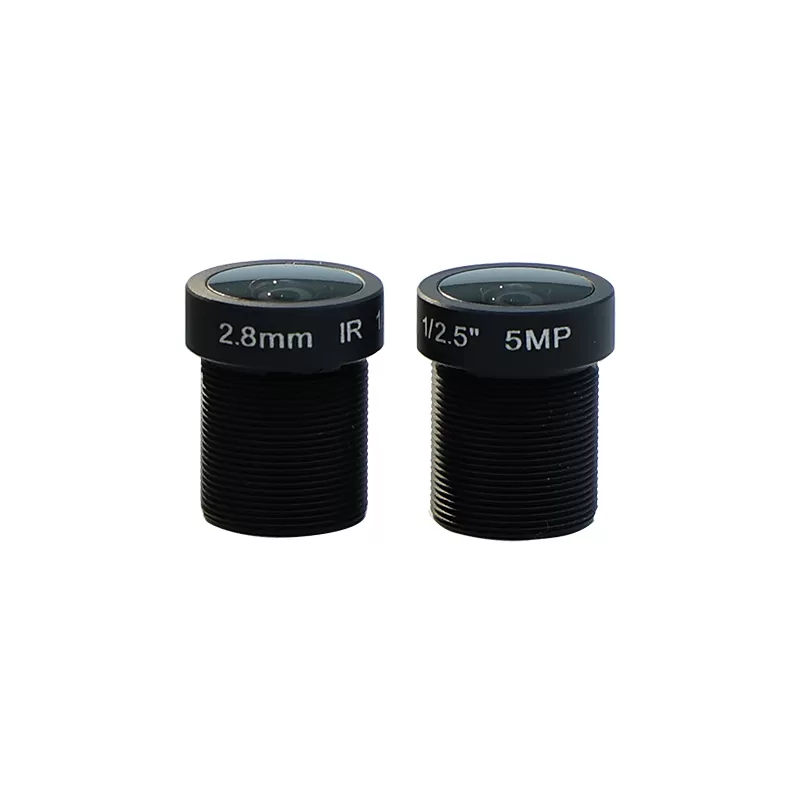
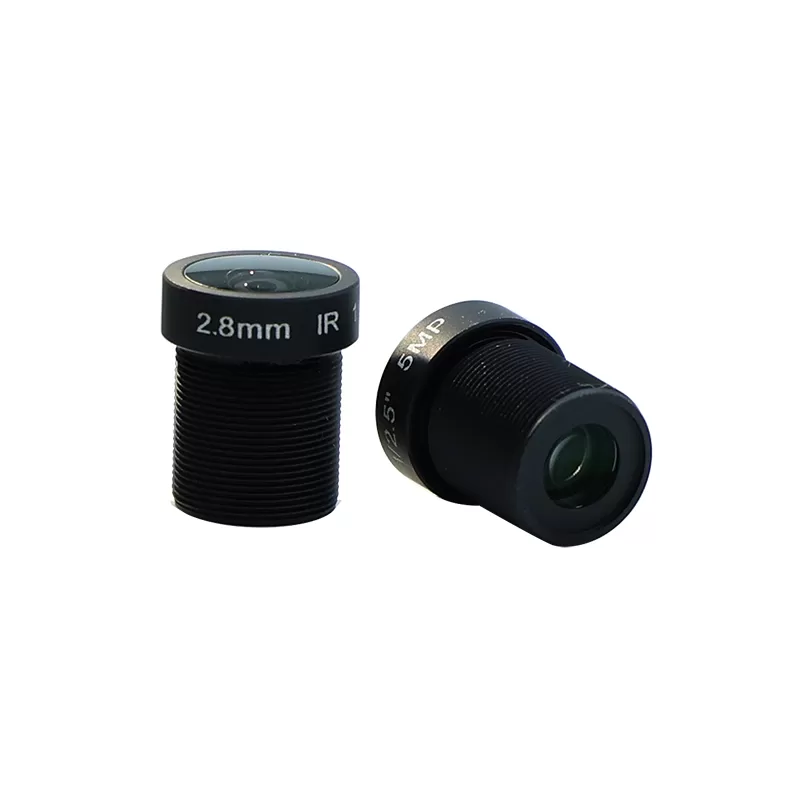
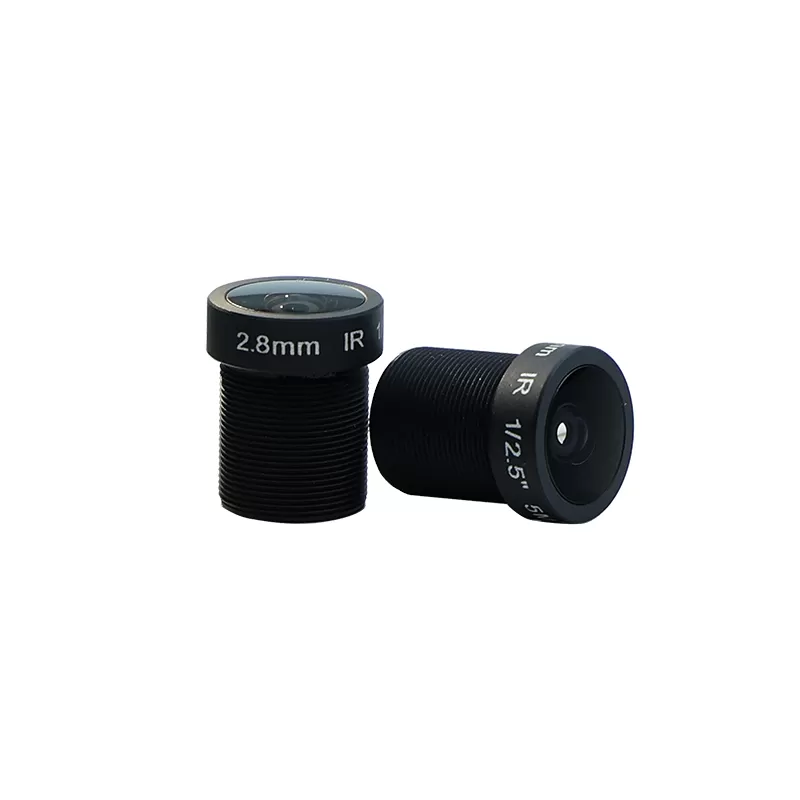
A: The M12 interface (M12×0.5 metric thread) is the most widely adopted mechanical mounting standard in industrial imaging and security applications—often referred to as the “miniature lens mount.” Its threaded design enables compact, robust, and tool-free installation. A large-format M12 lens is optically engineered to fully illuminate image sensors with diagonal dimensions significantly larger than those supported by conventional M12 lenses—typically 1/1.8″, 1/1.7″, or 1/1.2″ sensors, with select custom models compatible with APS-C format (≈28.2 mm diagonal). Mass-produced M12 lenses rarely fully cover the APS-C image circle. In contrast, legacy M12 lenses are generally limited to smaller sensors such as 1/2.7″ or 1/2.5″. The larger photosensitive area affords higher photon collection efficiency, improved low-light performance, enhanced signal-to-noise ratio (SNR), and superior dynamic range—making these lenses well-suited for high-resolution surveillance, machine vision, automotive ADAS, and AI-enabled edge analytics.
Q2: What are the key technical advantages of large-format M12 lenses over standard M12 lenses?
A:
- Enhanced light-gathering capability: Compatibility with larger sensors increases effective aperture area, enabling higher irradiance at the sensor plane—resulting in cleaner, lower-noise imagery under low-illumination conditions.
- High-resolution imaging fidelity: Optimized optical design supports high-megapixel sensors (e.g., 8 MP and 12 MP) while maintaining sharpness, contrast, and minimal aberration across the full field—particularly at image edges—thereby reducing geometric distortion and edge blur.
- Expanded field of view (FoV) and depth of field (DoF): At identical focal lengths, large-format lenses deliver a wider angular FoV, enabling broader scene coverage without compromising resolution density; DoF characteristics remain favorable for mid-range surveillance applications.
- Seamless integration within existing M12 ecosystems: Leverages mature, standardized M12 threading—requiring no structural modification to host cameras—ensuring rapid assembly, compact system footprint, and cost efficiency relative to C/CS-mount alternatives.
Note on design trade-offs: Achieving large-format performance within the M12 form factor imposes greater optical complexity. Consequently, such lenses typically feature larger physical apertures and slightly increased barrel dimensions compared to standard M12 variants.
Q3: What are the common large-format sensor compatibility tiers—and their typical application domains?
A: • 1/1.8″: Entry-tier large-format specification; widely adopted with mainstream 8 MP security sensors. Offers an optimal balance of cost, manufacturability, and image quality—ideal for general-purpose indoor/outdoor IP cameras. • 1/1.7″: Mid-tier specification; delivers improved quantum efficiency and read noise performance—commonly deployed in starlight-grade and ultra-low-light surveillance systems requiring reliable nighttime operation. • 1/1.2″: Premium-tier sensor format; sensors of this size feature substantially higher full-well capacity and sensitivity—suited for black-light, AI-accelerated analytics (e.g., facial recognition, behavioral analysis), and high-accuracy license plate or entrance capture. • APS-C: Largest format currently viable in M12 packaging; primarily used in high-end industrial inspection and metrology systems. Rare in commercial security due to size, cost, and integration constraints.
Q4: Which critical optical and mechanical parameters should be evaluated when selecting a large-format M12 lens?
A:
- Image circle / target format: The lens’s specified image circle diameter must equal or exceed the diagonal dimension of the sensor. Undersizing causes vignetting (corner darkening); oversizing wastes sensor utilization and may compromise peripheral resolution.
- Focal length: Directly determines angular field of view. Shorter focal lengths (e.g., 1.8–2.8 mm) support wide-area monitoring; longer focal lengths (e.g., 6–12 mm) enable detail-oriented long-range observation.
- Relative aperture (f-number): Lower f-numbers (e.g., f/1.4, f/1.6) indicate higher light throughput and improved low-light sensitivity—critical for 24/7 surveillance.
- Resolution support: Lens modulation transfer function (MTF) must sustain required spatial frequencies across the entire sensor—verify compatibility with target pixel count (e.g., ≥160 lp/mm @ Nyquist for 12 MP).
- Geometric distortion: Especially relevant for wide-angle configurations. Specify total distortion (TD) and TV distortion (TVD); values
- IR-corrected focus (day/night parfocality): Essential for dual-illumination environments. Parfocal lenses maintain focus position across visible (400–700 nm) and near-infrared (700–1050 nm) bands—eliminating refocusing during day/night transitions and ensuring consistent sharpness under IR illumination.
Q5: Can vignetting occur with large-format M12 lenses—and how is it mitigated?
A: Yes—vignetting arises primarily from mismatched image circle diameter and sensor size (e.g., using a 1/1.8″-rated lens on a 1/1.2″ sensor). Mechanical obstruction—such as an oversized lens barrel or misaligned internal baffles—may also contribute. Mitigation requires strict adherence to: (i) lens image circle diameter ≥ sensor diagonal; and (ii) verification of unobstructed optical path via mechanical layout review and sensor clearance checks.
Q6: How do M12 large-format lenses compare with C-mount lenses—and why are they increasingly preferred in modern security deployments?
A: • C-mount: Features a larger flange distance (17.526 mm) and bayonet interface, offering generous optical design headroom for large-format, high-performance optics. However, this results in bulkier lenses and larger camera housings—increasing system BOM, assembly complexity, and thermal/mechanical stability challenges. • M12 large-format: Represents an engineering optimization—retaining the M12 platform’s compactness, ease of integration, and scalability while extending sensor compatibility into premium large-format domains. It is especially advantageous for space-constrained, power-efficient, and cost-sensitive applications—including miniaturized IPCs, embedded AI cameras, vehicle-mounted systems, and edge-analytics devices—where high-resolution, low-light performance must coexist with small form factor. C-mount remains preferable only where ultimate optical fidelity, extreme resolution (>20 MP), or specialized spectral response (e.g., UV/VIS/NIR broadband) is non-negotiable.
Q7: What considerations apply to large-format M12 lenses in day/night dual-illumination security systems?
A: IR-parfocal (day/night shared-focus) lenses are mandatory. Non-parfocal variants exhibit axial focus shift between visible and IR wavelengths—causing defocus upon IR activation. True parfocal designs incorporate achromatic doublets and optimized glass combinations to align focal planes across both bands. Additionally, broadband multi-layer anti-reflection (AR) coatings—covering 400–1050 nm—are recommended to suppress ghosting, flare, and veiling glare under challenging lighting (e.g., streetlights, vehicle headlights).
Q8: Are manual zoom variants available for large-format M12 lenses—or are fixed-focal-length designs predominant?
A: Fixed-focal-length (FF) configurations dominate the market. The stringent dimensional constraints of the M12 form factor render integrated mechanical zoom mechanisms impractical—especially when combined with large-format optical requirements. As a result, zoom-capable large-format solutions are almost exclusively realized via C-mount platforms. Where variable FoV is essential alongside large-format imaging, C-mount zoom lenses remain the technically viable choice.
Q9: What are best practices for installation, alignment, and calibration of large-format M12 lenses?
A:
- Prior to mounting, clean both lens elements and sensor cover glass using lint-free wipes and optical-grade solvent to prevent dust-induced artifacts or micro-scratches.
- Thread the lens gently into the M12 socket—avoid cross-threading or excessive torque that may damage threads or misalign internal optics.
- Secure the lens using the locking ring with calibrated torque (typically 0.1–0.2 N·m) to prevent vibration-induced focus drift.
- Perform final focus adjustment under representative ambient lighting and scene content—avoid relying solely on bright indoor test conditions.
- Validate focus consistency under active IR illumination to confirm parfocality and absence of thermal focus shift.
Q10: In which application domains are large-format M12 lenses most commonly deployed?
A: • Black-light and starlight-grade outdoor IP cameras—for intelligent perimeter monitoring in transportation corridors, industrial parks, and municipal infrastructure. • AI-powered edge cameras—supporting real-time facial recognition, posture estimation, crowd analytics, and behavioral anomaly detection. • Access control and entry/exit capture systems—requiring high-resolution, low-distortion imaging for license plate and biometric identification. • Automotive vision systems—enabling high-definition cabin monitoring, ADAS rear-view, and surround-view recording. • Compact industrial vision—used in logistics automation (e.g., parcel barcode scanning), PCB inspection, and precision assembly guidance.
Q11: What technical and commercial factors do international procurement teams typically prioritize when evaluating large-format M12 lenses?
A:
- Sensor compatibility (target format) and maximum resolvable pixel count.
- Optical specifications: focal length, f-number, FoV angle, and distortion metrics.
- IR parfocality certification and spectral transmission data (400–1050 nm).
- Quantified geometric distortion (TV distortion, radial distortion) and MTF performance curves.
- Lead time, minimum order quantity (MOQ), and regional logistics support.
- Availability of evaluation samples and technical documentation—including mechanical drawings, spectral transmittance reports, and ISO 10110-compliant test certificates.
- Environmental robustness: focus stability across operating temperature range (e.g., −30°C to +70°C), quantified as focus shift (µm/°C) or MTF degradation.