
Meta description: Compare common optical lens focusing modes including fixed focus, manual focus, motorized autofocus, liquid lens, varifocal and parfocal zoom. Explore pros, cons and use cases to select the right machine vision lens focus solution for inspection, security, ITS and embedded vision projects.
Choosing the correct machine vision lens focusing method is just as important as picking a proper lens mount for industrial vision, ITS traffic monitoring, security surveillance and embedded vision systems. Every optical lens focusing design comes with inherent optical and mechanical trade-offs. A mismatched lens focus setup often leads to unstable sharpness, vision calibration drift, longer cycle time and higher defect rates on automated production lines.
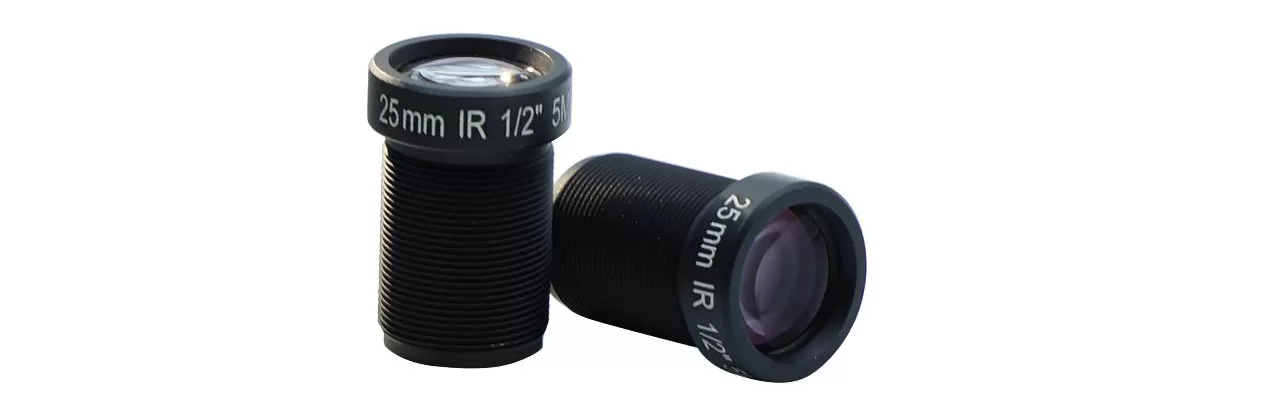
Fixed focus lenses are factory pre-calibrated industrial lenses locked for sharp imaging within a defined working distance range. There is no adjustable focus ring or moving optical group after assembly. Advantages: Outstanding image stability and repeatability; zero mechanical backlash; low cost and compact footprint; no power consumption; excellent vibration resistance; consistent MTF and distortion performance for quantitative measurement. Once locked, the intrinsic parameters of the vision camera remain unchanged, which is ideal for reliable machine vision calibration. Disadvantages: Limited flexibility; only objects within its depth of field stay sharp. Significant changes in working distance or target height will cause blurry images, requiring lens replacement or rework. Typical fixed focus lens applications: Standard FA industrial inspection, fixed-station barcode reading, highway ITS license plate capture, traditional security IPC, M12 board lenses, static defect detection on stable production lines.
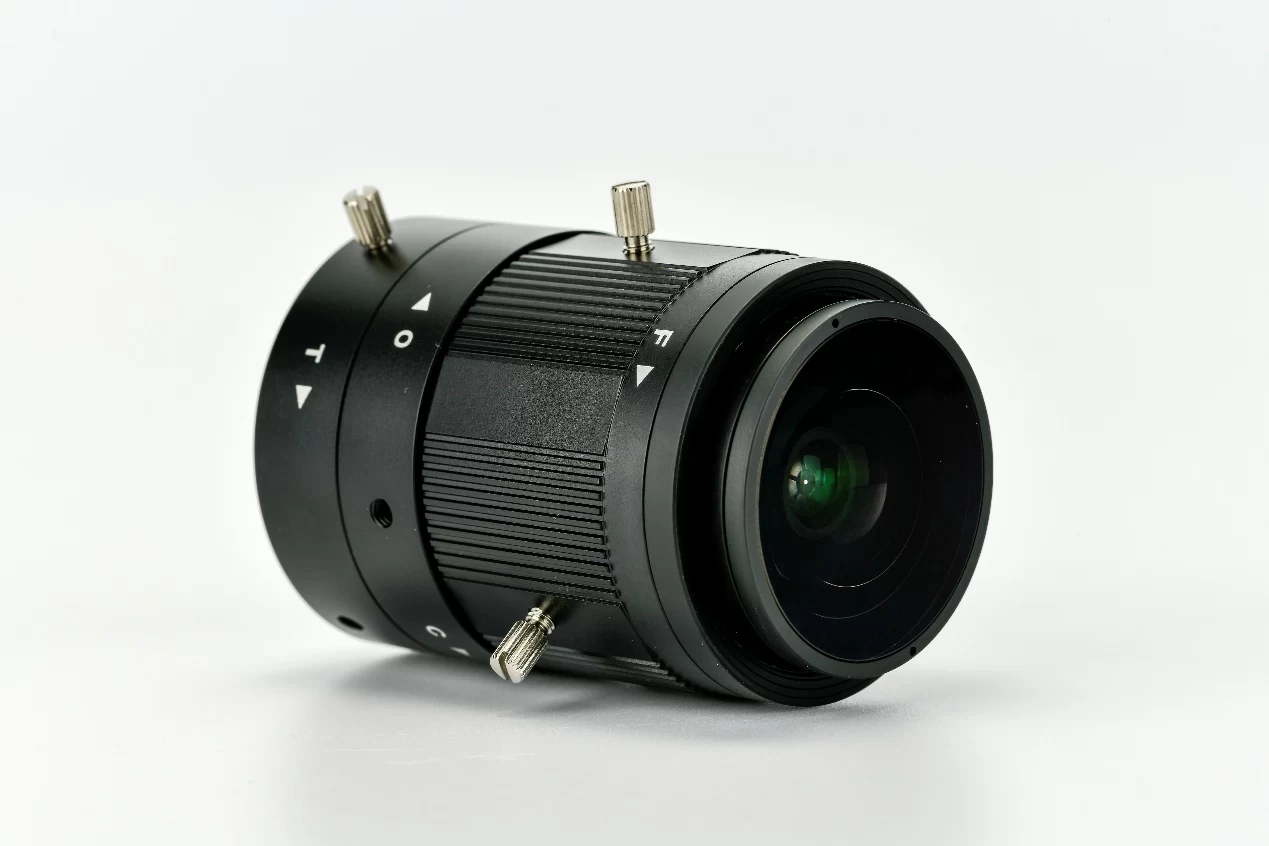
Manual focus lenses feature a mechanical focus ring, allowing technicians to adjust the focus position on-site and secure the lock screw once the target is sharp. Advantages: More flexible than fixed focus machine vision lenses; a single optical lens can cover a wider working distance range; simple structure with no extra controller or power supply required; widely available in C-mount FA lens series. Users can tune aperture alongside focus to adjust depth of field. Disadvantages: Requires on-site manual adjustment; cannot adapt automatically during runtime; thread clearance may cause slow focus drift under long-term vibration; focus settings cannot switch automatically for different production recipes. Typical manual focus lens applications: Machine vision lab testing, prototype verification, AOI equipment with fixed station geometry, low-volume batch inspection, fixed-install surveillance box cameras.
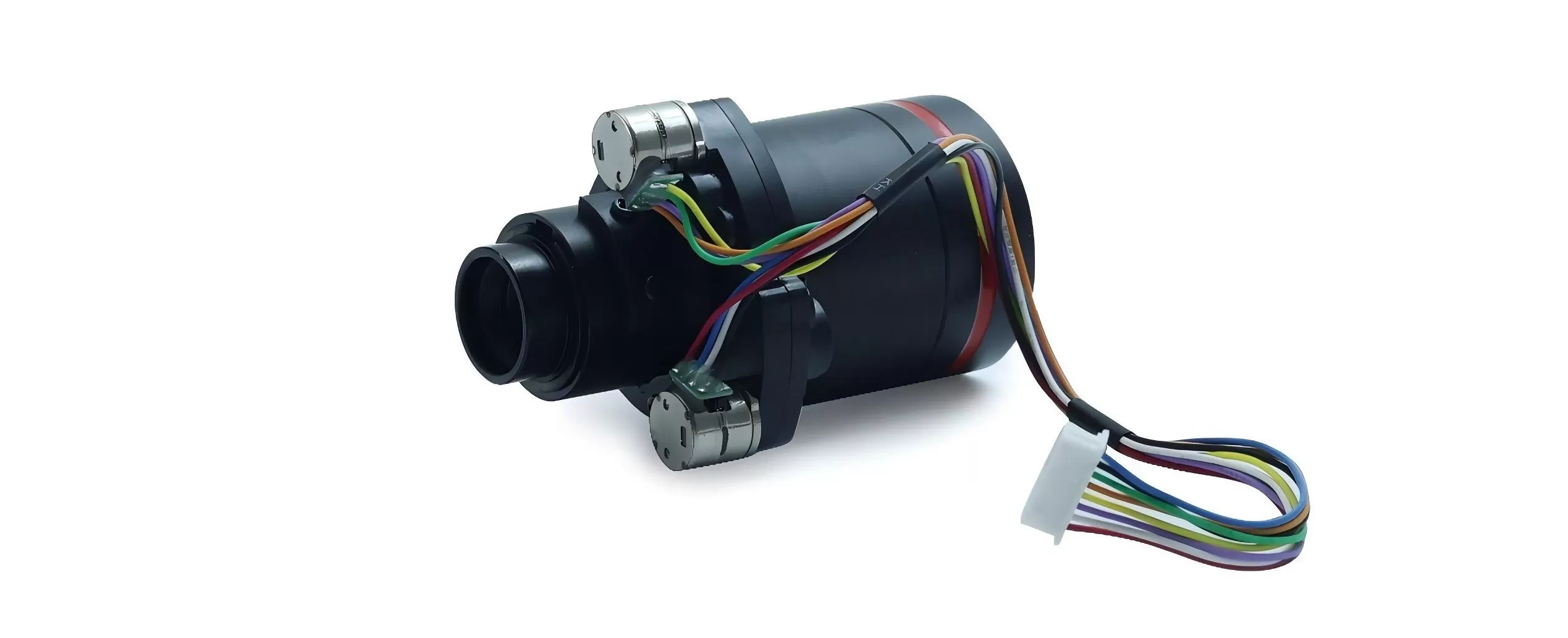
Motorized autofocus lenses (VCM / stepper motor driven) integrate tiny built-in motors to shift internal lens groups for focus adjustment, controlled by software or vision SDK. Advantages: Supports remote electronic focus adjustment; saves multiple production recipes for one-click switching across different SKUs; good positioning repeatability; less prone to temperature drift compared with liquid lenses; compatible with GigE and USB industrial camera systems. Disadvantages: Larger form factor and higher price; moving mechanical parts suffer wear after millions of adjustment cycles; longer focus settling time than liquid lens; strong continuous vibration may lead to positioning offset. Typical motorized autofocus lens applications: Flexible multi-SKU production lines, packaging inspection with variable product height, remotely adjustable ITS cameras, medical imaging, automated optical sorting with frequent product changeovers.
Liquid lenses (tunable liquid focus) change the curvature of liquid or polymer optical elements via voltage input to achieve fast electronic refocusing without sliding lens groups. Advantages: Millisecond-level ultra-fast response; no sliding mechanical components for superior vibration resistance; compact design, easy integration into small M12 or C-mount lens mount modules; continuous software focus control. Disadvantages: Highly temperature-sensitive; liquid viscosity and surface curvature shift under extreme temperature variation and introduce focus drift; peak MTF performance is slightly lower than premium fixed-focus FA industrial lenses; requires dedicated driver board and SDK integration; limited clear aperture options. Typical liquid lens applications: Logistics barcode scanning, parcel reading with variable stack height, multi-plane inspection, compact embedded vision modules, robotic pick-and-place with fluctuating object distance.
Varifocal lenses allow focal length adjustment to modify field of view, but they lose focus every time the focal length is changed and need re-focusing manually. Advantages: One optical lens covers multiple field-of-view requirements; convenient for system commissioning and project trial runs; reduces lens inventory pressure for vision integrators. Disadvantages: Optical performance degrades at both ends of the zoom range; more complex optical design brings higher distortion and weaker edge MTF; extra time cost for re-focusing after zooming; non-parfocal by nature. Typical varifocal lens applications: Camera system testing, equipment debugging, temporary surveillance, laboratory setup, multi-size sample verification.
Parfocal zoom lenses (true zoom) maintain sharp focus within specified tolerance while zooming. Advantages: Preserves sharpness during zoom operation; supports real-time framing adjustment without re-focusing; great for live monitoring and dynamic observation. Disadvantages: High cost, large and heavy body; limited models made for industrial machine vision; extremely complex optical design. Typical parfocal zoom lens applications: High-end ITS traffic monitoring, live security PTZ cameras, scientific observation, large-area dynamic process monitoring.
Before confirming your lens focus solution, evaluate whether your working distance stays stable, if automatic recipe switching is needed, and your tolerance for temperature fluctuation and vibration. For high-precision measurement with fixed working distance, locked fixed focus or manual focus machine vision lenses are the safest option. For flexible production lines with changing target height, liquid lens or motorized autofocus industrial lenses are the preferred selection.
FAQ
Q: What is the difference between fixed focus and manual focus lenses?
A: Fixed focus lenses are pre-calibrated and locked at the factory, with no adjustable focus ring during operation. Manual focus lenses have a mechanical focus ring for one-time on-site adjustment. Fixed focus delivers better long-term stability, while manual focus provides flexible working distance selection during installation. Both are popular machine vision lens options for FA inspection.
Q: Liquid lens or motorized autofocus, which one is better for industrial vision?
A: Liquid lens offers faster response and better vibration resistance but comes with temperature-induced focus drift. Motorized autofocus provides better thermal stability and higher positioning consistency, though it has mechanical wear and slower settling time. Choose liquid lens for high-speed scanning, and motorized autofocus for long-run high-precision inspection with industrial lenses.
Q: Can varifocal lenses be used directly on mass production inspection lines?
A: Varifocal lenses require re-focusing after every zoom adjustment. They suit prototype and debugging work, and are not recommended for continuous mass production unless paired with an automatic focus re-calibration workflow.
Q: Why do fixed focus lenses provide better calibration stability?
A: Fixed focus optical lenses have no moving lens groups. Once locked, the optical principal point, magnification and distortion curve remain consistent. Any focus adjustment will alter camera intrinsic parameters and break pixel-to-world calibration for measurement algorithms.
Q: Is liquid lens compatible with C-mount and M12 mount cameras?
A: Yes. Liquid lens modules are available in C-mount and M12 mount formats. You still need to strictly follow the flange focal distance rule of the lens mount to avoid compatibility and infinity focus issues.
Q: What is parfocal zoom?
A: Parfocal zoom lenses keep sharp focus while zooming. Ordinary varifocal lenses lose focus once the focal length changes. Parfocal zoom optical lenses are widely used in high-end surveillance and ITS camera systems.