
The efficacy of residential surveillance systems depends heavily on optical design. While pixel counts and digital image processing have advanced, the light-gathering stage remains a physical bottleneck. If the initial optical element fails to transmit clear, un-aberrated light to the sensor, subsequent processing steps cannot restore the lost detail. B2B purchasers, system integrators, and security device manufacturers must evaluate the home security camera lens based on quantitative metrics rather than broad marketing claims. Understanding how light interacts with glass elements, aperture mechanisms, and sensor pixels is fundamental to building high-performance imaging hardware.
Understanding Focal Length and Field of View
Focal length, expressed in millimeters, directly dictates the horizontal, vertical, and diagonal field of view (FOV). In domestic monitoring setups, selecting the focal length requires a compromise between situational awareness and detail resolution. A short focal length, such as 2.8mm, delivers a broad field of view, making it suitable for monitoring wide outdoor spaces, driveways, or gardens. This wide perspective allows a single camera to cover a large zone. However, this wide coverage distributes the sensor's pixels over a larger physical area.
This reduction in pixels-per-meter (PPM) means that objects farther from the camera lose sharpness. For example, identifying a license plate or recognizing a facial structure at fifteen meters becomes challenging because there are not enough pixels mapping to that specific target. To address this limitation, narrower focal lengths, such as 6mm, 8mm, or 12mm, are deployed where detailed identification is needed, such as entry gates or narrow pathways. These focal lengths reduce the field of view but concentrate the sensor's pixels on a smaller area, raising the PPM. In professional-grade home installations, system designers use a combination of different focal lengths across multiple units to balance broad area coverage with high-resolution detail capture.
Horizontal vs. Vertical Coverage
When selecting a lens, the aspect ratio of the CMOS sensor must be considered. A standard 16:9 sensor will have a wider horizontal coverage compared to its vertical coverage. Optical designers must ensure that the lens matches the sensor's aspect ratio to avoid wasting light or causing unwanted vignetting at the corners of the frame. The diagonal field of view (DFOV) is often used as a standard metric, but horizontal (HFOV) and vertical (VFOV) measurements provide a more practical representation of the actual coverage area.
Pixels-Per-Meter (PPM) Calculation
To determine if a lens meets the requirements for a specific security application, engineers calculate the PPM at target distances. The formula involves dividing the horizontal pixel resolution of the sensor by the physical field width at the target distance. For identification purposes, international security standards often require a density of 250 PPM or higher. For general detection or monitoring, 62 PPM may be sufficient. Matching the focal length of the lens to the target distance ensures that the camera system achieves the required PPM value.
Aperture Size and Low-Light Transmission
The light-gathering capability of a lens assembly is represented by its F-number, which is the ratio of the focal length to the diameter of the entrance pupil. A lower F-number indicates a wider aperture, which permits more light to reach the CMOS sensor. In residential security environments, where ambient light drops significantly after sunset, aperture performance is key. An aperture of F/1.0 or F/1.4 allows much more light to pass through than an F/2.0 aperture. This high light throughput is helpful for maintaining color imaging at night, as it reduces reliance on infrared LEDs or noisy digital gain amplification.
When a lens is designed with a very wide aperture, optical aberrations tend to increase. Spherical aberration, where light rays passing through the edges of the lens focus closer to the lens than those passing through the center, can cause image softness. Optical engineers manage this by incorporating aspherical lens elements. These elements have non-spherical curvatures that guide peripheral light rays to the same focal point as central rays, ensuring sharpness across the frame even when the aperture is fully open in low-light conditions.
Impact of F-Number on Photon Gathering
F/1.0 Aperture: Transmits approximately four times as much light as an F/2.0 aperture, enabling full-color night vision under low ambient light.
F/1.4 Aperture: Offers a balance between low-light sensitivity and optical size, suitable for standard day/night cameras.
F/2.0 Aperture: Standard for cost-sensitive or compact camera models, though it typically requires active infrared illumination in dark settings.
Managing Aberrations at Wide Apertures
As the aperture widens, other optical challenges such as coma and astigmatism become more pronounced. Coma causes off-axis point sources of light, like distant streetlamps, to appear with a tail-like flare, similar to a comet. Astigmatism causes light rays propagating in perpendicular planes to focus at different points, leading to localized blurring. Designing high-aperture lenses requires precise tolerances and multi-element designs to correct these aberrations without significantly increasing the size of the lens barrel.
Resolving the Focus Shift in Night Mode
Most outdoor residential cameras use near-infrared (NIR) light, typically at 850nm or 940nm wavelengths, to see in dark conditions. The refractive index of optical glass varies depending on the wavelength of light passing through it. This dispersion causes visible light (400nm to 700nm) and NIR light to focus at different points along the optical axis. In a standard day-use lens, switching from daytime visible light to nighttime infrared illumination causes a focus shift. This results in soft or blurry nighttime images, even if the daytime image was perfectly sharp.
Day/night confocal designs solve this issue. By using specialized low-dispersion glass materials and multi-layer anti-reflective coatings, optical designers can align the focal planes of both visible and infrared light. This day/night confocal configuration ensures that the camera remains in focus when transitioning between daytime and nighttime modes without requiring mechanical focus adjustments.
Near-Infrared (NIR) Wavelengths and Refraction
Because infrared light has a longer wavelength than visible light, it experiences less refraction when passing through standard glass elements. This difference in refraction causes the infrared focus plane to fall slightly behind the visible light focus plane. If the lens is not specifically designed to compensate for this difference, the night vision mode will suffer from a loss of fine-detail resolution, which can impair facial recognition or object detection capabilities.
Day/Night Confocal Solutions
Achieving a day/night confocal design requires selecting glass materials with specific refractive properties. Designers often combine crown glass elements with flint glass elements to balance chromatic dispersion. Furthermore, applying infrared-reflective coatings to select glass surfaces helps manage light propagation, ensuring that both 400nm visible light and 850nm infrared light converge on the same plane of the CMOS sensor. This design approach maintains consistent focus throughout the 24-hour cycle.
Environmental Durability and Thermal Drift
Outdoor home security units are subjected to variable weather conditions, including direct sunlight, low winter temperatures, and humidity. These environmental changes cause physical expansion and contraction in both the lens housing and the optical glass elements. This thermal expansion can shift the focus position, a phenomenon known as thermal drift. In lenses made with cheap plastic elements, such as polymethyl methacrylate (PMMA) or polycarbonate (PC), thermal drift can be significant because plastics have high thermal expansion coefficients. This can cause the camera to lose focus during hot summer afternoons or cold winter nights.
To prevent thermal drift, all-glass designs or glass-plastic hybrid constructions (such as 2G2P or 3G3P configurations) are preferred for outdoor use. Optical glass maintains its shape and refractive properties across a wide temperature range, typically from -30 to +70 degrees Celsius. Additionally, using metal barrels made of aluminum or brass rather than plastic helps maintain structural alignment and focus stability over time.
Glass versus Plastic Optical Elements
All-Glass Construction: Offers high thermal stability and scratch resistance, making it suitable for high-end, durable outdoor cameras.
Glass-Plastic Hybrid (G+P): Uses plastic elements for complex aspherical shapes alongside glass elements, offering a balance of performance and cost.
All-Plastic Construction: Cost-effective for indoor cameras, but prone to thermal drift and yellowing under long-term UV exposure in outdoor settings.
Mechanical Barrel Material Selection
The choice of material for the lens barrel is just as important as the glass elements themselves. Aluminum is widely used due to its low weight and decent structural integrity, though its thermal expansion rate must be matched with the optical design. For high-precision applications, engineered plastics with fiber reinforcement or brass alloys are utilized to match the expansion of the glass elements, maintaining the exact spacing between lenses across varying temperatures.
Distortion and Geometric Correction
Wide-angle lenses are prone to geometric distortion, especially barrel distortion, where straight lines curve outward near the edges of the frame. While digital image processing (such as lens distortion correction software) can straighten these lines, this process can stretch the pixels at the outer edges, reducing peripheral resolution. Optical correction using aspherical glass surfaces is a more effective solution. By modifying the physical curvature of the lens surface away from a true sphere, designers can guide light paths near the edges of the frame more accurately. This results in a geometrically correct image with uniform resolution from the center to the corner of the sensor, preserving the details needed for identification.
Managing Barrel Distortion via Aspherical Design
Standard spherical lenses have a constant radius of curvature, which naturally over-bends light rays entering near the periphery. An aspherical lens features a continuously variable curvature from the center to the edge. This design helps manage the path of off-axis rays, allowing wide-angle lenses to achieve wider viewing fields with minimal geometric distortion. This optical correction reduces the processing load on the camera's system-on-chip (SoC), as the image does not require extensive digital manipulation before encoding.
Jinyuan Custom Optical Manufacturing Capabilities
Addressing these optical requirements demands precise design and manufacturing capabilities. Jinyuan provides a range of optical solutions designed for the residential security market. The product line includes high-aperture M12 board mount lenses, day/night confocal assemblies, and thermal-stable glass-plastic hybrid lenses. By using advanced manufacturing methods, Jinyuan ensures that each lens element is produced to tight tolerances. This helps minimize batch-to-batch variation, ensuring that system integrators receive consistent optical performance. Whether you need a wide-angle lens for entryways or a narrow-angle lens for perimeter monitoring, Jinyuan can provide customized solutions that match specific sensor requirements.
Precision Engineering for M12 and Board Mounts
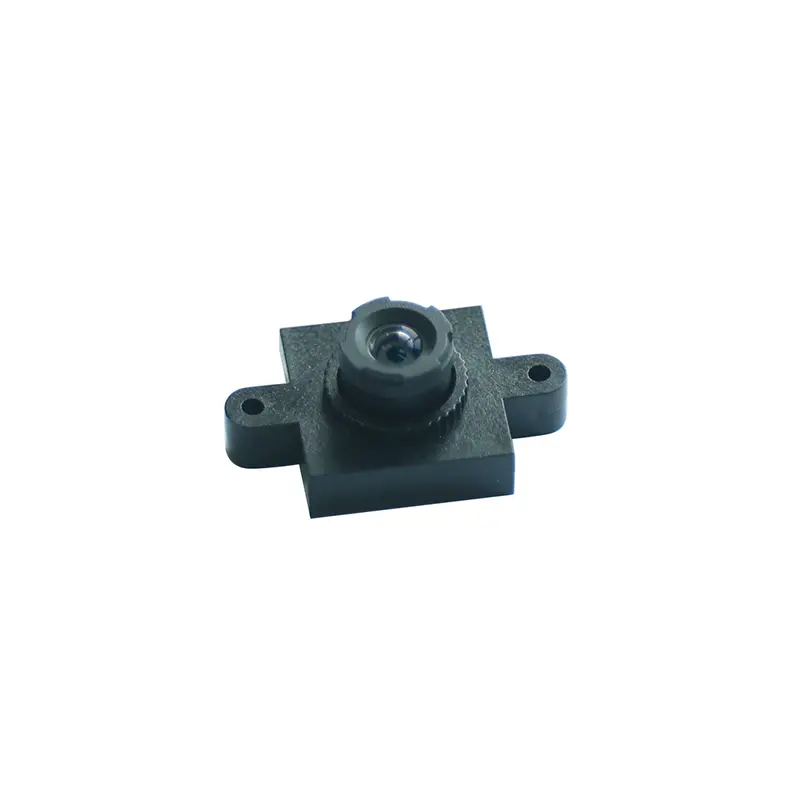
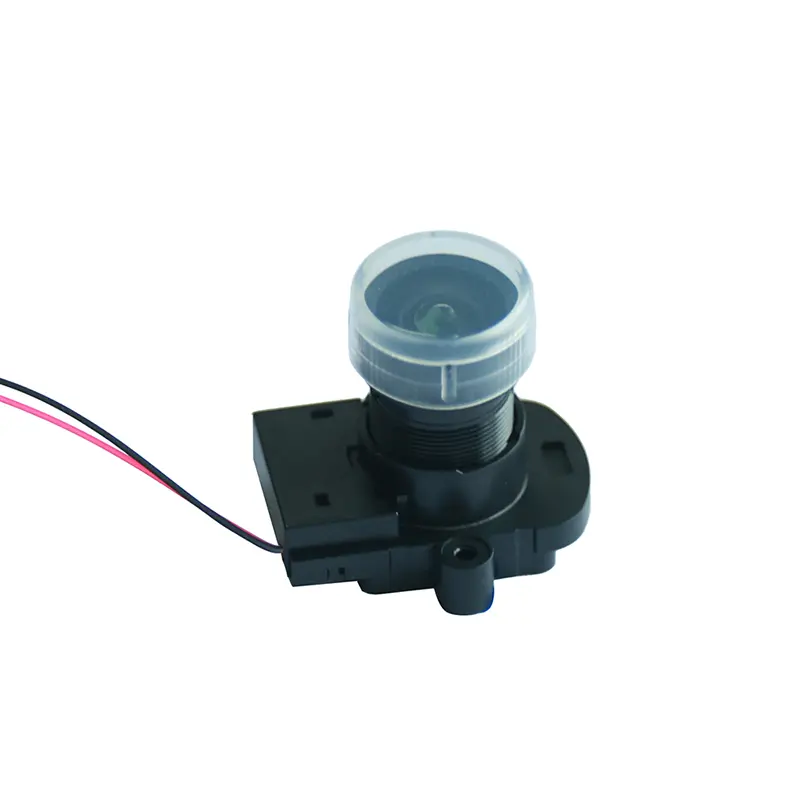
M12 mount lenses, also known as S-mount lenses, are the standard choice for home security camera lens designs due to their compact size and standardized thread pitch. Jinyuan manufactures these lenses with precise thread tolerances to prevent mechanical wobble, which can cause focus misalignment during installation or operation. The mount design is engineered to support the physical weight of larger glass elements required for wide-aperture configurations, ensuring long-term optical alignment under continuous vibrations.
Quality Control through MTF Analysis and CRA Alignment
Jinyuan utilizes Modulation Transfer Function (MTF) testing to evaluate the resolution and contrast performance of each manufactured lens batch. MTF testing measures the lens's ability to transfer detail from the object to the image sensor at different spatial frequencies. In addition, Jinyuan designs its lenses to align with the Chief Ray Angle (CRA) profiles of modern CMOS sensors. Proper CRA alignment prevents light loss and color shading near the edges of the sensor, which helps maintain image quality across the entire frame.
Matching Lenses with Sensor Formats
When selecting a lens, it must match the optical format of the camera's sensor (such as 1/1.8-inch, 1/2.7-inch, or 1/3-inch). The lens must produce an image circle large enough to cover the active area of the sensor. If a lens designed for a smaller sensor format (e.g., 1/3-inch) is paired with a larger sensor (e.g., 1/1.8-inch), the image circle will not cover the corners of the sensor. This results in vignetting, where the corners of the image appear dark or completely black.
It is also important to match the Chief Ray Angle (CRA) of the lens with the CRA of the CMOS sensor. If the angle of the light rays striking the sensor pixels is too steep, it can cause pixel crosstalk and color shading near the edges of the image. Matching these parameters helps ensure uniform brightness and color accuracy across the entire frame.
Preventing Vignetting and Corner Shading
To avoid vignetting, the diagonal of the lens's image circle must be equal to or greater than the diagonal of the sensor. For high-resolution applications, using a lens with an image circle slightly larger than the sensor diagonal can improve corner resolution, as it utilizes the center portion of the lens where aberrations are lowest. This choice helps maintain consistent sharpness and brightness from the center of the image to the corners.
Frequently Asked Questions
Q1: Why does a home security camera lens lose focus at night, and how can this be resolved?
A1: Focus loss at night is typically caused by chromatic aberration when transitioning from visible daylight to near-infrared (NIR) light. Since NIR light has a longer wavelength than visible light, it refracts at a different angle, causing it to focus on a different plane. This can be resolved by using a day/night confocal lens. These lenses are engineered with low-dispersion glass and multi-layer optical coatings that align both visible and infrared light onto the same focal plane of the CMOS sensor.
Q2: What is the difference between an M12 mount and a CS mount lens in security camera systems?
A2: M12 lenses, often called board lenses or S-mount lenses, have a 12mm thread diameter and are designed to mount directly onto the camera’s printed circuit board. They are common in compact home security cameras due to their small size and lightweight construction. CS mount lenses have a larger 25.4mm thread diameter and a longer flange focal distance. They are used in larger box cameras and often offer adjustable features such as manual zoom and focus rings.
Q3: How does the sensor size of a security camera affect the choice of lens?
A3: The lens must project an image circle that matches or exceeds the diagonal of the camera sensor. If a lens designed for a smaller sensor format (like 1/3-inch) is mounted on a larger sensor (like 1/1.8-inch), the corners of the sensor will not receive light, resulting in a dark ring around the frame (vignetting). Conversely, using a larger-format lens on a smaller sensor is functional, though it narrows the effective field of view.
Q4: Why are aspherical glass elements preferred over spherical elements in wide-angle surveillance lenses?
A4: Spherical elements have a uniform curvature, which causes light rays passing through the outer edges to focus at a different point than central rays, leading to spherical aberration and barrel distortion. Aspherical elements feature a complex, varying curvature that guides all light rays to a single focal point. This reduces geometric distortion and improves corner-to-corner sharpness, which is important for wide-angle surveillance where peripheral detail is necessary.
Q5: What is the significance of the Modulation Transfer Function (MTF) when evaluating security lenses?
A5: MTF is a metric that measures how well a lens transfers contrast from the subject to the image sensor at different resolution levels (spatial frequencies). A high MTF rating indicates that the lens can resolve fine details and maintain sharp contrast. This is important for high-resolution sensors, such as 4K or 8MP, as a lens with a low MTF would act as a bottleneck, reducing the effective resolution of the camera system.
Business Inquiry Guidance
For system integrators, camera manufacturers, and B2B distributors requiring customized optical components, Jinyuan offers dedicated engineering support. If you require specific focal lengths, custom optical coatings, or thermal-stable lens assemblies for your residential surveillance systems, please submit your technical requirements and parameters through our business inquiry channel. Our engineering team can assist you in selecting and manufacturing the correct optical components to meet your system specifications.