
Modern Intelligent Transportation Systems (ITS) depend heavily on reliable visual data. While high-resolution image sensors and AI recognition algorithms receive most of the attention, optical hardware dictates raw data quality. If an image enters the sensor blurred, distorted, or blown out by headlight glare, even advanced neural networks will fail to process it accurately.
The optical lens acts as the front line of every vision-based traffic system. Selecting the right traffic monitoring cameras lens determines whether an automated enforcement camera reads a speeding vehicle's license plate or captures an unreadable blur. At Jinyuan, we help traffic engineers and vision system integrators design and deploy field-tested optical solutions tailored to challenging outdoor environments.
This guide explains the technical criteria required to specify lenses for smart city traffic surveillance, tolling gates, intersection control, and high-speed enforcement.
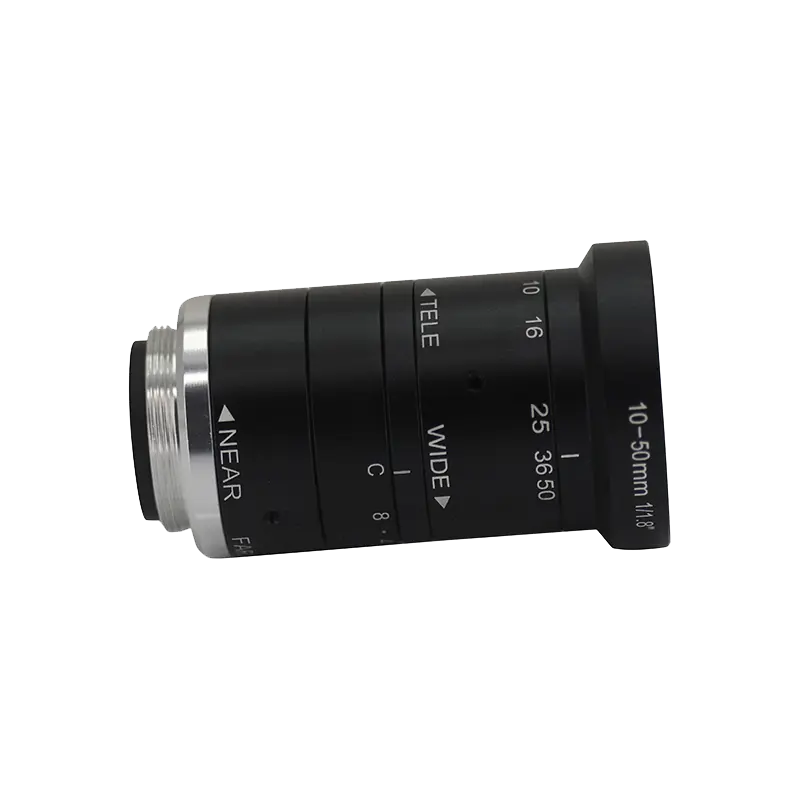
1. Match Sensor Format and Optical Resolution
Optical performance must match or exceed the specifications of the camera sensor. Using a low-grade lens on an advanced sensor causes vignetting, soft corners, and wasted processing capacity.
Sensor Format Compatibility
Traffic cameras typically utilize large sensors to capture sufficient light during night operations. Common formats include 1/1.8", 2/3", 1", and 1.1" sensors. Your lens image circle must fully cover the sensor dimensions.
A lens designed for a smaller sensor format (like 1/2.8") installed on a 1/1.8" sensor creates severe dark corners (vignetting).
A lens designed for a larger sensor can be used on a smaller sensor, which often utilizes the sharpest central portion of the glass, though it narrows the effective field of view.
Resolving Power and 4K Traffic Lens Performance
Sensor pixel sizes continue to shrink as resolutions climb to 4K and beyond. A high-pixel sensor requires a high-resolving optical assembly with high Modulation Transfer Function (MTF) values. A true 4K traffic lens delivers high contrast and edge-to-edge sharpness across millions of pixels, ensuring distant license plates remain legible at the image perimeter.
2. Balance Focal Length, Working Distance, and Field of View
Choosing between a fixed focal length lens and a motorized zoom lens depends on deployment location, installation height, and roadway geometry.
Fixed vs. Motorized Zoom Lenses
Fixed focal length lenses provide superior optical clarity, wider maximum apertures, and mechanical stability. They work best in standardized checkpoint installations where the distance between the gantry pole and the target vehicle lane remains constant.
Motorized zoom and focus lenses offer installation flexibility. Field technicians can adjust the field of view and refocus remotely from a central control room. This capability reduces roadside maintenance hours, lowers operational costs, and simplifies lane realignment in dynamic smart city traffic surveillance projects.
Calculating Required Focal Length
To determine the correct focal length, engineers must evaluate three parameters:
Target Distance (Working Distance): The physical distance from the camera mounting position to the vehicle capture zone.
Target Width (Field of View): The width of the road area covered (e.g., a single 3.5-meter lane versus a three-lane highway).
Sensor Dimensions: The physical width and height of the image sensor.
A standard formula applies:
Focal Length (mm) = (Distance to Target × Sensor Dimension) / Target Field of View
3. Aperture Engineering and Extreme Lighting Dynamics
Roadside cameras face difficult lighting challenges. Direct sunlight, deep shadows under overpasses, vehicle high-beams, and pitch-black nights occur within the same 24-hour cycle.
Large Apertures for Low-Light Capture
A fast aperture (such as F1.2 to F1.4) allows maximum light transmission to the sensor. This feature enables short shutter speeds (often 1/1000s or faster) to freeze high-speed motion at night without introducing motion blur or extreme sensor noise.
P-Iris Precision Aperture Control
Traditional DC-iris lenses often over-close under bright sunlight, causing light diffraction that softens the entire image. Modern ITS camera lens options integrate P-Iris (Precise Iris) technology. Controlled by internal stepper motors and camera software, a P-Iris system maintains the optimal aperture opening to balance light throughput with maximum depth of field, keeping both near and far vehicles in sharp focus.
4. Day/Night IR Correction and Optical Coatings
Most 24/7 traffic monitoring cameras switch between visible daylight and active infrared (IR) illumination (typically 850nm or 940nm) at night.
Eliminating Focus Shift
Standard glass bends visible light and infrared light at different angles, creating a noticeable focus shift when the camera switches modes. An IR-corrected traffic monitoring cameras lens utilizes extra-low dispersion (ED) optical glass to focus both visible and infrared wavelengths onto the exact same focal plane. This prevents blurry night captures without requiring motorized refocusing.
Anti-Reflective and Anti-Glare Coatings
Vehicle headlights point directly into roadside camera optics. Uncoated or poorly coated lenses produce internal reflections, flaring, and ghost images that obscure plate characters. High-grade multi-layer broadband anti-reflective (AR) coatings suppress unwanted light scattering and preserve high image contrast during night surveillance.
5. Optical Low Distortion for Reliable Analytics
Image processing algorithms rely on geometric accuracy to calculate vehicle speed, track lanes, and extract alphanumeric plate text.
Barrel Distortion: Curves straight lines outward, warping vehicles at the frame edges.
Pincushion Distortion: Squeezes image features inward.
A specialized ANPR/LPR lens maintains low optical distortion (often below 1% or even below 0.5%). This geometric fidelity ensures that character recognition algorithms read numbers without optical stretching, keeping automated tolling and enforcement accuracy high.
Matching Lenses to Core ITS Application Scenarios
Different ITS installations require specific optical configurations:
Automatic Number Plate Recognition (ANPR/LPR)
Checkpoints and highway gantries require narrow-angle telephoto lenses (e.g., 12-50mm, 16-85mm, or longer fixed lenses). These setups maximize pixel density on the license plate area while eliminating motion blur at vehicle speeds exceeding 120 km/h.
Intersection Control and Red-Light Enforcement (E-Police)
Intersection monitoring requires multi-lane coverage, deep depth of field, and low distortion. Lenses with focal lengths between 8mm and 25mm mounted on large-format sensors enable the camera to capture traffic signals, lane markings, vehicle positions, and driver details simultaneously.
Smart City Traffic Flow and Incident Detection
Area-wide traffic monitoring benefits from versatile varifocal or wide-angle lenses. System operators prioritize wide field coverage and stable, continuous performance over extreme telephoto reach to detect congestion, stalled vehicles, and roadway debris.
Environmental Durability for Roadside Optics
Outdoor traffic lenses operate continuously in harsh environments. Standard security lenses often degrade under these conditions.
Athermalization: Outdoor housing temperatures fluctuate from -40°C in winter to +80°C inside direct sunlight enclosures. Mechanically or optically athermalized lenses prevent focal drift caused by thermal expansion of metal barrels and glass elements.
Vibration Resistance: Traffic gantries and bridges vibrate constantly from heavy vehicle traffic and wind loads. Robust lock screws and rugged internal mechanical tracks keep focus and zoom settings locked firmly in place.
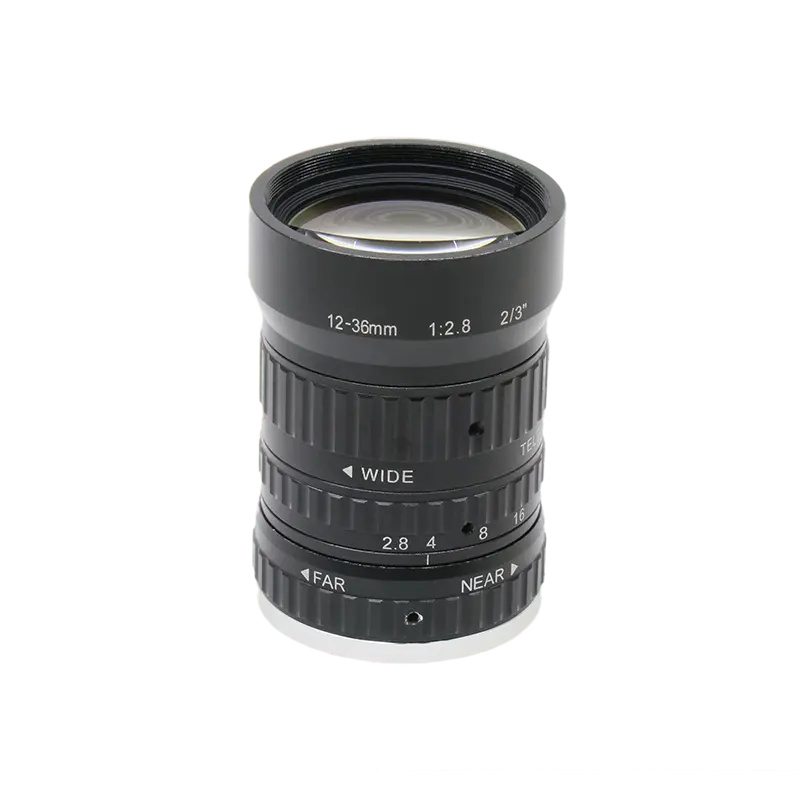
Why Partner with Jinyuan for Traffic Monitoring Optics?
Jinyuan brings over a decade of optical engineering expertise to the smart transportation sector. We design and manufacture high-precision optical components that meet rigorous ITS and industrial vision requirements.
10+ Years of Optical R&D: Our experienced engineering team designs optical assemblies tailored to demanding machine vision and surveillance standards.
ISO9001 Certified Quality: Every production batch undergoes strict quality control and MTF testing to guarantee consistent optical resolution and thermal stability.
End-to-End OEM/ODM Services: As an established custom optical lens manufacturer, Jinyuan delivers tailored solutions, including custom focal lengths, mechanical mounts, specialized coatings, and full custom optical designs.
Reliable Supply Chain: We provide rapid prototyping, competitive pricing, and scalable high-volume manufacturing to support large-scale municipal infrastructure projects.
Frequently Asked Questions
Q1: Why is an IR-corrected lens essential for ANPR systems?
A1: Standard lenses focus visible light and infrared light onto different focal planes. Without IR correction, an ANPR camera calibrated during daylight will produce blurry images at night when infrared illuminators activate. An IR-corrected lens keeps both spectrums in sharp focus continuously.
Q2: What is the primary advantage of a P-Iris lens over a traditional DC-Iris lens in traffic monitoring?
A2: A DC-Iris lens can over-close in bright daylight, leading to optical diffraction that softens image details. A P-Iris lens works with the camera software to restrict aperture shrinkage within an optimal range, preserving high image sharpness and deep depth of field across varying lighting conditions.
Q3: How does sensor size impact the choice of a traffic monitoring cameras lens?
A3: The lens image circle must equal or exceed the physical dimensions of the camera sensor. If you use a lens built for a small sensor on a larger sensor format, the image will display heavy vignetting and black borders around the edges.
Q4: Can standard CCTV security lenses be used for high-speed traffic enforcement?
A4: Standard CCTV lenses generally lack the edge-to-edge resolving power, anti-glare coatings, low distortion, and thermal stability required for automated enforcement. Traffic applications require specialized optics capable of resolving small characters on moving targets in fluctuating temperatures.
Q5: Does Jinyuan support custom lens modifications for specific ITS camera enclosures?
A5: Yes. Jinyuan provides complete OEM and ODM optical engineering services. We customize focal lengths, mechanical housing dimensions, aperture controls, lens mounts (C, CS, M12, etc.), and optical coatings to match your proprietary camera hardware.
Select the Ideal Optical Solution for Your Project
A dependable smart transportation system starts with high-performance optical design. Equipping your vision platform with the proper traffic monitoring cameras lens improves plate capture rates, reduces algorithmic errors, and minimizes long-term field maintenance costs.
Are you developing next-generation ITS hardware or deploying a municipal traffic monitoring project? Contact the Jinyuan technical team today to discuss your optical specifications, request lens samples, or explore custom OEM/ODM development solutions.