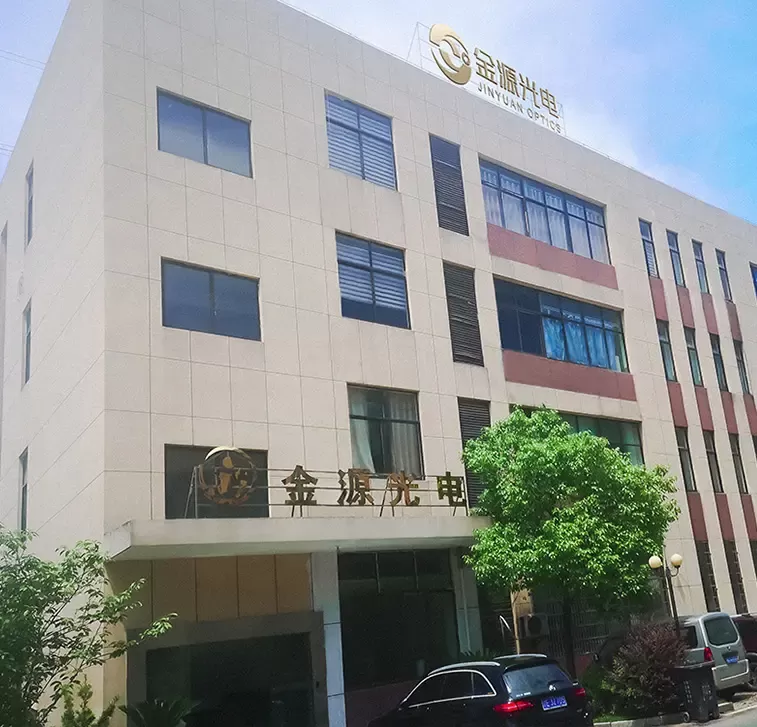

Standard off-the-shelf catalog optics often fail to meet the tight tolerances of high-performance vision systems. Modern machine vision applications demand exact optical specifications, compact barrel designs, or specialized spectrum coatings that mass-market lenses simply do not offer.
When off-the-shelf hardware limits your system, building a custom optical assembly becomes necessary. Selecting the right industrial camera lens manufacturer determines whether your product succeeds in field testing or stalls in development.
A reliable optical partner does more than grind glass to print. They validate your optical train, catch mechanical interferences early, and guarantee consistent batch performance. At Jinyuan, we help engineering teams bridge the gap between initial optical modeling and repeatable serial manufacturing. If you are developing a new vision platform, send an inquiry to our optical engineering team to assess your project specifications.
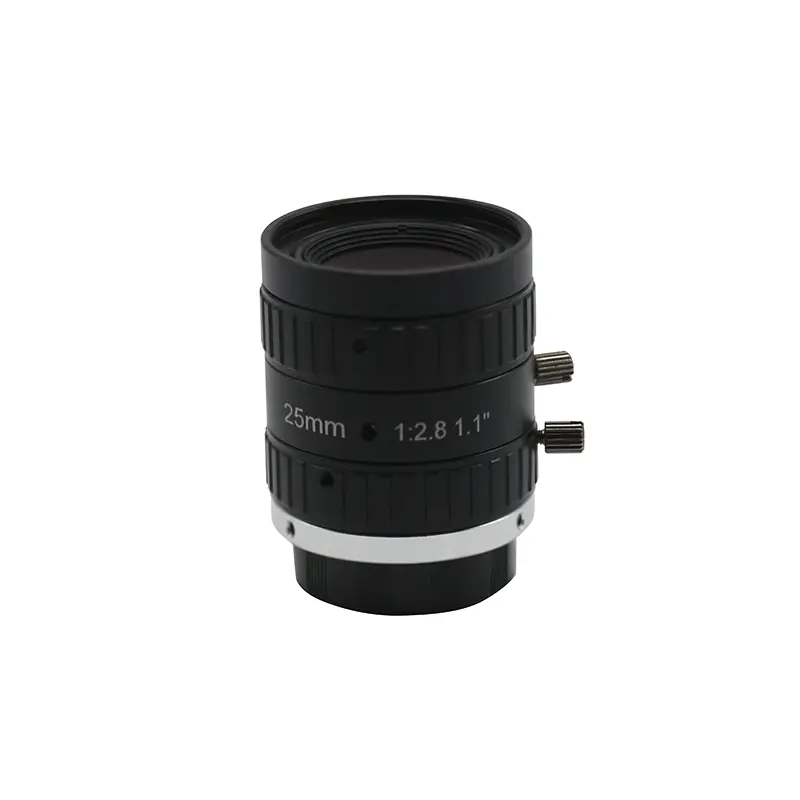
The Dilemma: Off-the-Shelf vs. Custom Machine Vision Lenses
Commercial catalog lenses work well for generic bench testing. However, production-grade vision systems frequently face physical and optical constraints that catalog items cannot solve:
- Non-standard sensor formats: Large-format line scan sensors and high-resolution area sensors often suffer from severe corner vignetting with standard C-mount lenses.
- Challenging working distances: Automated inspection cells rarely offer the luxury of arbitrary standoff distances.
- Harsh operating environments: Mobile robots, automotive platforms, and aerial drones subject optics to shock, continuous vibration, and thermal cycling.
- Spectral requirements: Standard anti-reflective coatings typically attenuate light outside the visible 400–700 nm band, rendering them ineffective for Short-Wave Infrared (SWIR) or UV sorting.
A custom solution tailors focal length, aperture, distortion parameters, and barrel geometry to your exact sensor envelope. To achieve this, you need an optical manufacturing partner capable of managing complex design variables without causing budget overruns.
1. Optical Engineering and R&D Capabilities
The foundation of any successful custom optical project lies in the engineering phase. A capable manufacturer must possess in-house design capabilities rather than outsourcing design work to third parties.
Evaluate whether the prospective supplier uses industry-standard optical design software such as Zemax OpticStudio or SYNOPSYS. Their engineering team must have direct experience running comprehensive ray tracing, stray light analysis, and wave-front aberration corrections.
Equally critical is tolerance analysis. An optical design might look flawless in simulation, but tight mechanical tolerances can make it impossible or prohibitively expensive to manufacture. Capable engineers utilize Design for Manufacturability (DFM) reviews to balance performance targets against production cost. They should follow established standards such as ISO 10110 for optical drawings to clearly define surface tolerances, centration errors, and scratch-dig specifications.
Speed to prototype also dictates your project timeline. Jinyuan brings over ten years of optical R&D expertise to the table, transforming conceptual optical layouts into working mechanical prototypes rapidly. This agility allows system integrators to evaluate prototypes on actual inspection lines weeks ahead of typical industry schedules.
2. Precision Manufacturing and Quality Assurance
Theoretical optical designs mean nothing if the manufacturing floor lacks the machinery and metrology to hold micron-level tolerances. Precision industrial cameras lenses demand rigorous production controls across every step.
Machining and Cleanroom Assembly
Review the manufacturer's machining capabilities. High-resolution machine vision demands precision-machined aluminum or brass barrels with concentricity measured in single-digit microns. Lens elements must be seated without tilt or decenter to prevent asymmetrical blur.
Assembly must take place in controlled cleanroom environments (typically ISO Class 5 to Class 7). Even a single microscopic dust particle on an internal element can ruin the contrast on a 20-megapixel sensor or cast shadows on wafer-inspection images.
Metrology and Testing Equipment
Never partner with a lens supplier that cannot verify its own optical components. Ask which metrology instruments they deploy on the shop floor:
- Interferometers: Used to check surface figure accuracy and radius of curvature of bare optical elements.
- Optical Centration Testers: Used to measure the runout and tilt of cemented doublets and mechanical seatings.
- Modulation Transfer Function (MTF) Benches: The gold standard for verifying resolution and image contrast across the entire field of view, as detailed by testing methodologies documented through SPIE optical engineering resources.
- Spectrophotometers: Essential for verifying spectral transmission curves of optical thin-film anti-reflective coatings.
Verify that the company holds an accredited ISO 9001 quality management certification. ISO compliance proves that the factory enforces documented material inspections, in-process testing, and batch traceability from raw optical glass to packed cargo.
3. Breadth of Customization and Application Experience
Industrial imaging is not a one-size-fits-all discipline. An optical shop that only manufactures standard CCTV security lenses will struggle with the micron-level resolving power required for semiconductor inspection. Select a supplier that demonstrates cross-disciplinary manufacturing capability across various product families:
- Factory Automation (FA) Lenses: Low-distortion, high-resolution optics built to withstand industrial factory automation lines.
- Telecentric and Microscopic Optics: Objective and eyepiece lenses engineered for high magnification and zero perspective error in precision metrology.
- Ruggedized Automotive and Drone Optics: Lightweight, compact fixed-focus lenses engineered with glued elements and athermalized barrels to resist mechanical shock and thermal shifts.
- Specialized Security and Night Vision: Wide-aperture lenses with optimized infrared coatings for low-light surveillance.
Jinyuan maintains a versatile production profile, manufacturing custom solutions that span industrial automation, intelligent transportation systems, medical imaging, and aerial scanning. This broad industry footprint ensures our production engineers understand the specific optical trade-offs your working environment requires.
4. Supply Chain Agility, Lead Times, and Communication
Commercial factors often dictate project success just as much as technical capabilities. Protracted development delays or poor technical communication can disrupt product launch schedules.
Direct communication between your engineers and the manufacturer's optical designers eliminates the "translation gap." When non-technical sales brokers manage communication, complex technical requirements like back focal distance tolerances, sensor chief ray angle (CRA) matching, and optical distortion limits get lost.
Inquire about realistic prototype and production lead times upfront:
- Optical modeling and DFM reports: 1 to 2 weeks.
- First Article Prototyping: 4 to 8 weeks, depending on whether custom glass melt batches or specialized tooling are required.
- Pilot to mass production ramp: 6 to 10 weeks.
A vertically integrated manufacturer controls processing in-house—from grinding, polishing, and thin-film coating to CNC metal housing machining and final assembly. This vertical integration reduces supply chain markups and prevents production bottlenecks.
Jinyuan leverages in-house fabrication lines and streamlined supply routes to deliver competitive unit pricing and predictable lead times. Our consultative engineering sales team speaks your technical language, preventing expensive design revisions before metal cutting begins.
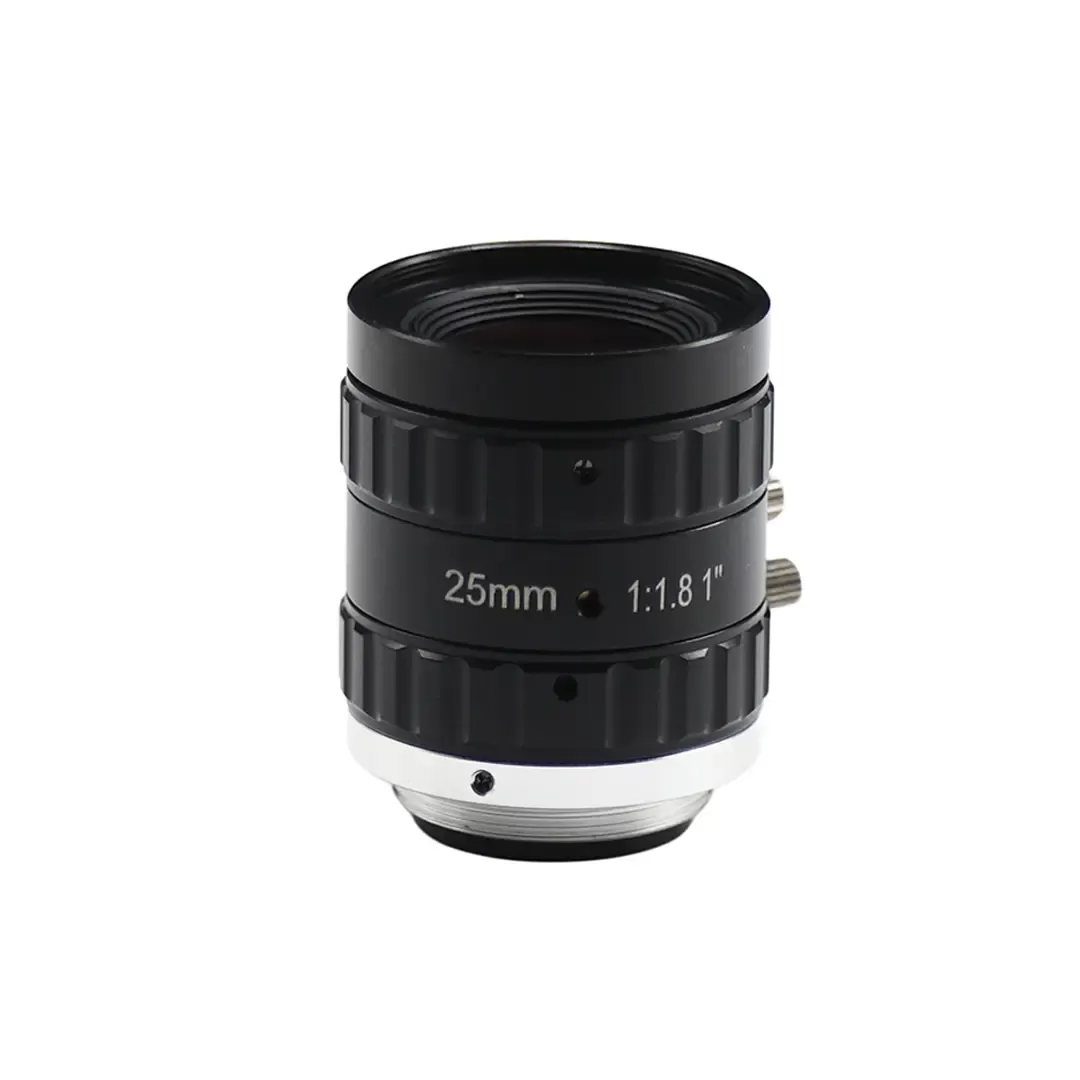
Key Questions to Ask Prospective Lens Manufacturers
Before issuing a formal Request for Quotation (RFQ), present the manufacturer with this targeted qualification checklist:
- Can you provide simulated MTF and distortion curves based on our specific sensor format and working distance?
- How do you handle thermal drift, and can you offer an athermal optical barrel design if our system operates between -20°C and +70°C?
- What specific MTF testing equipment do you use to qualify production units before shipment?
- Do you provide full First Article Inspection (FAI) reports with every prototype delivery?
- What are your standard Minimum Order Quantities (MOQ) for custom-machined optics after prototype sign-off?
Sourcing dependable custom industrial cameras lenses requires vetting more than just unit prices on a quotation sheet. You need a dedicated manufacturing partner that brings rigorous optical design capabilities, accredited ISO 9001 production disciplines, comprehensive metrology, and open engineering communication to every project phase.
With more than a decade of proven design and manufacturing expertise, Jinyuan transforms complex optical concepts into production-ready imaging products. Whether you need an athermalized lens for outdoor vision or a low-distortion objective for micro-inspection, our team delivers consistent quality at scale.
Ready to start your custom lens project? Contact Jinyuan's engineering team today to request a technical review of your optical specifications and get a competitive quotation.
Frequently Asked Questions (FAQ)
Q1: What is the typical lead time for custom industrial cameras
lenses prototyping?
A1: Custom optical prototyping generally takes
between 4 and 8 weeks following optical design sign-off. The exact timeline
depends on the availability of raw optical glass types, mechanical tooling
requirements, and the complexity of the anti-reflective coatings.
Q2: Why is Chief Ray Angle (CRA) matching critical when customizing
an industrial lens?
A2: CRA describes the angle at which light rays
strike the image sensor surface. If the exit pupil of the custom lens does not
align closely with the sensor’s micro-lens array acceptance angle, the system
suffers from severe pixel crosstalk, shading, and chromatic shifts around image
borders.
Q3: How does MTF validation differ from simple optical bench
resolution tests?
A3: Simple resolution charts (such as USAF 1951
targets) rely on subjective human inspection to determine resolving limits. In
contrast, automated Modulation Transfer Function (MTF) benches scientifically
quantify contrast transfer across distinct spatial frequencies (line pairs per
millimeter) across both sagittal and tangential planes.
Q4: Can Jinyuan customize lens housings to fit non-standard mounting
envelopes?
A4: Yes. Beyond standard C-mount, CS-mount, and
M12/S-mount configurations, our CNC machining facility can engineer custom
mounting flanges, integrated lock screws for focus and iris, or compact
footprints tailored for tight spaces inside industrial machinery and UAV
gimbals.
Q5: What is the minimum order quantity (MOQ) for custom industrial
camera lens manufacturing?
A5: While early prototype stages
accommodate small engineering batches of 5 to 10 units for system integration
testing, standard mass-production runs typically begin at 100 to 500 units per
batch, depending on component complexity and raw material requirements.