
Modern imaging applications in industrial automation, intelligent transport systems, and security surveillance demand high spatial resolution within small mechanical envelopes. To meet these demands, hardware designers often turn to the S-mount format, commonly referred to as the M12 mount. Within this category, integrating a high-quality Megapixel Mtv Lens is a common method for achieving high-fidelity image capture without increasing the overall size of the camera assembly. As sensor pixels continue to shrink, understanding the relationship between the optical lens assembly and the sensor architecture is necessary for successful system integration.
Jinyuan provides optical solutions designed to address the challenges of high-resolution imaging. Selecting the correct lens requires looking beyond basic focal length specifications. This guide examines the optical parameters, common system design challenges, and selection criteria that procurement managers and optical engineers must evaluate when sourcing these components for commercial projects.
Optical Specifications and Engineering Principles of the Megapixel Mtv Lens
An M12 or MTV lens is characterized by its metric M12x0.5 thread. Historically, these lenses were used in standard-definition analog CCTV systems where low resolution was acceptable. The advent of modern CMOS sensors with pixel sizes under 2.0 microns has required a major redesign of these compact optical elements. A standard lens cannot resolve the fine details required by a multi-megapixel sensor, resulting in blurry images, chromatic aberrations, and poor contrast.
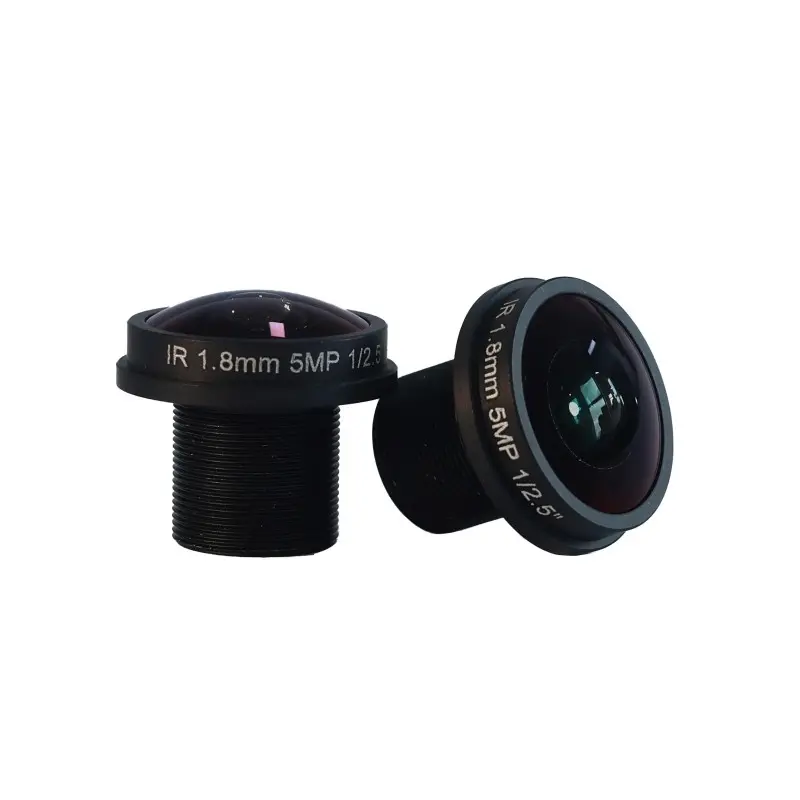
A true Megapixel Mtv Lens is engineered to project a highly detailed image onto the active area of the sensor. This capability depends on several interrelated optical parameters:
Modulation Transfer Function (MTF): MTF measures the lens's ability to transfer contrast from the subject to the sensor at specific spatial frequencies, measured in line pairs per millimeter (lp/mm). High-resolution lenses maintain a high MTF even at high spatial frequencies, which corresponds to sharp edges and clear transitions between dark and light pixels.
Pixel Pitch Matching: For a sensor with a 5-megapixel resolution on a 1/2.5-inch format, the pixel size is relatively small. The lens must have a resolving power that matches or exceeds this pixel pitch. If the spot size of the lens is larger than the pixel size of the sensor, the additional sensor resolution is wasted.
Relative Illumination: Standard wide-angle lenses often suffer from severe vignetting, where the corners of the image are noticeably darker than the center. High-quality designs maintain relative illumination above 70% across the entire image circle, ensuring consistent brightness across the sensor field.
Designing a Megapixel Mtv Lens: Glass Selection and Mechanics
The performance of an MTV lens is determined by the quality of its optical design and the materials used in its construction. Unlike basic plastic lenses used in toy cameras, professional-grade lenses utilize multi-element glass designs to correct common optical aberrations.
Spherical aberration occurs when light rays passing through the edges of a lens focus closer to the lens than light rays passing through the center. To counteract this, designers incorporate aspherical lens elements. These elements have a surface profile that departs from a perfect sphere, allowing all light rays to focus at a single point. This is particularly important for lenses with wide apertures, such as F1.6 or F2.0, where light gathering is maximized.
Another factor is the choice of optical glass. Using low-dispersion glass helps minimize chromatic aberration, which is the failure of different wavelengths of light to focus on the same plane. When selecting a Megapixel Mtv Lens for outdoor applications, infrared (IR) correction is often necessary. During the day, visible light is utilized; at night, IR illumination is active. Without IR correction, the shift in wavelength causes the image to go out of focus at night. IR-corrected lenses use specialized coatings and glass materials to ensure that both visible and near-infrared light focus on the same sensor plane, eliminating the need for manual refocusing.
Addressing Optical Challenges in High-Definition Systems
Integrating compact lenses into high-resolution systems often reveals physical limitations that must be managed through careful optical engineering. When configuring a vision system, engineers frequently encounter three major challenges: distortion, sensor compatibility, and thermal drift.
1. Managing Radial Distortion
Wide-angle lenses are prone to barrel distortion, where straight lines curve outward near the edges of the frame. In security applications, this may be acceptable, but in machine vision or automated inspection, distortion introduces measurement errors. The formula for radial distortion is expressed as:
D = (Y_actual - Y_ideal) / Y_ideal * 100%
Where Y_actual is the actual image height and Y_ideal is the predicted image height based on paraxial optics. Optical manufacturers like Jinyuan design low-distortion M12 lenses that keep radial distortion below 1% or even 0.5% for precise measurement applications, eliminating the need for extensive digital correction in software.
2. Sensor Format and Image Circle Compatibility
Every lens is designed to project an image circle of a specific diameter. This circle must cover the diagonal dimension of the image sensor. Common sensor formats include 1/4", 1/3", 1/2.7", 1/2", and 1/1.8". If a lens designed for a 1/4" sensor is paired with a 1/2" sensor, the corners of the sensor will remain dark, causing severe vignetting. Conversely, using a lens designed for a large sensor on a small sensor is optically acceptable, though it narrows the effective field of view (FOV) and may result in using only the central, highest-quality portion of the lens optics.
3. Thermal Stability and Focusing Precision
In outdoor environments, temperature fluctuations cause mechanical expansion and contraction within the lens barrel. Plastic lens barrels can shift significantly over a wide temperature range, leading to focus drift. Metal housings and high-precision brass or aluminum threads are utilized in industrial-grade lenses to maintain mechanical alignment. This ensures that the distance between the rear lens element and the sensor remains stable, preventing defocusing when operating in temperatures ranging from -20°C to +60°C.
Key Applications in Industrial and Commercial Sectors
The compact footprint and high resolving power of these lenses make them suitable for various modern vision systems. Understanding the specific requirements of each application helps in selecting the appropriate lens model.
Intelligent Transportation Systems (ITS)
Traffic monitoring and automated license plate recognition (ALPR) systems require high contrast and sharp focus across the entire frame. These systems operate 24 hours a day under varying weather and lighting conditions. An IR-corrected, high-resolution lens allows cameras to capture clear vehicle details and license plates at high speeds, even under challenging night-time IR illumination.
Factory Automation and Automated Optical Inspection (AOI)
On assembly lines, cameras are used to inspect solder joints, verify component placement, and read barcodes. Space is often limited inside industrial machinery, making the M12 form factor highly desirable. A low-distortion Megapixel Mtv Lens ensures that the geometry of the inspected part is not warped by the optics, allowing the vision software to make accurate dimensional measurements down to the micrometer level.
Smart Retail and Security Surveillance
High-resolution dome and bullet cameras rely on wide-angle, high-definition lenses to monitor large areas without losing detail in the periphery. Utilizing a high-megapixel lens ensures that digital zoom can be applied to recorded footage to identify faces or objects without significant pixelation.
Sourcing and Customization Criteria for OEM/ODM Buyers
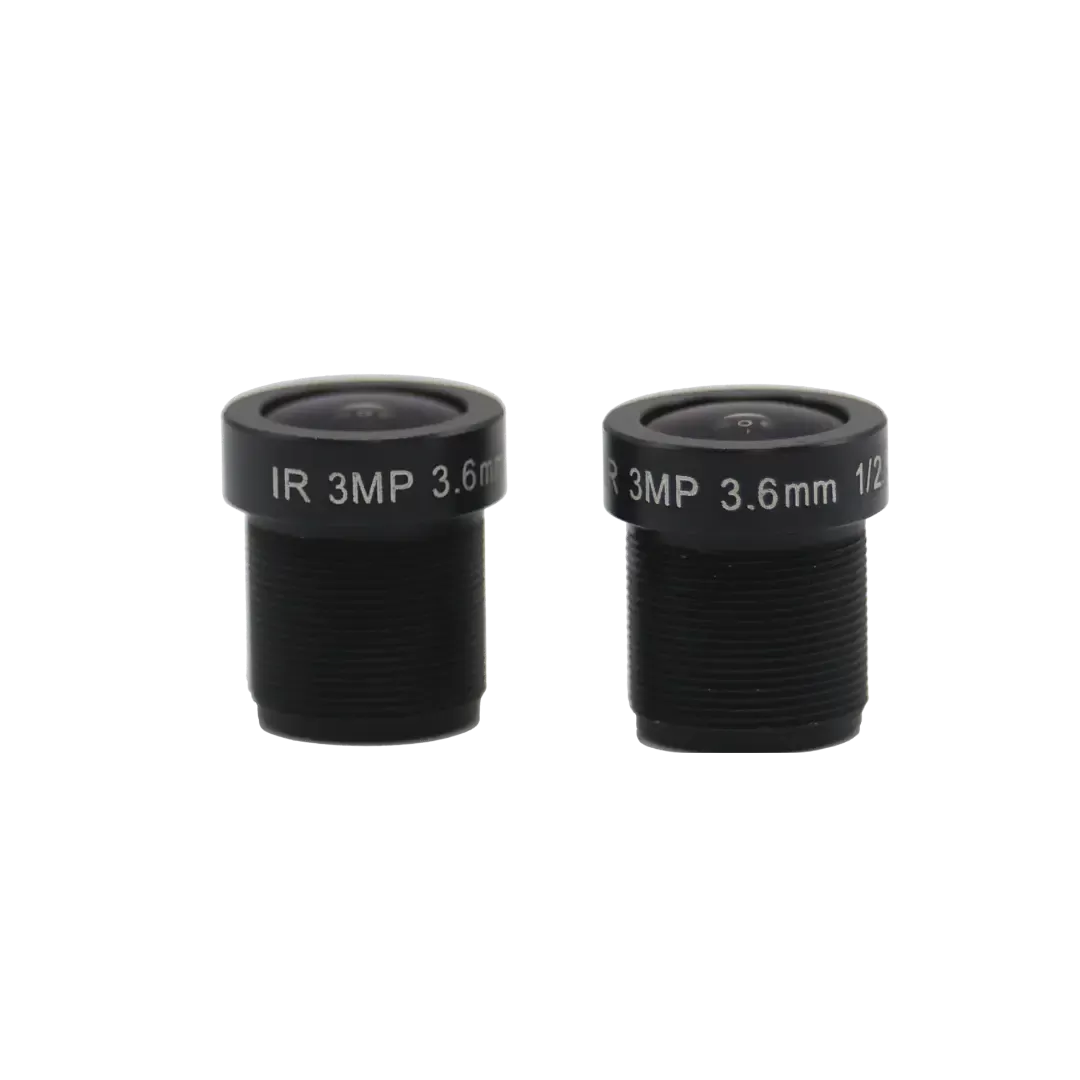
When procurement managers evaluate optical components, they must consider long-term reliability and consistency across production batches. Selecting the appropriate Megapixel Mtv Lens requires a balance of optical performance, mechanical durability, and cost-efficiency.
Manufacturing tolerances play a major role in the yield rate of high-resolution cameras. In low-cost lenses, slight variations in lens element centering can cause asymmetric blur, where one side of the image is sharp while the opposite side is out of focus. Professional manufacturers maintain tight centering tolerances during assembly and utilize active alignment (AA) techniques. Active alignment involves monitoring the live optical output of the lens assembly while positioning the optical elements, ensuring that the sensor and lens planes are aligned.
For custom integration projects, standard off-the-shelf lenses may not always meet the mechanical or optical requirements. In such cases, customization services are necessary. Jinyuan assists clients in modifying parameters such as back focal length, focal length, aperture size, or housing materials to fit specific camera housings or environmental requirements. This ensures that the final assembly meets the thermal and mechanical demands of the target environment.
Frequently Asked Questions
Q1: What is the main difference between a standard M12 lens and a Megapixel Mtv Lens?
A1: Standard M12 lenses are designed for low-resolution, analog sensors and cannot resolve the fine details required by modern sensors. A megapixel-rated lens utilizes high-index glass elements, advanced coatings, and precise manufacturing tolerances to resolve high spatial frequencies, matching the pixel density of multi-megapixel CMOS sensors.
Q2: How does the sensor size affect the field of view of an MTV lens?
A2: The field of view is determined by the focal length of the lens and the physical dimensions of the active area on the sensor. For a fixed focal length, a larger sensor format will produce a wider field of view, while a smaller sensor format will result in a narrower, cropped field of view.
Q3: Why is infrared (IR) correction important for outdoor security cameras?
A3: Visible light and near-infrared light have different wavelengths, which causes them to refract differently as they pass through optical glass. Without IR correction, a camera focused during the day will become out of focus under infrared illumination at night. An IR-corrected lens aligns the focal planes of both light spectrums to maintain sharp focus around the clock.
Q4: Can a lens designed for a 5MP sensor be used on a 2MP sensor?
A4: Yes. Using a higher-rated optical lens on a lower-resolution sensor is acceptable and often results in excellent image contrast and clarity, as the lens easily resolves the larger pixels of the lower-resolution sensor. However, the reverse configuration is not recommended, as a lower-rated lens will limit the performance of a high-resolution sensor.
Q5: What is the benefit of a metal lens barrel over a plastic lens barrel?
A5: Metal barrels offer superior thermal stability, maintaining precise lens element spacing over wide temperature ranges. They also provide stronger physical protection, higher thread durability during installation, and better resistance to shock and vibration in industrial environments.
Inquiry and Custom Optical Solutions
Sourcing the right optical components is a critical step in the development of any vision system. Jinyuan designs and manufactures high-performance optical lenses to meet the demands of commercial, industrial, and security applications. Whether your project requires standard configurations or custom optical design adjustments, our engineering team can provide technical support, detailed optical simulation data, and evaluation samples. Please contact our sales department with your specific project parameters to receive a detailed quote and technical consultation.