
Alternative Title 1 (Numeric): 5 Key Factors to Consider When Selecting a Dc Iris Varifocal Lens for Security Systems
Alternative Title 2 (Question): How Does a Dc Iris Varifocal Lens Improve Image Quality in Variable Lighting?
Alternative Title 3 (Benefit): Maximize Surveillance Precision with a High-Performance Dc Iris Varifocal Lens
Modern surveillance and industrial imaging systems operate under highly unpredictable conditions. Outdoors, light levels change dramatically from dawn to dusk, shifting from bright, direct sunlight to complete darkness within a few hours. Indoors, artificial lighting can introduce flicker, shadows, and varying intensity. To capture clear, usable video footage under these volatile conditions, optical systems must automatically control the amount of light reaching the image sensor while maintaining the desired field of view. This requires a balanced physical control mechanism rather than relying solely on digital sensor adjustments.
An industry standard for handling these demands is the Dc Iris Varifocal Lens, a versatile optical assembly designed to adapt to shifting environments. By combining adjustable focal lengths with an automated, camera-controlled iris diaphragm, this category of lenses provides a balanced solution for system integrators, security professionals, and industrial vision engineers. This article provides an objective, in-depth analysis of the underlying physics, mechanical design, selection criteria, and operational challenges associated with these optical systems.
The Electro-Mechanical Principles of DC Iris Control
The iris is the component of a lens that regulates the aperture size, thereby controlling the depth of field and the quantity of light that passes through to the sensor. Unlike manual irises, which require physical adjustment, or motorized irises, which rely on external command signals, auto-iris systems adjust automatically in response to changes in ambient light.
To understand the function of a self-adjusting aperture, it is helpful to compare the two primary types of auto-iris control: video iris and DC iris.
Video Iris: In a video iris system, the amplifier circuitry resides within the lens housing itself. The lens receives a composite video signal from the camera, demodulates it, and uses the signal level to drive the iris motor. While effective, this adds bulk and cost to the lens assembly.
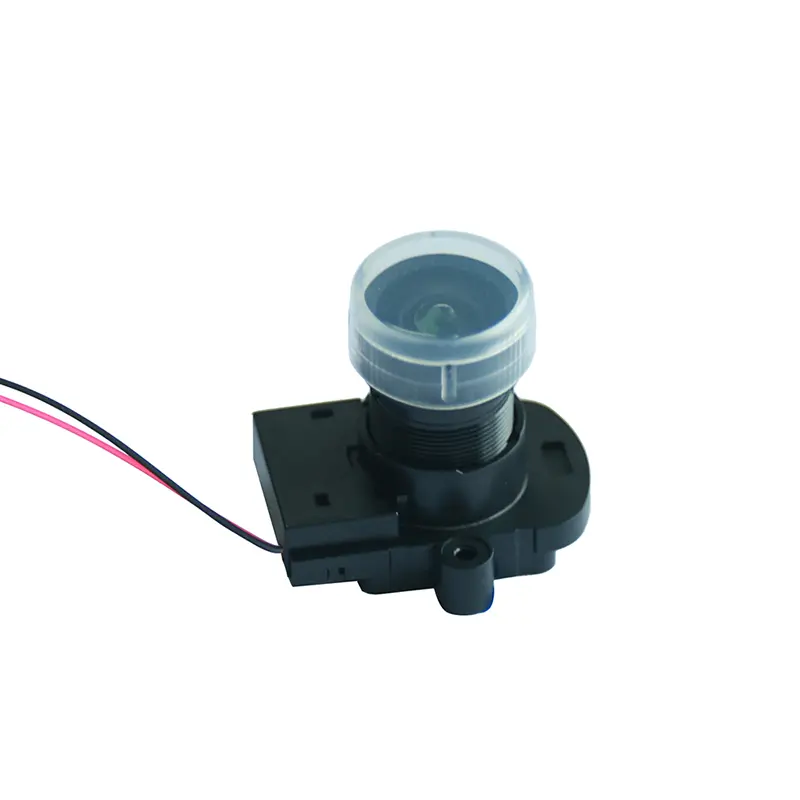
DC Iris: This system delegates the control circuitry to the camera body. The lens housing contains only the physical drive coil and a damping coil (a galvanometer arrangement). The camera's digital signal processor (DSP) continuously analyzes the incoming video frame's average luminance. If the image is too bright, the camera sends a small direct current (DC) to the drive coil, which creates a magnetic field that moves the iris blades closer together, reducing the aperture. Conversely, if the scene is too dark, the current is adjusted to open the blades.
Integrating a Dc Iris Varifocal Lens into a surveillance or industrial system allows for continuous operation without manual iris adjustment. This approach offers several engineering advantages:
Reduced Lens Cost and Size: Moving the control electronics from the lens to the camera simplifies the lens's internal design, reducing both the overall physical footprint and manufacturing costs.
Improved Mechanical Reliability: With fewer electronic components inside the lens housing, the system is less susceptible to thermal stress and mechanical vibration, which is a key factor in long-term outdoor deployments.
Direct Sensor-Level Control: The camera's image processor can use sophisticated exposure algorithms to balance sensor gain, shutter speed, and iris position simultaneously, leading to more stable exposure control across high-contrast scenes.
Varifocal Mechanics and Optical Design
While the DC iris manages exposure, the varifocal mechanism provides flexibility in field of view (FOV). Unlike a fixed-focal lens, which has a set angle of view, or a parfocal zoom lens, which maintains focus throughout the zoom range, a varifocal lens allows the operator to adjust the focal length manually or via a motor during installation to achieve the exact framing required. Once the desired field of view is set, the installer must adjust the focus ring to secure a sharp image. This provides a cost-effective alternative to continuous zoom lenses for installations where the field of view is only adjusted during setup.
When configuring a Dc Iris Varifocal Lens, understanding the relationship between focal length and field of view is fundamental. A shorter focal length (e.g., 2.8 mm) provides a wide-angle view, suitable for general area monitoring. A longer focal length (e.g., 12 mm or 50 mm) narrows the angle of view, bringing distant objects closer, which is necessary for license plate recognition (LPR) or facial identification. The mathematical relationship between the focal length ($f$), the sensor dimension ($h$), and the horizontal field of view ($FOV$) is defined by the formula:
FOV = 2 × arctan(h / 2f)
Optical composition within these lenses is highly complex. Inside the lens barrel, multiple glass elements are arranged in groups. The zoom group moves along the optical axis to change the focal length, while the focus group moves to compensate for the focus shift caused by the zoom movement. High-quality lenses utilize low-dispersion glass and specialized multi-coatings to reduce chromatic and spherical aberrations, ensuring that light across the visible and near-infrared spectrum focuses onto the exact same focal plane.
Addressing Common Industry Pain Points in Outdoor Surveillance
System integrators face persistent challenges when deploying optical systems in demanding outdoor or industrial settings. Understanding these pain points and how advanced lens design addresses them is vital for reliable system deployment.
1. Focus Shift under Infrared (IR) Illumination
Many security cameras use infrared illuminators for night vision. Because infrared light has a longer wavelength than visible light, it refracts at a different angle when passing through standard glass. This discrepancy causes a "focus shift" between day and night, resulting in blurry nighttime footage even if the daytime image was clear. To resolve this, high-performance lenses incorporate IR-corrected glass. By using materials with specific refractive properties, manufacturers ensure that both visible light (approx. 400–700 nm) and near-infrared light (approx. 850 nm) converge on the same sensor plane, eliminating the need for constant refocusing.
2. Diffraction Limits and the "Pinhole" Effect
In extremely bright environments, such as direct sunlight on snow or reflective facades, a DC iris will close the aperture to its minimum size (often F/16 or higher). When the aperture becomes extremely small, light waves passing through begin to bend around the edges of the iris blades—a physical phenomenon known as diffraction. This diffraction limits the maximum resolvable resolution of the lens, making the image appear soft or muddy despite the abundance of light. Advanced lens designs mitigate this by using neutral density (ND) filters integrated directly onto the center of the iris blades. When the blades close, the ND filter covers the optical path, reducing light transmission without requiring the physical aperture to shrink to a diffraction-limiting size.
3. Thermal Expansion and Environmental Durability
Outdoor cameras are subjected to extreme temperature fluctuations. Thermal expansion can cause the metal and plastic components of the lens barrel to expand or contract, shifting the internal lens elements by fractions of a millimeter. This subtle shift is often enough to degrade focus, particularly on high-megapixel sensors with tight pixel pitches. To maintain stability, manufacturers utilize optomechanical designs that pair materials with opposing thermal expansion coefficients, effectively self-compensating for temperature fluctuations from -20°C to +60°C.
Key Selection Parameters for System Integrators
When specifying a lens for a project, several parameters must be evaluated to ensure compatibility and performance. Choosing mismatched components can lead to vignetting, poor resolution, or complete system incompatibility.
Sensor Format Compatibility: The lens must project an image circle that is equal to or larger than the active area of the camera's image sensor. For example, a 1/2.7-inch lens can be used on a 1/2.7-inch or 1/3-inch sensor, but using it on a 1/2-inch sensor will result in severe vignetting (dark corners).
Aperture Range (F-Number): The maximum aperture (e.g., F/1.4) determines the lens's light-gathering ability in low-light environments. A lower F-number allows more light to pass, reducing the camera's reliance on digital gain, which introduces noise.
Resolution Capability (Megapixel Rating): High-resolution sensors require lenses with high optical resolving power. A standard analog-era lens paired with an 8-megapixel (4K) sensor will yield a blurry, low-contrast image because the lens cannot resolve the fine details the sensor is capable of capturing.
Mount Types: The physical connection between the camera and the lens must match. CS-mount and C-mount are the industry standards for varifocal security lenses. A CS-mount lens has a flange focal distance of 12.526 mm, whereas a C-mount lens has a distance of 17.526 mm. While a C-mount lens can be mounted on a CS-mount camera using a 5 mm spacer ring, a CS-mount lens cannot be used on a C-mount camera.
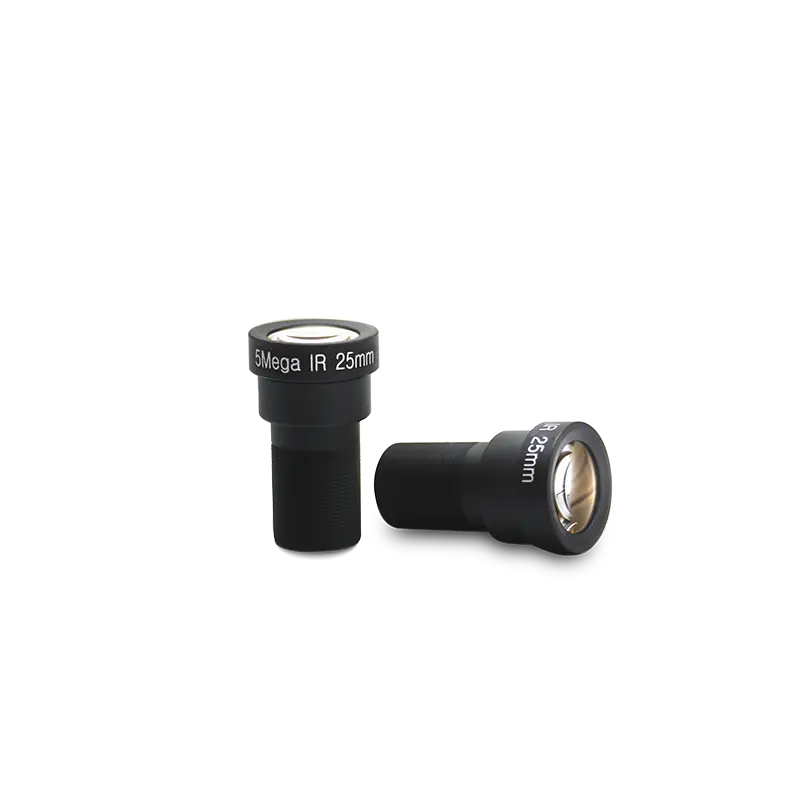
For instance, Jinyuan offers a high-performance Dc Iris Varifocal Lens engineered with precision-ground glass to minimize aberration and maximize light throughput across challenging focal ranges. By focusing on mechanical tolerance and material longevity, Jinyuan ensures that each lens assembly maintains optical alignment under continuous outdoor exposure.
Practical Applications in Diverse Industries
The flexibility of this lens category makes it a preferred choice across several key sectors where lighting conditions cannot be controlled.
Traffic Monitoring and Automated Number Plate Recognition (ANPR)
Speeding vehicles, headlights, and changing weather conditions require extremely fast exposure adjustments. The automated iris responds rapidly to high-contrast headlight glare, while the varifocal feature allows operators to adjust the field of view to cover specific lanes of traffic. This ensures that the system captures sharp, high-contrast images of license plates both during the day and under night-time headlight illumination.
Perimeter Security for Sensitive Infrastructure
Industrial yards, airports, and power stations require wide-area monitoring combined with the ability to zoom in on vulnerable points. The continuous adjustment capability of the auto-iris ensures reliable monitoring during transition periods like sunrise and sunset, when the angle of sunlight can easily blind standard fixed-iris cameras.
Logistics and Warehousing
Large distribution centers present complex lighting challenges, with bright skylights contrasting with dark shelving aisles. Lenses must adapt dynamically as cameras pan across these high-contrast zones to ensure labels, barcodes, and safety corridors remain legible to both human operators and automated tracking software.
Selecting the appropriate Dc Iris Varifocal Lens requires a systematic evaluation of environmental factors, sensor specifications, and lighting variance. As a dedicated manufacturer, Jinyuan focuses on precise component alignment to deliver consistent optical performance, ensuring that system integrators receive reliable hardware that minimizes maintenance overhead.
Frequently Asked Questions
Q1: What is the primary difference between a DC iris and a manual iris lens?
A1: A manual iris lens requires physical intervention to adjust the aperture, making it suitable for environments with constant, controlled lighting, such as indoor studios. A DC iris lens connects to the camera's processor, which dynamically adjusts the aperture size via an internal drive motor to maintain consistent exposure in environments with changing light levels.
Q2: Can a CS-mount lens be used on a C-mount camera?
A2: No, a CS-mount lens cannot be used on a C-mount camera because the flange focal distance of a CS-mount lens (12.526 mm) is shorter than the physical depth required by a C-mount camera (17.526 mm). This prevents the lens from focusing. However, a C-mount lens can be used on a CS-mount camera by adding a 5 mm adapter ring.
Q3: How does IR correction prevent focus shift in security cameras?
A3: Standard glass refracts visible and infrared light differently, causing them to focus on different planes, which leads to blurry night images. IR-corrected lenses use specialized low-dispersion optical glass and unique coatings to ensure both visible and near-infrared wavelengths focus at the exact same point on the sensor, keeping images sharp day and night.
Q4: What happens if a lens with a small sensor format is mounted on a larger sensor camera?
A4: If the lens's optical format is smaller than the camera's sensor size (for example, a 1/3-inch lens on a 1/2-inch sensor), the projected image circle will not cover the entire sensor surface. This results in vignetting, where the corners and edges of the captured image appear dark or completely black.
Q5: Why does an image sometimes look blurry in very bright sunlight when using a DC iris?
A5: In intense sunlight, the DC iris closes to a very small aperture to restrict light. When the aperture becomes too small, light waves bend around the edges of the iris blades, causing diffraction. This physical limitation reduces the overall contrast and resolution of the image, making it look soft. Some lenses use integrated neutral density filters on the iris blades to prevent this.
B2B Inquiry and Consultation
Determining the precise optical specifications for your project is key to ensuring long-term system performance. Jinyuan provides tailored advice and robust optical solutions to meet specific integration requirements. Contact the engineering team at Jinyuan to discuss your custom focal length, sensor compatibility, or mechanical requirements and request a detailed quotation.