
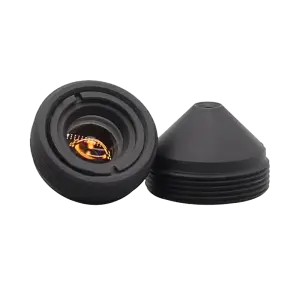
S-mount optics, commonly known as M12 lenses, are a cornerstone of modern compact vision systems. As industries demand smaller footprints without sacrificing image quality, understanding the nuances of these micro-optics becomes necessary for system integration. Selecting the appropriate lens assembly involves balancing optical performance, mechanical constraints, and environmental durability. At Jinyuan, we recognize that small-scale optical design requires meticulous planning to achieve the desired resolution and reliability in industrial environments.
Historically, miniature cameras relied on larger C-mount or CS-mount configurations to maintain optical clarity. Modern advancements in optical manufacturing have enabled M12 lenses to deliver high-resolution capabilities that rival their larger counterparts. This shift has enabled new design possibilities in automated systems, robotics, and embedded vision applications where space and weight are strictly limited.
Optical Parameters and Sensor Compatibility
Sensor Format and Image Circle Matching
A primary consideration when selecting a lens is matching its image circle to the diagonal of the image sensor. If the image circle is smaller than the sensor, vignetting occurs, resulting in dark corners or lost data at the edges of the frame. Conversely, utilizing a lens with an excessively large image circle on a small sensor restricts the field of view and wastes potential sensor area. M12 lenses are commonly designed for formats ranging from 1/4-inch up to 1/1.8-inch, and occasionally 2/3-inch for specialized designs. Precision alignment during the assembly phase ensures that the optical axis aligns precisely with the center of the sensor active area.
Focal Length and Field of View Calculations
The focal length of the lens directly dictates the field of view (FOV) for a given sensor size. Short focal length S-mount optics provide wide-angle coverage, which is advantageous for situational awareness and spatial scanning. Long focal lengths offer narrower fields of view, concentrating the sensor pixels on a smaller target area to capture finer details at greater distances. When calculating the required focal length, engineers must consider both the working distance and the physical dimensions of the target object. Wide-angle variants often introduce optical distortion, which must be managed through design elements or digital correction algorithms.
Relative Illumination and Distortion Control
Relative illumination describes how evenly light is distributed from the center to the edges of the image sensor. In wide-angle applications, light intensity tends to fall off toward the periphery due to the cosine-fourth law. Utilizing custom lens coatings and advanced element positioning allows Jinyuan to maintain high relative illumination, ensuring uniform exposure across the entire frame. Furthermore, geometric distortion—whether barrel or pincushion—must be minimized in metrology and inspection systems to prevent measurement errors. This is achieved by incorporating aspherical glass elements into the lens stack to correct aberrations before they reach the sensor plane.
Mechanical Construction and Environmental Stability
Thread Standards and Mount Integrity
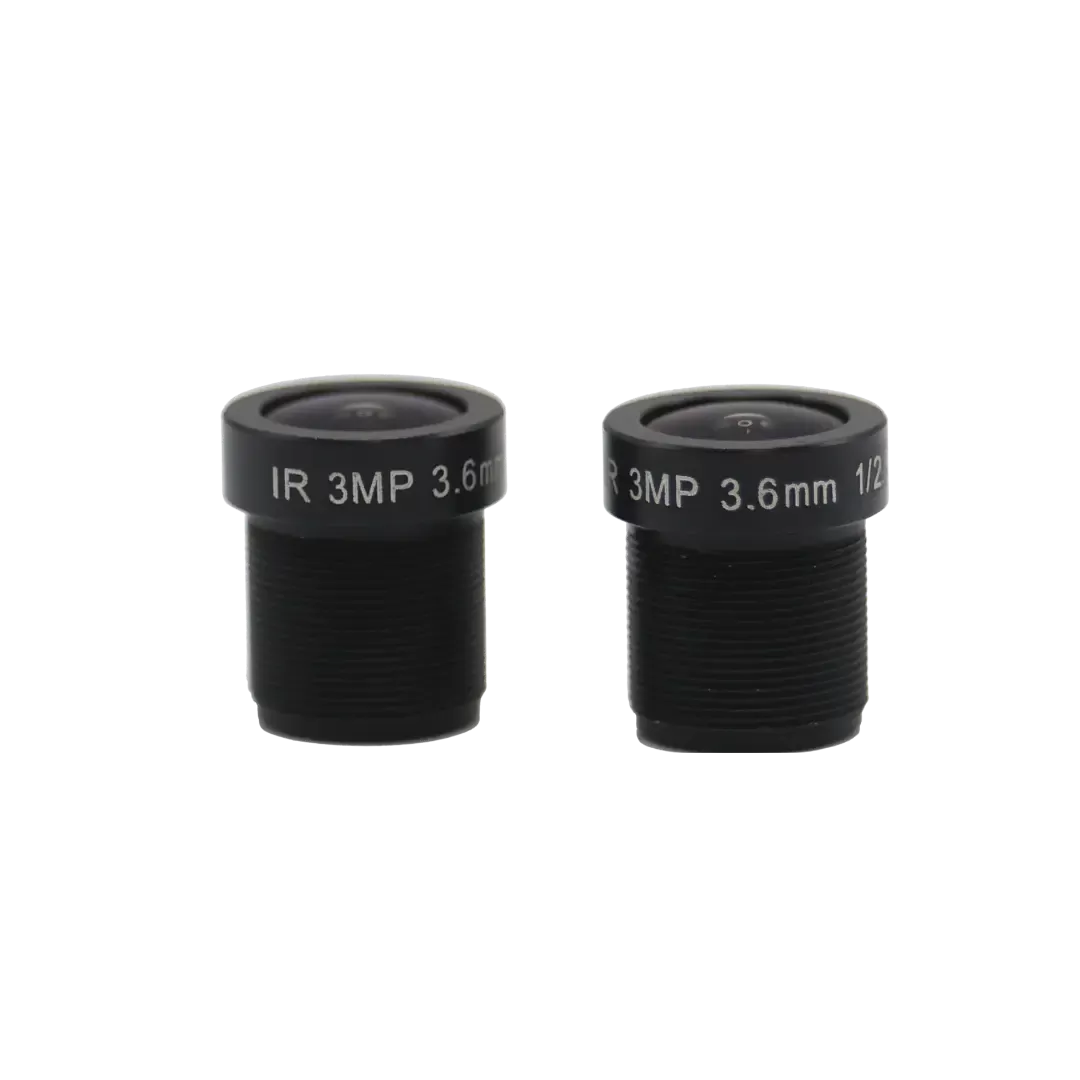
The M12 designation refers to the metric thread standard of the lens barrel, which features a 12 mm diameter with a 0.5 mm thread pitch (M12 x 0.5). Unlike C-mount lenses, which have a standardized flange focal distance, S-mount lenses are focused by screwing the lens into a mount holder until the image is sharp. This mechanical simplicity reduces cost and space, but it introduces the need for secure locking mechanisms. Thread tolerances must be tightly controlled during manufacturing to prevent tilt or wobble, which can defocus parts of the image. Once focused, the assembly is typically secured using set screws or locking rings to preserve focus during operation.
Thermal Behavior and Athermal Optical Design
Industrial applications often expose vision systems to extreme temperatures and rapid thermal cycling. Temperature shifts cause mechanical components to expand or contract, altering the distance between the lens elements and the sensor. This thermal drift can lead to defocusing and image degradation. To address this, high-reliability assemblies utilize athermal design methodologies. By combining materials with complementary coefficients of thermal expansion—such as specific optical plastics, specialized glass, and metal alloys for the barrel—designers can create an assembly where the focal point remains stable across a wide temperature range. Aviation-grade aluminum and brass are frequently selected for barrels in outdoor or high-vibration settings due to their structural integrity.
Industrial Applications of Miniature S-Mount Optics
Automated Optical Inspection and Machine Vision
In factory automation, space on the assembly line is at a premium. Small-footprint cameras equipped with high-resolution M12 lenses are integrated directly into robotic arms, pick-and-place machines, and sorting systems. These setups require short working distances and high resolving power to detect micro-defects on printed circuit boards or verify the placement of mechanical components. The ability to mount these compact lenses close to the inspection target allows for compact machinery design and reduces overall system complexity.
Advanced Driver Assistance Systems (ADAS)
The automotive industry relies heavily on S-mount optics for surround-view monitoring, lane departure warnings, and driver monitoring systems. These applications demand exceptional wide-angle performance, low light sensitivity, and resistance to environmental hazards like moisture, dust, and continuous vibration. Glass-metal designs are preferred in this sector because they maintain optical clarity and alignment despite prolonged exposure to solar radiation and fluctuating weather conditions.
Aerial Integration and Robotics
Unmanned aerial vehicles (UAVs) and mobile robots require lightweight imaging systems to maximize operational efficiency and battery life. S-mount assemblies offer a significant weight reduction compared to standard industrial lenses. In agricultural monitoring, mapping, and surveillance, these lightweight optics allow drones to carry multi-camera arrays that capture multispectral data without compromising flight dynamics.
Resolving Manufacturing Anomalies and Integration Challenges
Integrating miniature optics into custom camera modules often presents challenges related to manufacturing tolerances. Variations in cover glass thickness, sensor packaging, and mount height can accumulate, resulting in an off-center or tilted image plane. This tolerance stack-up must be analyzed during the early design phase. Utilizing active alignment—a process where the lens is focused while the sensor is active and displaying a real-time MTF target—allows manufacturers to position the lens with sub-micron precision before final adhesive curing.
Stray light and ghosting are additional challenges, particularly in environments with strong ambient light sources or retroreflective targets. These anomalies occur when light reflects off the internal surfaces of the lens barrel or the edges of the optical elements. Implementing anti-reflective (AR) coatings, internal baffles, and blackened lens edges helps absorb unwanted reflections, thereby preserving image contrast and preventing artifacts from obscuring critical data. Jinyuan applies tailored thin-film coatings to address specific spectral bands, ensuring optimal transmission and color fidelity for every application.
Frequently Asked Questions
Q1: What is the main structural difference between M12 lenses and C-mount lenses?
A1: M12 lenses utilize a smaller, 12 mm diameter thread with a 0.5 mm pitch and do not have a fixed flange focal distance. They are focused by threading the lens body directly into a mount holder. C-mount lenses are larger, featuring a 1-inch thread diameter and a standardized flange focal distance of 17.526 mm, which allows for direct mounting without manual depth adjustments during installation.
Q2: How does pixel pitch affect the choice of S-mount optics?
A2: High-resolution sensors with small pixel pitches require optics with higher resolving power (higher line pairs per millimeter) to prevent image blur caused by diffraction. Pairing a low-resolution lens with a high-megapixel sensor limits the effective resolution of the system, making it important to verify that the lens optical resolution matches or exceeds the sensor Nyquist frequency.
Q3: Are M12 lenses suitable for outdoor use in fluctuating temperatures?
A3: Yes, provided they are designed with appropriate materials. Glass-metal S-mount assemblies with athermal designs maintain stable focus and structural integrity over wide temperature ranges, making them suitable for outdoor applications such as traffic monitoring, security, and automotive systems.
Q4: Can bandpass filters be integrated directly into M12 lens assemblies?
A4: Yes, filters can be integrated in several ways. They can be coated directly onto one of the internal glass elements, mounted as a separate filter on the back of the lens barrel, or positioned inside the camera mount holder. This is commonly done in infrared illumination applications to block unwanted visible light.
Q5: What causes vignetting in compact camera systems, and how is it resolved?
A5: Vignetting occurs when the lens image circle is smaller than the active area of the sensor, or when physical obstructions inside the lens barrel block off-axis light rays. This issue is resolved by selecting a lens designed specifically for the target sensor size or larger, and by optimizing the mechanical design of the lens holder to prevent physical clipping of the light path.
Custom Optical Solutions and Procurement
Every imaging application presents distinct mechanical and optical requirements that standard off-the-shelf components may not satisfy. Factors such as modified working distances, specialized spectral transmission, and custom mechanical dimensions require engineered solutions. Jinyuan works closely with system integrators and OEMs to design, manufacture, and test customized S-mount optical systems tailored to exact project specifications.
To discuss your design requirements, request detailed engineering drawings, or obtain a quote for production quantities, please contact our engineering team directly through our inquiry portal. We will evaluate your sensor specifications and mechanical constraints to provide a compatible, high-performance optical solution.