
Miniature imaging assemblies have become standard components in specialized surveillance, automated quality inspection, and space-constrained optical devices. When designing these systems, selecting the appropriate lens assembly is a primary engineering challenge. A pinhole lens offers a specific solution for applications requiring high-resolution imaging through a minute physical aperture. These specialized optics allow the camera assembly to remain hidden or protected behind a barrier, utilizing an opening that is often smaller than two millimeters in diameter.
For industrial optical manufacturers like Jinyuan, developing these miniature systems requires a deep understanding of geometric optics, material properties, and mechanical tolerances. Standard off-the-shelf optical components rarely satisfy the strict spatial and resolution requirements of high-performance security equipment. This analysis examines the physics governing these miniature optical assemblies, the primary engineering challenges faced during development, and the criteria for selecting the proper components for industrial integration.
Understanding the Physics of Miniature Aperture Optics
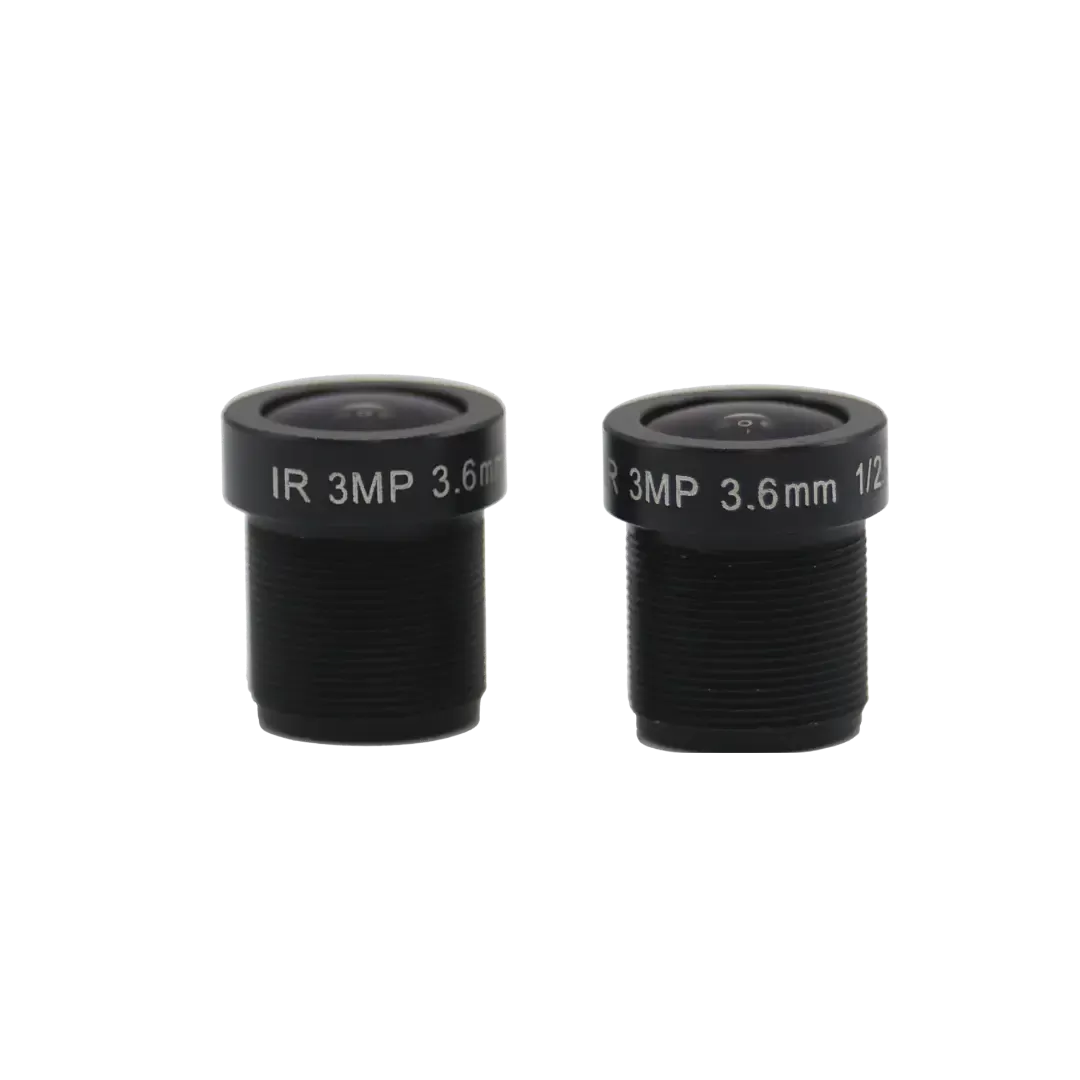
To implement a pinhole lens successfully, optical designers must distinguish between a simple lensless pinhole aperture and a refractive pinhole lens system. A lensless pinhole relies purely on light propagation through a tiny hole, which suffers from severe diffraction limits and low light-gathering capability. In contrast, a modern pinhole lens utilizes a sophisticated multi-element refractive design. This approach combines a very small front aperture with internal glass elements to focus light efficiently onto a high-resolution complementary metal-oxide-semiconductor (CMOS) or charge-coupled device (CCD) sensor.
The primary advantage of this optical configuration is the ability to achieve a wide field of view while keeping the exposed portion of the lens extremely small. The front element, often referred to as the "pinhole tip" or "cone," gathers light and passes it through an intermediate image plane before projecting it onto the camera sensor. Managing this light path requires precise calculations of refraction angles and surface curvatures to prevent severe optical aberrations.
Diffraction remains a primary physical constraint in these systems. According to the Rayleigh criterion, as the physical aperture of an optical system decreases, the diffraction limit restricts the maximum achievable spatial resolution. Optical engineers must balance the physical size of the entrance pupil with the operating wavelength of the light to ensure that the image does not become overly soft or blurry due to diffraction effects.
1. Sensor Format and Chief Ray Angle Matching
When specifying a pinhole lens for a commercial or industrial camera, sensor compatibility is the first parameter to analyze. Miniature lenses are typically designed for specific sensor formats, such as 1/3-inch, 1/2.7-inch, or 1/2-inch sensors. Using a lens designed for a smaller sensor on a larger sensor results in severe vignetting, where the corners of the image appear dark or completely cut off.
Another major consideration is the Chief Ray Angle (CRA) of the sensor. The CRA is the angle at which the light rays from the edge of the lens exit pupil strike the sensor surface. Modern CMOS sensors use micro-lenses over each pixel to maximize light collection efficiency. If the exit CRA of the pinhole lens deviates significantly from the acceptance CRA of the sensor, the pixels at the periphery of the image sensor will fail to collect light efficiently. This mismatch leads to:
Pixel Crosstalk: Light intended for one pixel spills into adjacent pixels, causing color distortion and reduced image contrast.
Shading Effects: A noticeable drop in brightness from the center of the image to the corners, also known as lens vignetting.
Reduced Signal-to-Noise Ratio (SNR): Lower overall light gathering at the image boundaries, requiring electronic gain amplification which introduces image noise.
Jinyuan designs custom optics to match the specific CRA profiles of modern security sensors, ensuring uniform illumination and color fidelity across the entire active area of the sensor.
2. Focal Length, Field of View, and Distortion Control
The relationship between focal length and field of view (FOV) is modified by the unique mechanical layout of a pinhole lens. Because the front aperture is restricted, achieving a wide FOV requires a complex optical design. Most applications demand a wide-angle perspective to monitor large areas through a small physical opening. This requirement typically dictates a short focal length, often between 2.0mm and 4.5mm.
However, short focal lengths combined with wide-angle demands naturally introduce geometric distortion, specifically barrel distortion. In a standard wide-angle lens, barrel distortion causes straight lines near the edge of the frame to curve outward. For security and surveillance, moderate distortion may be acceptable if the primary goal is detection. For industrial inspection or automated optical measurement, geometric distortion must be minimized or accurately calibrated.
Optical designers control this distortion by utilizing asymmetrical lens groupings and incorporating aspherical lens elements. Aspherical surfaces allow the designer to correct spherical aberration and field curvature without adding excessive physical length or weight to the lens housing. This results in a highly corrected image that preserves geometric accuracy across the entire field of view.
3. Aperture Size, F-Number, and Low-Light Performance
The F-number (or focal ratio) of an optical system determines its light-gathering speed and is defined as the ratio of the focal length to the diameter of the entrance pupil. In a pinhole lens, the physical entrance pupil is constrained by the small front tip. Consequently, these lenses often operate at higher F-numbers, typically between F/2.0 and F/4.0.
A higher F-number means less light reaches the sensor, which directly impacts low-light performance. In security environments, cameras must often capture clear footage under suboptimal lighting conditions. To compensate for a high F-number, engineers can utilize several strategies:
High-Sensitivity Sensors: Selecting back-illuminated (BSI) sensors that offer improved quantum efficiency in low-light environments.
Infrared (IR) Illumination: Using near-infrared light sources that are invisible to the human eye but highly visible to the camera sensor.
Multi-Layer Anti-Reflective Coatings: Applying specialized optical coatings to each lens element within the assembly to maximize light transmission and minimize internal reflections.
By optimizing the internal optical coatings, Jinyuan maximizes the transmission efficiency of the lens elements, ensuring that every available photon reaches the sensor plane even when operating with a restrictive physical aperture.
4. Material Selection and Environmental Durability
The choice of materials for both the optical elements and the mechanical housing dictates the performance stability of the pinhole lens under varying environmental conditions. The two primary categories of optical materials are optical glass and optical plastics.
Optical glass is preferred for high-precision applications. It offers superior optical clarity, a wide range of refractive indices, and excellent thermal stability. Glass lenses do not degrade or yellow when exposed to ultraviolet (UV) radiation, making them suitable for long-term outdoor deployment. Furthermore, the thermal expansion coefficient of glass is significantly lower than that of plastic, meaning the lens maintains focus across a wide temperature range.
Optical plastics, such as polymethyl methacrylate (PMMA) or cyclic olefin polymers (COP), are lighter and can be molded into complex aspherical shapes cost-effectively. However, plastic lenses are more susceptible to scratch damage, thermal drift, and environmental degradation. For industrial and security applications, a hybrid design utilizing both glass and high-quality plastic elements is sometimes employed to balance cost, performance, and weight.
The mechanical housing must also be engineered to withstand environmental stress. Machined aluminum or brass housings provide the structural integrity required to keep the delicate internal glass elements precisely aligned. In outdoor security installations, these housings must resist moisture ingress, dust, and corrosive atmospheres.
5. Mechanical Integration and Mounting Configurations
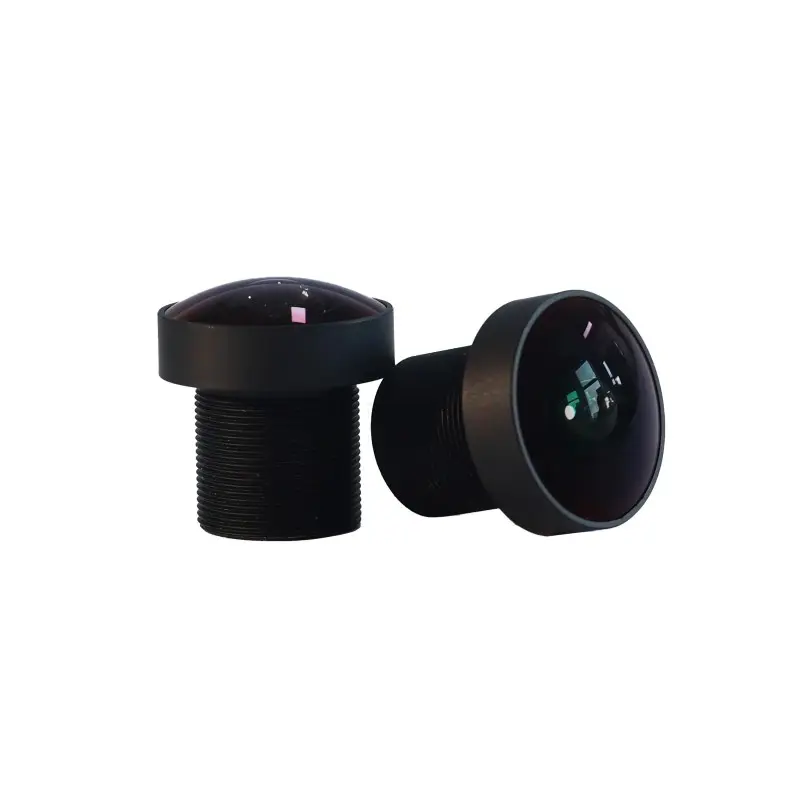
Integrating a pinhole lens into an existing enclosure requires careful planning of the physical mounting interface. The lens must be positioned precisely relative to the sensor, and the outer tip must align perfectly with the external opening of the enclosure. The most common mounting standards for miniature lenses include:
M12 Thread Mount (S-Mount): The industry standard for small security and board cameras. It features a 12mm thread diameter and offers a secure, adjustable interface for focusing the lens relative to the sensor.
M9 and M11 Mounts: Smaller threaded interfaces designed for extremely compact camera modules where space is highly constrained.
Custom Mounts: Tailored mechanical interfaces designed to lock directly into specialized camera housings or industrial equipment chassis.
The mechanical nose profile of the lens is another key parameter. A "flat nose" design is suitable when the lens can be placed directly against a flat cover glass or thin barrier. A "conical nose" or "tapered tip" design is ideal when the lens must protrude through a thicker wall or panel, minimizing the visible surface area on the exterior of the enclosure. Jinyuan provides customized mechanical housings to ensure seamless physical integration into a variety of industrial enclosures.
Common Optical Aberrations in Miniature Lens Systems
Designing miniature optics requires managing optical aberrations that degrade image quality. Because the light path in a pinhole lens is bent sharply to accommodate the wide field of view through a small front element, several aberrations become more pronounced:
Chromatic Aberration
Chromatic aberration occurs because different wavelengths of light bend at slightly different angles when passing through a lens. This results in color fringing, especially at high-contrast boundaries within the image. To mitigate this issue, optical designers use achromatic doublets—two individual lens elements made from glasses with different dispersion characteristics cemented together. This design aligns the focal points of red and blue light, reducing the color fringing effect.
Field Curvature
Field curvature causes a flat object to project its image onto a curved surface rather than a flat sensor plane. If the center of the image is in sharp focus, the edges may appear blurry, and vice versa. Correcting field curvature is crucial for automated optical inspection, where uniform focus across the entire sensor is required. Engineers utilize specific spacing of internal elements and field-flattening lenses to correct this aberration.
Quality Control and Optical Testing Protocols
Maintaining high manufacturing standards is necessary to ensure consistent performance in mass production. Optical testing protocols for a pinhole lens typically involve several advanced measurement systems:
Modulation Transfer Function (MTF) Testing: Measures the lens's ability to transfer contrast from the subject to the image sensor at specific spatial frequencies. High MTF values indicate sharp, high-resolution performance.
Distortion Measurement: Quantifies the percentage of geometric distortion across the field of view, ensuring it falls within acceptable tolerances for the target application.
Environmental Chamber Testing: Subjects the lens assemblies to extreme temperatures and high humidity levels to verify optical alignment stability and mechanical integrity.
By implementing rigorous testing phases, Jinyuan ensures that each lens assembly meets the precise performance specifications required by industrial clients and security integrators.
Frequently Asked Questions
Q1: How do you determine the correct sensor format for a custom
pinhole lens?
A1: The sensor format is determined by matching the
image circle produced by the lens to the active diagonal area of the CMOS or CCD
sensor. The image circle must be equal to or slightly larger than the sensor
diagonal to prevent vignetting and dark corners in the captured image.
Q2: Why does diffraction limit the resolution of extremely small
optical apertures?
A2: Diffraction is a physical wave property of
light. When light waves pass through a very small aperture, they bend and
interfere with each other, spreading out and forming an Airy disk pattern on the
sensor. If the aperture is too small, these disk patterns overlap, which reduces
the maximum spatial resolution of the system regardless of the sensor's pixel
count.
Q3: What are the primary advantages of optical glass over plastic
elements in miniature lenses?
A3: Optical glass offers superior
thermal stability, keeping the system in focus across wide temperature
fluctuations. It also provides a higher refractive index range, resists
scratching and UV degradation, and maintains consistent optical performance over
long periods, making it ideal for harsh industrial environments.
Q4: Can a pinhole lens operate in both visible and near-infrared
(NIR) spectrums?
A4: Yes, provided the lens elements are designed
with dual-band or broadband anti-reflective coatings. This allows the lens to
maintain sharp focus and high transmission in both visible light during the day
and near-infrared light at night without experiencing significant focal
shift.
Q5: What mechanical mount options are standard for miniature optical
assemblies?
A5: The most common standard is the M12x0.5 thread mount
(S-mount), which is widely used on board-level cameras. Smaller variations such
as M9 or M11 threads are also used for ultra-compact applications, and custom
mechanical flanges can be designed for specific enclosure integrations.
Request a Customized Optical Consultation
Selecting the correct optical components for specialized security systems or industrial measurement platforms requires a careful balance of physical size, optical performance, and environmental durability. Standard solutions often fail to meet the unique mechanical constraints or image quality requirements of specialized projects.
Jinyuan provides comprehensive optical design and manufacturing services tailored to your specific application requirements. Whether you require modifications to an existing design or a completely custom miniature optical assembly, our engineering team can assist you through the process from initial design to final production. Please contact our technical sales team to submit your detailed specifications and request a formal inquiry.