
In the field of industrial imaging and security surveillance, selecting the appropriate optical component is a primary factor in system performance. The M12 mount, often referred to as the MTV mount (metric thread M12x0.5), has become a standard interface for compact camera modules due to its balance of structural rigidity and small footprint. Among the various focal length configurations available, the Efl 25mm Mtv Lens offers a narrow field of view combined with high magnifying potential, making it suitable for applications requiring detailed inspection or long-distance observation.
For system integrators and camera manufacturers, understanding the mechanical and optical characteristics of these lenses is necessary to ensure compatibility with modern high-resolution image sensors. As an established developer of optical solutions, Jinyuan designs and produces specialized board-level optics to meet these rigorous industrial needs. This analysis covers the design parameters, sensor matching criteria, and practical deployment considerations for the Efl 25mm Mtv Lens in industrial settings.
Mechanical and Optical Construction
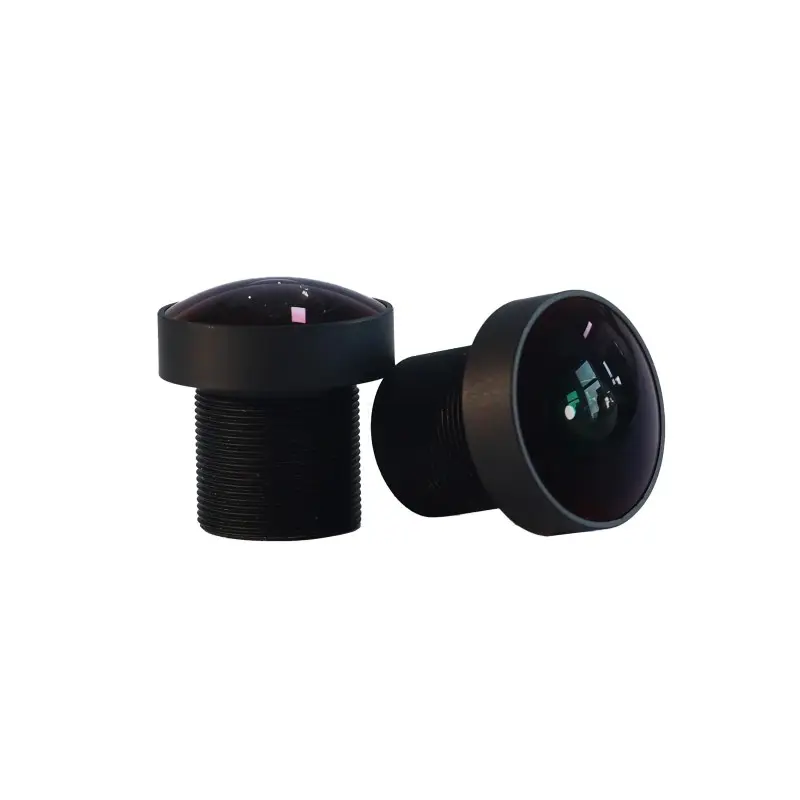
The terminology "Efl 25mm" designates the Effective Focal Length of the lens assembly. In optical design, the effective focal length determines the system's magnification and field of view for a given sensor format. When paired with an M12 thread interface, this lens falls into the category of micro-optics or board lenses.
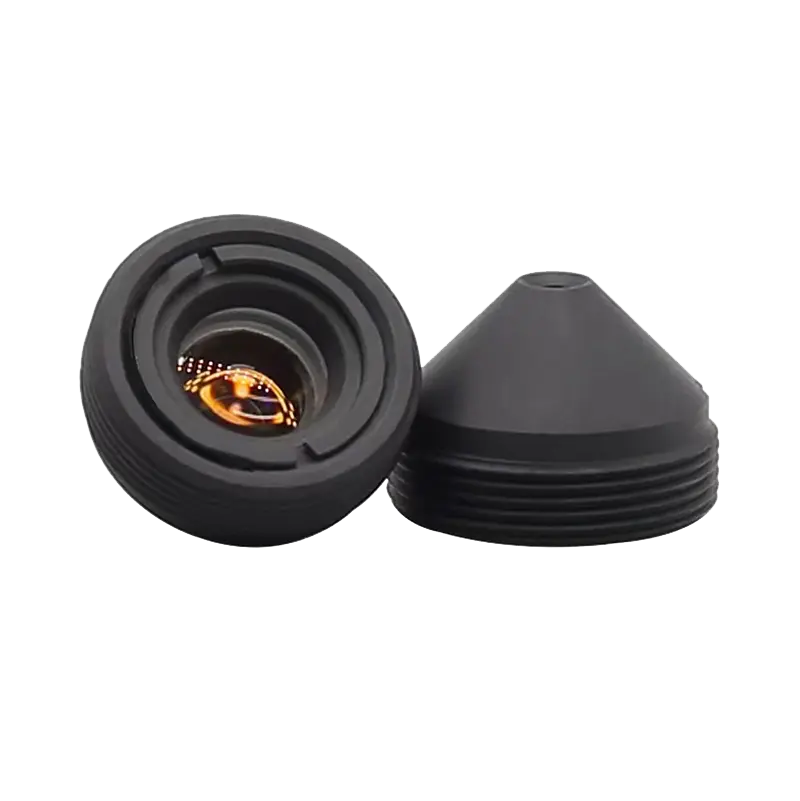
The mechanical layout of a typical Efl 25mm Mtv Lens consists of a threaded barrel designed to screw directly into a camera board receptacle. This threaded design allows for fine focus adjustment by rotating the lens assembly within the mount, which is subsequently secured using a locking ring or adhesive. To maintain optical clarity, these lenses are manufactured using multi-element glass configurations. While consumer-grade lenses sometimes utilize plastic elements to reduce costs, industrial applications demand glass elements to ensure thermal stability and high light transmission. The optical design typically incorporates:
Anti-reflective (AR) Coatings: Applied to the air-to-glass interfaces to minimize internal reflections and ghosting, thereby improving contrast and light transmission.
All-Metal Housings: Providing structural protection against mechanical shock, vibration, and thermal expansion in challenging environments.
Fixed Aperture Diaphragms: Unlike larger C-mount lenses with adjustable irises, board-level lenses generally utilize fixed apertures (such as F2.0 or F2.8) to maintain structural simplicity and prevent calibration drift over time.
Optical Parameters and Sensor Compatibility
Integrating an Efl 25mm Mtv Lens into an imaging system requires careful matching between the lens's optical capabilities and the image sensor’s physical dimensions.
Image Circle and Sensor Formats
Every lens projects a circular image onto the sensor plane, known as the image circle. If the diagonal dimension of the image sensor exceeds the diameter of this image circle, vignetting occurs, resulting in darkened corners or loss of data at the image boundaries. A standard Efl 25mm Mtv Lens is typically designed to cover 1/2.7-inch, 1/3-inch, or 1/4-inch CMOS/CCD image sensors. System designers must verify that the sensor's active area falls entirely within the usable image circle of the chosen optical assembly to avoid edge degradation.
Field of View (FOV) and Magnification
Because a 25mm focal length is relatively long for a compact board lens, it provides a narrow horizontal field of view (typically between 10 to 18 degrees depending on the sensor size). This narrow FOV is highly advantageous for:
Detail Capture: Observing small defects on a production line without positioning the camera too close to potentially hazardous machinery.
Long-Distance Monitoring: Capturing clear images of distant subjects, such as license plates or facial features in security applications.
Aperture and Relative Illumination
The aperture ratio (often expressed as F/#) determines the light-gathering capability of the lens. An aperture of F2.0 allows more light to reach the sensor than an F2.8 aperture, which is helpful in low-light environments. However, a wider aperture also narrows the depth of field, making precise focusing more demanding. Furthermore, relative illumination should remain high across the entire sensor plane to prevent central hotspots and edge roll-off in illumination.
Challenges in Industrial Vision Integration
While board-level optics offer significant space savings, engineers face several challenges during integration:
Optical Distortion and Corrective Measures
Distortion is a geometric aberration where the magnification varies with the distance from the optical axis. For a 25mm focal length lens, pincushion distortion can sometimes occur, though it is generally much lower than the barrel distortion found in wide-angle lenses. In applications such as automated metrology, even low levels of distortion can introduce measurement errors. Consequently, using high-precision glass elements and accurate alignment during assembly is necessary to keep geometric distortion below acceptable thresholds (often less than 1% or 2%).
Thermal Drift and Environmental Stability
Industrial environments often experience temperature fluctuations. As temperatures change, the refractive index of optical glass shifts, and the metal barrel expands or contracts. This thermal expansion can shift the focal plane away from the sensor, causing defocus. Utilizing materials with low coefficients of thermal expansion and robust mechanical housings ensures that the lens assembly retains focus across standard industrial operating ranges.
Primary Application Areas
The unique combination of a long focal length and a compact M12 form factor makes the Efl 25mm Mtv Lens suitable for several key sectors:
Automated Optical Inspection (AOI)
In manufacturing, components must be inspected for dimensional accuracy, surface defects, and marking clarity. This lens allows cameras to be mounted at a safe working distance while maintaining a high spatial resolution over a localized inspection area. This is particularly useful for semiconductor inspection, solder joint analysis, and barcode reading on packaging lines.
Surveillance and Traffic Monitoring Systems
Security cameras deployed in outdoor environments often require narrow-angle lenses to monitor specific corridors, entryways, or toll booths. When integrated into weatherproof enclosures, these M12 lenses provide the necessary reach to capture high-definition footage of vehicles and pedestrians from elevated mounting points.
Medical Imaging and Lab Diagnostics
Compact diagnostic instruments often require high-resolution optics to view samples, biological assays, or mechanical movements within a closed analyzer. The small footprint of the MTV mount format allows these lenses to be integrated into space-constrained laboratory equipment.
Quality Standards and Manufacturing Processes
Producing reliable board-level optics requires a structured approach to quality control. At Jinyuan, the manufacturing process emphasizes strict adherence to optical design specifications through advanced testing methodologies. Each lens assembly undergoes rigorous evaluation, including:
MTF (Modulation Transfer Function) Testing: To quantify the contrast and resolution across the center and corners of the image field.
Centration Measurement: Ensuring that the optical axes of all individual lens elements align with high precision to avoid asymmetric blur.
Environmental Testing: Subjecting test samples to vibration, humidity, and thermal cycling to verify mechanical durability.
By maintaining these standards, manufacturers can deliver consistent optical performance, reducing the need for field recalibration and preventing premature system failures in the field.
Selecting the Right Configuration for B2B Procurement
When sourcing optics for large-scale deployment, purchasing and engineering departments must coordinate on several custom specifications. Standard off-the-shelf components may not always satisfy unique system requirements. Depending on the project requirements, customization options may include:
Bandpass and Cut-Off Filters: Integrating IR-cut filters directly into the lens housing for day/night security cameras, or bandpass filters for monochromatic laser-based inspection.
Custom Thread Lengths: Adjusting the mechanical back focal length to fit specific sensor board enclosures.
Aperture Variations: Modifying the internal fixed aperture to balance light throughput with the required depth of field.
Jinyuan works closely with engineering teams to analyze these operational variables, providing prototype samples and performance reports before initiating high-volume production runs.
Frequently Asked Questions
Q1: What is the significance of the "Mtv" designation in the Efl 25mm Mtv Lens?
A1: The term "Mtv" historically refers to lenses designed for board cameras, utilizing an M12x0.5 thread. This is a metric thread standard with a 12mm diameter and a 0.5mm thread pitch, often referred to as an M12 mount or S-mount lens.
Q2: Can this lens cover a 1/2-inch image sensor?
A2: Typically, most 25mm M12 lenses are optimized for smaller sensor formats, such as 1/2.7-inch, 1/3-inch, or 1/4-inch. Using this lens on a larger 1/2-inch sensor may lead to optical vignetting or significant resolution degradation at the corners, as the image circle may not fully cover the sensor area. It is recommended to verify the specific image circle specification with the manufacturer before integration.
Q3: Is an IR-cut filter integrated into this lens?
A3: Many board-level lenses can be supplied with or without an integrated IR-cut filter (usually at 650nm) mounted on the rear element. For color applications under daylight conditions, an IR-cut filter is necessary to prevent color distortion. For monochrome or low-light applications utilizing infrared illumination, a lens without an IR filter is preferred.
Q4: How do you adjust the focus on an M12 mount lens?
A4: Focus is adjusted mechanically by rotating the lens within the M12 mount, which moves the lens assembly closer to or further from the image sensor. Once the optimal focus point is achieved, the lens is secured in place using a locking nut, set screw, or specialized adhesive.
Q5: What is the typical working distance for a 25mm focal length board lens?
A5: Due to the 25mm focal length, these lenses are designed for medium to long working distances, typically starting from 0.5 meters to infinity. However, with the addition of mechanical spacers or customized thread lengths, they can also be focused at shorter working distances for macro inspection applications.
Q6: How does Jinyuan ensure consistency across high-volume orders?
A6: Jinyuan utilizes automated optical assembly processes alongside strict batch testing. Every production batch is subjected to modulation transfer function (MTF) analysis and environmental stress testing to verify that the optical and mechanical tolerances align with the original design specifications.
Contact Us for Optical Inquiries
Selecting the correct optical configuration is a fundamental step in ensuring the reliability and accuracy of any vision-based system. The Efl 25mm Mtv Lens offers a practical solution for applications requiring a narrow field of view, high spatial resolution, and a compact mechanical profile. By evaluating factors such as sensor compatibility, aperture size, and environmental stability, engineering teams can implement these lenses with confidence.
If you are designing a new vision system or seeking to replace existing optical components, contacting an experienced manufacturer can streamline your development process. Jinyuan provides comprehensive engineering support, customized modifications, and high-volume production capabilities tailored to your exact optical specifications. Please contact our engineering sales team today to discuss your project requirements, request detailed datasheets, or obtain a competitive quotation.