
In the domain of IP-based video surveillance, the optical assembly is often the defining factor between actionable intelligence and unusable footage. A Digital Surveillance Ip Camera Lens is not merely a light-passing component; it is a precision instrument that determines resolution yield, low-light viability, and system reliability. For B2B system integrators, security project managers, and OEM buyers, understanding the engineering nuances behind these lenses is essential for deploying cost-effective, future-proof monitoring infrastructures. This article provides a deep technical examination of lens design, performance trade-offs, application-specific challenges, and advanced solutions, drawing from established optical engineering practices. Jinyuan brings this perspective into the custom optics domain, where tailored lens specifications meet rigorous field demands.
1. Core Optical Parameters Defining a Digital Surveillance Ip Camera Lens
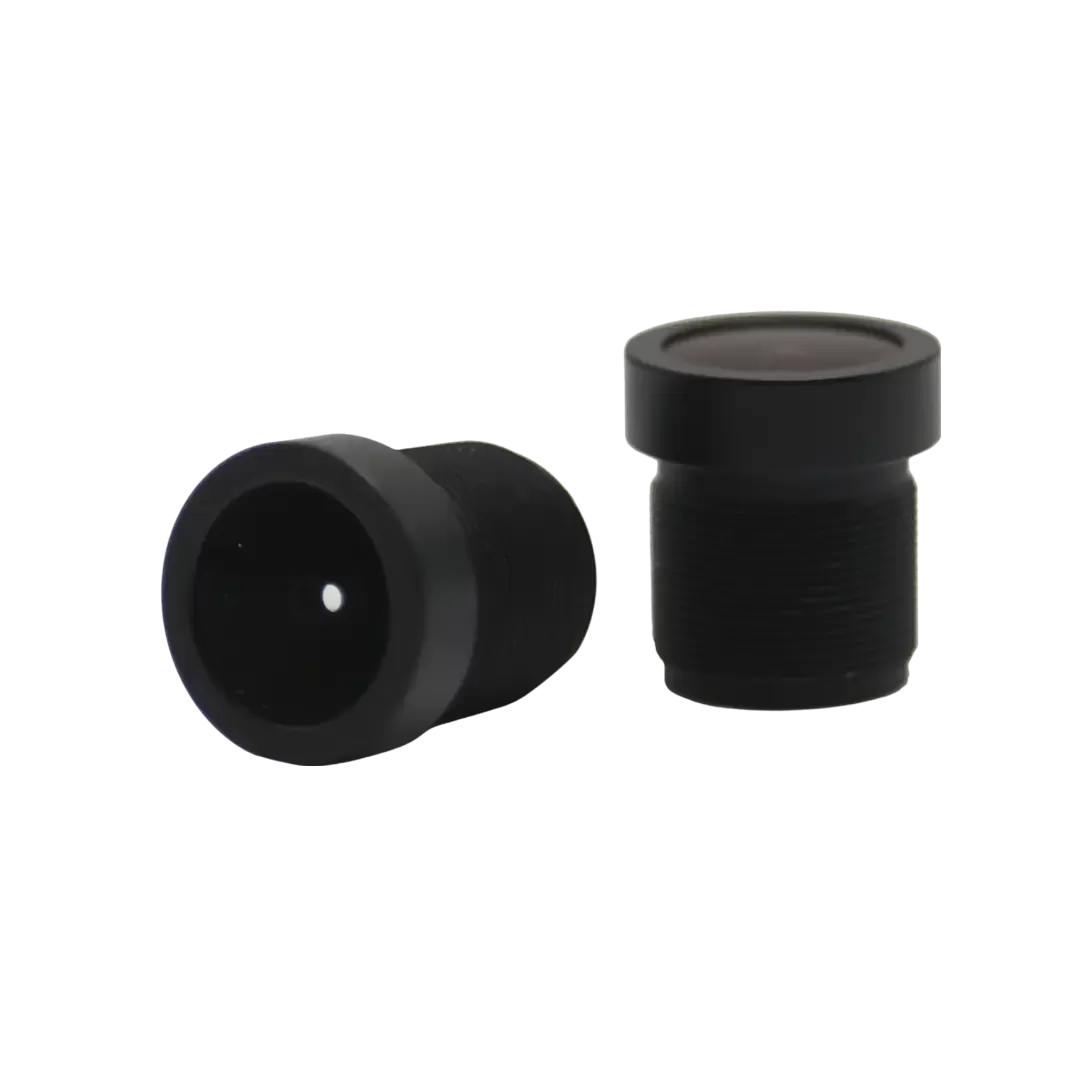
Selecting an appropriate Digital Surveillance Ip Camera Lens begins with a precise evaluation of five interdependent parameters. Any compromise in these specifications directly degrades the camera sensor’s potential.
Focal length & field of view (FoV): Ranges from 2.8mm (wide-angle, ~100°+) to 50mm (telephoto, ~10°). Varifocal lenses (e.g., 5–50mm) offer flexibility for PTZ or fixed-box cameras. For license plate recognition (LPR), longer focal lengths (≥25mm) are mandatory.
Maximum aperture (F-number): A lower F-number (F1.2 – F1.8) provides higher light throughput, directly improving low-light signal-to-noise ratio. Modern surveillance lenses with F1.0 are emerging for starlight-level sensors.
Image circle and sensor size matching: Lens must cover the sensor diagonal (1/2.8″, 1/1.8″, 2/3″). Using a 1/2.7″ lens on a 1/1.8″ sensor leads to severe vignetting and false resolution claims.
Optical resolution (MTF at Nyquist frequency): A lens rated for 4MP may not resolve 8MP sensors. The modulation transfer function at 200 lp/mm should exceed 0.4 for high-pixel-density sensors (4K/8MP).
Back focal length & mount type: CS-mount (12.5mm flange distance) and C-mount (17.5mm) dominate. Board lenses with M12 threads are common for compact indoor cameras but lack environmental sealing.
When these parameters are not co-engineered with the image sensor, the resultant system suffers from false detail, corner softness, and chromatic aberration. This is especially critical for multi-sensor panoramic cameras where edge-to-edge consistency is required.
2. Conquering Low-Light and Infrared Challenges with Advanced Coatings
Over 70% of security incidents occur under poor illumination. A conventional lens design without IR correction will exhibit focus shift when a camera switches from daylight to night mode (with IR cut filter removed). Digital Surveillance Ip Camera Lens intended for 24/7 operation must incorporate IR-corrected optics, meaning the lens focuses visible and 850nm/940nm infrared light on the same plane. This is achieved through apochromatic or athermalized designs using low-dispersion glass and diffractive elements. Additionally, anti-reflection (AR) coatings on each air-to-glass surface increase transmission from 92% to over 98% per surface, reducing flare and ghosting. Jinyuan employs multi-layer vacuum deposition for high-durability AR coatings that withstand thermal cycling and humidity without delamination.
Other low-light solutions include:
Large relative aperture (F1.2 or brighter) combined with aspherical elements to control spherical aberration.
Back-illuminated sensor compatibility – lens chief ray angle (CRA) must match sensor’s micro-lens array, typically within ±3°.
Motorized IR-cut filter mechanisms with optical compensation for day/night switching hysteresis.
Without these features, end users experience blurry night video or so-called “red eye” artifacts from internal reflections. For perimeter protection in oil refineries or railway yards, low-light performance is non-negotiable.
3. Critical Performance Factors: Distortion, Relative Illumination, and Environmental Resilience
Beyond basic parameters, three often-overlooked metrics separate industrial-grade lenses from consumer devices:
TV distortion: Barrel or pincushion distortion should be kept below 1% for forensic applications such as facial recognition and ANPR. Wide-angle lenses (≤3mm) naturally exceed 15% distortion; advanced designs incorporate aspheric and double-aspheric surfaces to reduce it to < -5% while maintaining resolution.
Relative illumination (shading): Specified as a percentage of corner light relative to center. For uniform scene analysis (e.g., traffic monitoring), >65% is desirable. Vignetting reduces effective sensor sensitivity in peripheral zones.
Thermal stability: Lens barrels made from aluminum alloy (versus plastic) offer consistent focal shift across -30°C to +70°C. Athermalized designs compensate for refractive index change with temperature, preventing re-focusing drift in outdoor housings. Jinyuan provides thermal vacuum testing per MIL-STD-810H for extreme-climate projects.
Additionally, ingress protection (IP67 or IP69K) and anti-fogging (hydrophobic front coating) are prerequisites for traffic and city surveillance. Lens housings must integrate seamlessly with camera enclosures to maintain the overall system’s IP rating. Many cheap alternatives fail after one summer due to internal condensation – a direct result of poor optical cementing and non-hermetic seals.
4. Application-Specific Engineering: From City Surveillance to Industrial Inspection
No single Digital Surveillance Ip Camera Lens fits all scenarios. Each application imposes a unique set of constraints and optimization goals.
City surveillance (wide area): 4–12mm varifocal lenses with F1.4 and IR correction. The lens must balance angular coverage and pixel density for license plate reading at 25 meters. Distortion below 2% helps PTZ stitching algorithms.
Traffic enforcement & ANPR: Telephoto lenses (25–75mm) with large aperture (F1.6) and minimal lateral chromatic aberration. High-contrast edge rendering is critical to avoid false reads. Often combined with polarized coating to reduce windshield glare.
Fisheye panoramic (180° or 360°): Ultra-wide angle (1.2–1.8mm) with high relative illumination and barrel distortion intentionally corrected in software. The lens must deliver uniform modulation across the entire image circle, or dewarping algorithms will amplify blur.
Industrial optical inspection (non-security but related): For machine vision in smart factories, lenses demand telecentricity and low distortion (<0.1%). While not surveillance, the same optical design expertise applies to custom security lenses.
For integrators working on multi-sensor fusion systems (thermal + visible), matching the optical path length and field of view across different lenses is a complex calibration task. Custom mechanical mounting flanges from manufacturers like Jinyuan reduce alignment errors and field failures.
5. Solving Industry Pain Points: Resolution Wastage, IR Shift, and Coating Degradation
Based on field feedback from system integrators and large-scale deployment reports, three recurring failures dominate when using substandard Digital Surveillance Ip Camera Lens products.
Pain point 1 – Resolution wastage: A 4K (8MP) sensor paired with a lens that resolves only 2MP effectively produces 2MP images. This happens when lens MTF at 150 lp/mm drops below 20%. Solution: specify lenses with “8MP ready” or “4K” designation from manufacturers that publish MTF charts. Field testing with an ISO 12233 chart verifies actual performance.
Pain point 2 – Infrared focus shift: Many low-cost lenses are not IR-corrected. When the camera switches to night mode (IR LEDs on), the focal plane shifts, causing blur. Correction requires at least one anomalous dispersion glass element in the optical train. Ask for IR correction data or a spectral transmission curve up to 950nm.
Pain point 3 – Coating delamination and flare: Security cameras facing direct sunlight or vehicle headlights produce veiling glare, obscuring details. Advanced multi-coating with hydrophobic and oleophobic layers (e.g., DLC – diamond-like carbon) resists staining and cleaning damage. Jinyuan’s hard coating process passes 48-hour salt spray and 200-cycle abrasion testing (per ASTM D4060).
Additionally, mechanical issues such as loose aperture blades or stuck zoom mechanisms are prevented by using precision-machined cam barrels and low-temperature grease. Reputable manufacturers provide MTF, distortion, and transmission data for each lens lot – a practice absent from white-label products.
6. Future-Ready Lens Selection: A Checklist for Integrators and Procurement Teams
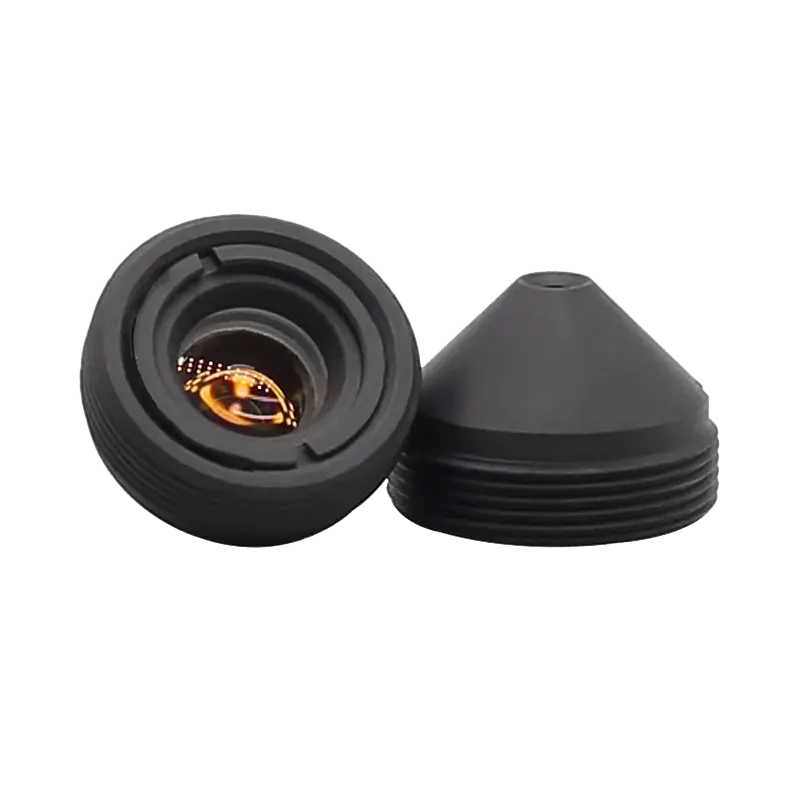
When evaluating a potential Digital Surveillance Ip Camera Lens for a large-scale project (500+ units), incorporate the following technical checklist into your RFQ:
True resolution support: Request MTF curves at the sensor’s Nyquist frequency (e.g., 160 lp/mm for 4MP on 1/2.8″).
IR focus shift magnitude: Should be less than 5μm across 20°C. Provide measurement method (interferometer or slanted edge analysis).
Back focal length tolerance: ±0.05mm for CS-mount to maintain infinity focus.
Aperture mechanism durability: DC-iris or P-iris for automatic exposure. Cycle life > 100k operations.
Operating temperature range: Verify functional storage and operational range with shock/vibration (IEC 60068).
Sample testing: Obtain 5–10 samples for internal qualification – measure resolution, distortion, and IR focus shift using an optical bench. Compare unit-to-unit consistency.
For projects requiring non-standard focal lengths (e.g., 6.5mm for specific mounting height), special spectral bands (NIR or SWIR), or integrated heater rings for de-icing, off-the-shelf optics are rarely sufficient. Custom engineering cycles typically run 12–16 weeks and include prototyping and tooling. A specialized optical manufacturer can provide tailored solutions without redesigning the entire camera housing. Jinyuan has supported numerous vertical projects with custom flange back adjustments and environmental hardening.
Frequently Asked Questions (FAQ)
Q1: How do I select the correct focal length for a Digital Surveillance Ip Camera Lens given a required detection distance and field of view?
A1: Use the simplified optical formula: focal length (mm) = (sensor width [mm] × distance to object [m]) / desired field width [m]. For example, with a 1/2.8″ sensor (width 4.8mm), to cover a 10m wide area at 30m distance, focal length = (4.8 × 30)/10 = 14.4mm. Always verify with the camera’s resolution and lens manufacturer’s angular FOV data. For ANPR, ensure pixel density > 100 pixels per meter at the target area.Q2: Why do some lenses cause blurry night images even when the camera has good low-light sensitivity?
A2: The most likely reason is IR focus shift. Non-IR corrected lenses are optimized for visible light only (400–700nm). When the IR cut filter is removed at night, the image sensor sees 850nm IR light that focuses at a different plane. You need an IR-corrected (or IR-coated) lens designed to focus both visible and IR light on the same plane. Always request IR focus shift data from the lens supplier.Q3: What is the difference between a fixed iris, manual iris, and P-iris (DC-iris) surveillance lens?
A3: Fixed iris has constant aperture – best for constant lighting but poor for day/night cycles. Manual iris allows adjustment during installation but cannot adapt dynamically. P-iris (precise iris) uses a stepper motor controlled by the camera’s auto-exposure algorithm to maintain optimal aperture for both depth of field and diffraction limits. For outdoor surveillance with wide light variation, P-iris or DC-iris (analog voltage controlled) is recommended.Q4: Can I use a lens designed for a 1/2″ sensor on a 1/1.8″ sensor camera?
A4: No. The lens image circle will be smaller than the sensor diagonal, causing severe vignetting (dark corners) and a loss of effective resolution. Always match the lens format (image circle) to the sensor size or larger. Using a 1/1.8″ lens on a 1/2″ sensor is acceptable but results in a narrower field of view.Q5: What level of customization does Jinyuan offer for specialized surveillance lens projects?
A5: Jinyuan provides end-to-end optical design,ac mechanical barrel engineering, prototype manufacturing, and mass production. Customizations include unique focal lengths (e.g., 6–18mm for specific mounting heights), specialized IR transmission windows (850/940nm notch filters), integrated motorized zoom, and environmental sealing up to IP69K. We also co-engineer with sensor vendors to match chief ray angle and back focal length for maximum resolution yield. Minimum order quantities vary based on complexity; engineering consultation is available for volume commitments.
In summary, the Digital Surveillance Ip Camera Lens is the silent determinant of image quality and system reliability. Selecting a lens based solely on price or nominal megapixel claims leads to field returns and degraded security outcomes. Instead, focus on optical design transparency, IR correction verification, and environmental durability data. For system integrators and OEMs requiring consistent, application-tailored optical performance, partnering with an experienced optics manufacturer ensures project success.
Need a custom-designed Digital Surveillance Ip Camera Lens for your next security project? Contact Jinyuan’s optical engineering team today for a technical consultation, sample testing, and volume quotation.
Send your specification sheet (sensor model, required focal length, IR mode, operating environment) to receive a responsive solution within 48 hours.