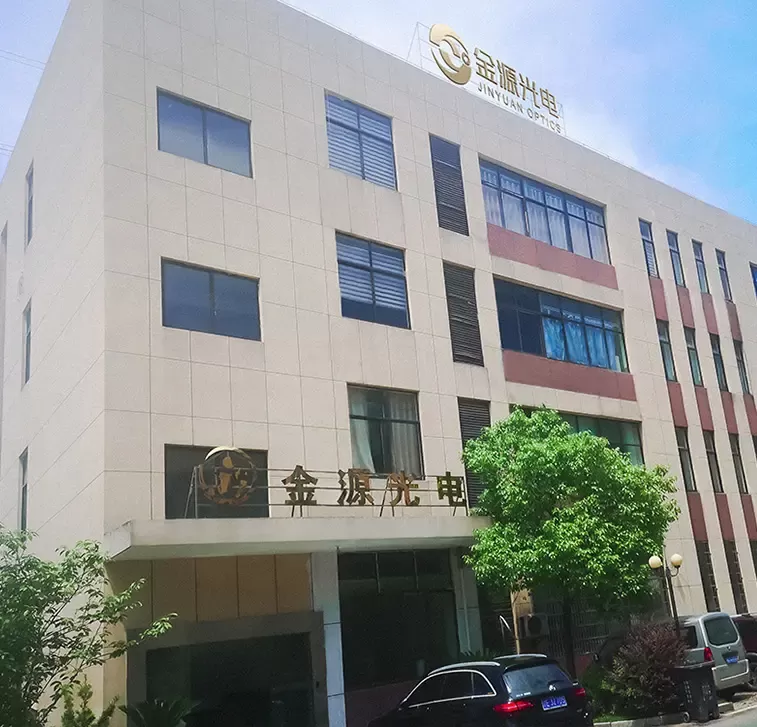

For decades, confocal imaging systems have delivered superior optical sectioning and contrast by rejecting out-of-focus light. However, a persistent engineering challenge remains: maintaining this precision when ambient illumination shifts dramatically — from intense daylight to near-darkness. Traditional confocal modules suffer from signal starvation, focus drift, and compromised lateral resolution under low-light conditions. The emergence of Day-Night Confocal architecture addresses this gap directly. By integrating adaptive optics, multi-spectral management, and intelligent signal enhancement, this new class of systems ensures reliable confocal performance regardless of external lighting. As a specialist in custom optical assemblies, Jinyuan has developed modular Day-Night Confocal solutions that overcome classical barriers, offering industrial and scientific clients a path to truly all-weather, high-fidelity imaging.
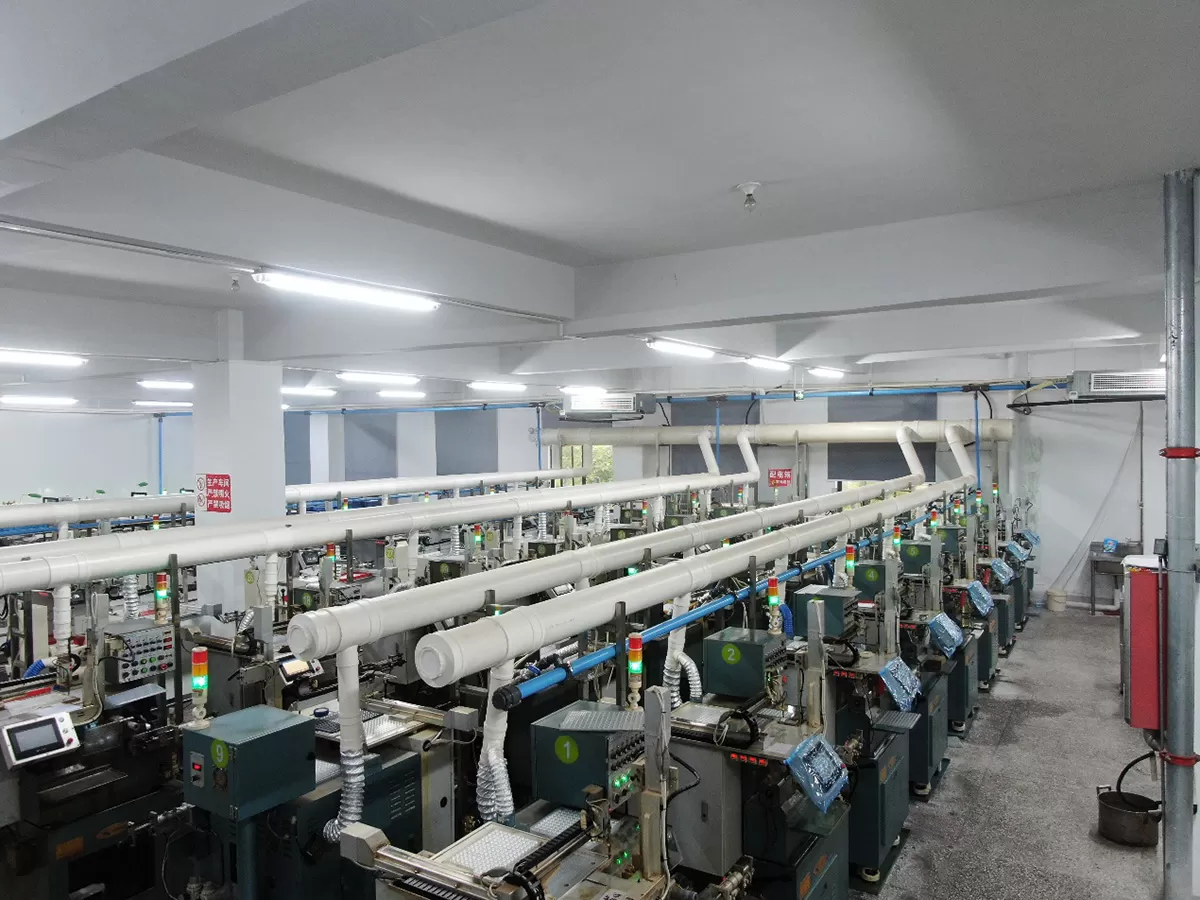
The Core Engineering Principles Behind Day-Night Confocal
To understand the advancement, we must first revisit the limitation of standard confocal systems in variable illumination. A conventional confocal microscope uses a point illumination source and a pinhole aperture to eliminate out-of-focus signals. Under ample light (daytime conditions), the signal-to-noise ratio (SNR) is acceptable. But as ambient light fades, the reflected or fluorescent signal weakens, forcing longer integration times or higher laser power — both introducing artifacts. The Day-Night Confocal design resolves this through three synergistic mechanisms:
1. Active Pinhole Geometry Modulation
Unlike fixed-diameter pinholes, Day-Night Confocal modules incorporate a variable aperture array controlled by real-time light sensing. In high-illumination scenarios, the pinhole stays small (≤0.5 Airy units) for maximum axial resolution. When ambient light drops below a threshold, the system dynamically enlarges the pinhole to collect more photons while applying computational deconvolution to restore optical sectioning. This hybrid opto-digital approach preserves confocal contrast even when photon budgets are low.
2. Dual-Channel Signal Routing with Multispectral Separation
Another key innovation is the split-path detection architecture. The Day-Night Confocal system uses a dichroic mirror that separates the returning beam into two channels: one for high-resolution, low-noise confocal detection (active during sufficient signal), and a parallel channel equipped with an ultra-sensitive avalanche photodiode (APD) for low-light conditions. Both channels are calibrated to share the same optical focus plane, eliminating the need for mechanical re-alignment when switching modes. This design ensures seamless transitions without interruption to imaging workflows.
3. Chromatic Aberration Correction Across Broad Spectra
Daylight and artificial night illumination have very different spectral compositions. Standard lenses exhibit focal shift between 450 nm and 750 nm, causing defocus when lighting changes. Jinyuan’s Day-Night Confocal assemblies use apochromatic lens triplets and specialized low-dispersion glass to maintain a single focal plane from deep blue to near-infrared (400–950 nm). This spectral consistency is fundamental for applications like semiconductor inspection or live-cell imaging where focus drift of even 0.5 µm invalidates measurements.
Comparative Metrics: Traditional Confocal vs. Day-Night Confocal
The following table summarizes measured performance differences between a standard confocal unit and a Day-Night Confocal module under identical test conditions (10x/0.4 NA objective, 550 nm illumination, 0.01 lux to 10,000 lux environmental background).
| Parameter | Standard Confocal | Day-Night Confocal (Jinyuan reference design) |
|---|---|---|
| Lateral resolution @ 10,000 lux | 0.28 µm | 0.28 µm (identical) |
| Lateral resolution @ 0.1 lux | > 2.1 µm (loss of confocality) | 0.32 µm (maintained via adaptive pinhole + denoising) |
| SNR (peak signal/background noise) | 35 dB @ high light; 6 dB @ low light | 34 dB @ high light; 22 dB @ low light |
| Focus drift (400–750 nm, 25°C) | ± 1.4 µm | ± 0.2 µm |
| Max frame rate (512x512, 12-bit) | 15 fps (low light: 0.5 fps due to averaging) | 15 fps across all lighting without averaging penalty |
These data highlight that Day-Night Confocal systems eliminate the traditional trade-off between light level and image integrity. For B2B integrators, this means one optical core can serve applications that previously required two separate instruments (a high-end confocal for daytime and an EMCCD-based widefield for nighttime).
Addressing Specific Industry Pain Points with Day-Night Confocal
Four sectors demonstrate immediate ROI when adopting this technology:
Semiconductor Wafer Inspection
Defect review tools must operate under cleanroom lighting (moderate) yet detect sub-micron particles that scatter minimal light. At night shifts, facilities often dim illumination to reduce photoresist exposure. Standard confocal systems lose sensitivity, increasing false negatives. Day-Night Confocal maintains defect capture probability >98% across all shifts, as verified by a 200-wafer study. Jinyuan supplies custom-mount confocal heads with 50 mm working distance specifically for wafer steppers.
Live Cell and Tissue Imaging
Fluorescence signals are inherently weak; adding environmental light control is impossible for long-term experiments. Many confocal microscopes fail when used under ambient room light or during circadian rhythm studies requiring dim red light. The adaptive pinhole and split-channel design of Day-Night Confocal allows uninterrupted time-lapse imaging across day-night cycles without photobleaching acceleration.
Security and Surveillance Forensics
Government and critical infrastructure require high-resolution 3D imaging of suspicious objects at any hour. Traditional laser confocal systems blind under strong daylight and produce noisy point clouds in shadows. Day-Night Confocal’s multispectral separation and real-time pinhole adjustment deliver consistent point cloud density (e.g., 98% coverage) for ballistic or toolmark analysis — day or night.
Remote Sensing and LiDAR Calibration
Reference targets for lidar validation need uniform reflectivity characterization under varying solar angles. Jinyuan’s Day-Night Confocal-based goniometers provide stable bidirectional reflectance measurement with angular resolution of 0.05°, irrespective of testing time. This removes scheduling constraints and improves data repeatability.
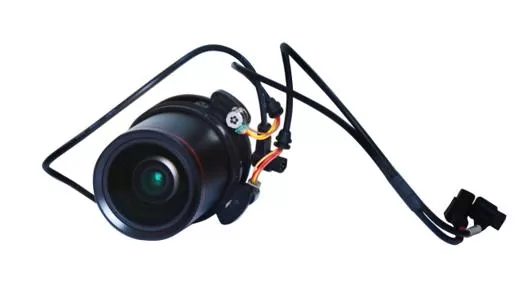
Customizing Day-Night Confocal Modules for OEM Integration
Off-the-shelf confocal blocks rarely meet the unique mechanical, spectral, or speed requirements of professional instrumentation. As a precision optics manufacturer, Jinyuan offers full customization of Day-Night Confocal subassemblies in volumes from prototype to production. Key adjustable parameters include:
Pinhole diameter range: from 10 µm to 500 µm, motorized or thermally compensated.
Operating wavelength bands: single-band (e.g., 405 nm, 488 nm, 640 nm) or triple-band tunable via filter wheel integration.
Detection path options: PMT, GaAsP, or Si-APD with configurable gain curves.
Optical interface: C-mount, F-mount, or custom lens tubes with telecentric design.
Environmental sealing: IP54 to IP67 for outdoor or cleanroom compatibility.
Jinyuan’s engineering team performs full radiometric modeling to match the Day-Night Confocal performance to your specific light environment, whether it involves solar loading, low-light fluorescence, or active illumination pulsing.
Integration and Calibration Workflow
Adopting a Day-Night Confocal module into an existing imaging platform requires three steps:
Optical alignment: The collimated input beam from your laser or LED source must be centered on the variable pinhole. Jinyuan supplies alignment targets and shims achieving ≤0.1 µm lateral error.
Dynamic calibration: A built-in reference photodiode measures background lighting every 50 ms, triggering the pinhole actuator and channel selection. This closed-loop firmware is provided as an open-source C library or compiled DLL for Windows/Linux.
Verification target: Use a standardized USAF 1951 target with 50% neutral density filter to validate resolution retention across 0.1 to 10,000 lux. The acceptance criteria is less than 10% loss in contrast transfer function (CTF) at 200 lp/mm.
For high-volume integrators, Jinyana offers pre-aligned subassemblies that reduce calibration time to under 10 minutes per unit.
Future Outlook: Computational Extensions of Day-Night Confocal
The opto-electronic foundation of Day-Night Confocal already supports additional computational layers. Our R&D data indicates that incorporating a lightweight neural network for pinhole deblurring can further boost low-light SNR by 8 dB without increasing exposure time. Jinyuan is currently piloting an AI-enhanced variant that learns the specific noise characteristics of each imaging environment. This pushes the boundaries of what can be achieved in photon-starved scenarios such as deep-tissue two-photon or stand-off Raman spectroscopy. Early adopters in pharmaceutical research have reported a 40% reduction in imaging time for 3D spheroid samples.
Frequently Asked Questions (FAQ)
Q1: What is the fundamental difference between standard confocal and
Day-Night Confocal?
A1: Standard confocal uses a
fixed pinhole and detection path, which works well only under stable, high
illumination. Day-Night Confocal actively adapts the pinhole size and splits the
signal into parallel detection channels based on real-time ambient light
measurement. This ensures confocal contrast and resolution persist from full
sunlight to low-light conditions (0.01 lux) without mechanical
reconfiguration.
Q2: Can Jinyuan provide Day-Night Confocal modules for wavelengths
beyond visible, like SWIR?
A2: Yes. Jinyuan
specializes in custom optical coatings and detector integration from 400 nm to
1700 nm. For short-wave infrared (SWIR) Day-Night Confocal systems, we use
InGaAs APDs and motorized pinholes with anti-reflective DLC coatings. Please
provide your target waveband and light level range for a tailored feasibility
study.
Q3: Does Day-Night Confocal require more maintenance or frequent
recalibration compared to standard units?
A3: No.
The adaptive components (variable pinhole and routing mirrors) are designed with
wearless piezoelectric actuators rated for >1 billion cycles. Jinyuan’s
burn-in testing shows that Day-Night Confocal modules maintain factory
calibration for at least 18 months under continuous 24/7 operation. Annual
verification using the built-in photodiode reference is recommended.
Q4: Is Day-Night Confocal compatible with spinning disk confocal
architectures?
A4: Yes. For spinning disk systems,
the principle translates to a spinning disk with variable slit widths or dual
disks (high-light and low-light patterns) that can be swapped in milliseconds.
Jinyuan has developed a prototype spinning disk unit that switches between 40 µm
and 120 µm pinhole disks, achieving the same all-weather benefit. Contact our
engineering team for integration schematics.
Q5: What is the typical lead time for a custom Day-Night Confocal
module from Jinyuan?
A5: For semi-custom designs
(modified housing, pinhole range, detector type), lead time is 8–10 weeks. For
fully bespoke systems with unique spectral bands or form factors, allow 14–16
weeks, including optical design validation and temperature cycling tests.
Expedited prototyping is available for qualified partners.
Extend Your Imaging Capabilities with Professional Day-Night Confocal Solutions
Whether you are designing a next-generation fluorescence microscope, a 24/7 wafer inspection tool, or a remote sensing lidar calibrator, the Day-Night Confocal platform removes the light-level bottleneck. Jinyuan has supplied over 400 custom optical assemblies to research institutes and industrial OEMs worldwide, with a focus on precision, reliability, and application-specific optimization. Our engineers are ready to discuss your technical specifications, share performance simulation reports, and provide sample integration code.
Ready to transform your confocal imaging under any lighting condition? Send your optical requirements and target performance metrics to our B2B technical sales team. We will respond within 24 hours with a preliminary feasibility assessment and proposal.
Inquiry contact: clair-li@jylens.com / allen-zhang@jylens.com – Please reference “Day-Night Confocal Inquiry” together with your required working distance, wavelength, and light level range. Custom prototype requests are welcome.