
Miniaturized imaging systems require highly specialized optical components to maintain high image quality under strict physical limitations. The design of a hidden camera lens must balance compact dimensions with high optical resolution, low distortion, and adequate light transmission. As modern security hardware transitions to high-megapixel CMOS sensors, optical manufacturers face the challenge of delivering clear images through small apertures. Jinyuan provides customized optical assemblies designed to address these complex design challenges, ensuring reliable performance in commercial, industrial, and residential monitoring systems.
For B2B procurement managers and hardware design engineers, understanding the optical variables that govern these small-format lenses is crucial for successful product development. This article examines the core parameters of compact optical design, discusses common engineering challenges, and outlines the manufacturing standards required for high-volume production.
The Anatomy of a Hidden Camera Lens: Key Optical Specifications
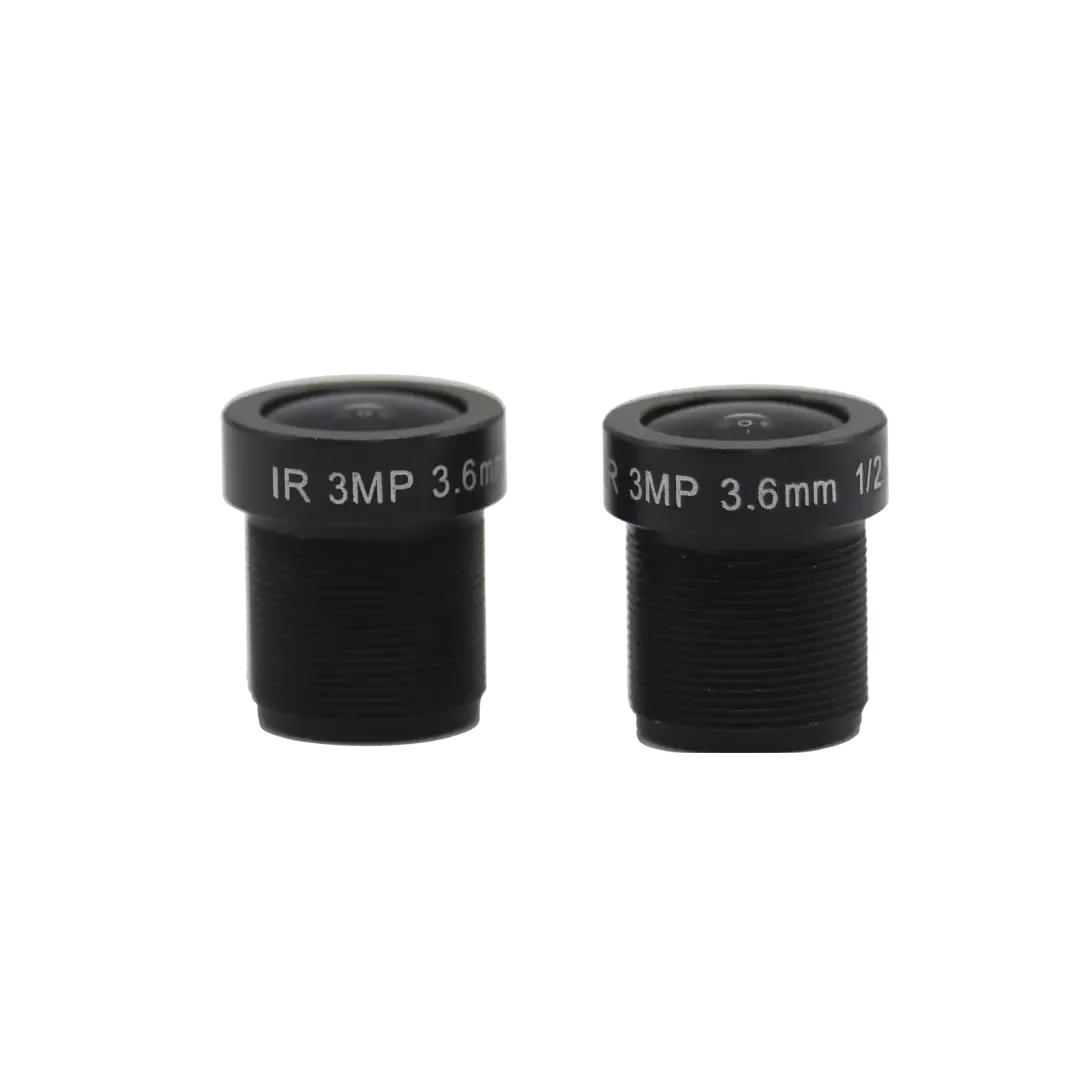
To evaluate the performance of a hidden camera lens, engineers must analyze several interrelated optical parameters. These specifications dictate how the lens interacts with the sensor and how the resulting image is rendered under different environmental conditions.
Focal Length and Field of View (FOV)
The focal length of the lens determines the angle of view and the magnification of the target scene. In covert monitoring systems, a wide-field view is typically preferred to capture a broad area from a single, static installation point. However, reducing the focal length to achieve a wider FOV often introduces geometric distortion. Engineers must select a focal length that matches the active area of the sensor to achieve the targeted horizontal, vertical, and diagonal field of view without compromising image quality at the periphery.
Aperture (F-Number) and Light Transmission
The aperture size, represented by the F-number, governs the amount of light that reaches the image sensor. A lower F-number, such as F/2.0 or F/1.8, indicates a larger aperture that allows more light to pass through, which is vital for low-light imaging. In a miniaturized hidden camera lens, achieving a wide aperture is challenging due to the physical diameter limitations of the lens barrel and the entry pupil. Design engineers must use high-index optical glass to maximize light-gathering capability while maintaining a low physical profile.
Lens Elements and Material Selection
Modern miniature lenses utilize a multi-element design consisting of several individual glass or plastic lenses housed within a single barrel.
Optical Glass: Offers superior transmission, scratch resistance, and excellent thermal stability. Glass is preferred for industrial systems where ambient temperatures fluctuate significantly.
Optical Plastics (PMMA, OKP, COP): Provide design flexibility, especially for complex aspherical shapes that are costly to grind in glass. Plastic elements are lightweight and highly cost-efficient for consumer electronics but are susceptible to thermal focus shift.
A hybrid design, combining both glass and plastic elements, is frequently utilized to balance performance, thermal stability, and manufacturing costs.
Key Challenges in Miniaturized Optical Designs
Designing optics at a micro-scale introduces physical limitations that do not affect standard-sized lenses as severely. Addressing these limitations requires precise optical modeling and advanced manufacturing processes.
Controlling Geometric Distortion
Wide-angle pinhole systems are highly susceptible to barrel distortion, where straight lines appear to curve outward near the edges of the frame. For security and analytical software, maintaining geometric accuracy is important for facial identification and spatial measurements. By incorporating custom aspherical lens elements into the optical design, Jinyuan can correct geometric distortion within the lens assembly itself, reducing the processing load on the camera’s digital signal processor (DSP).
Managing Stray Light, Flare, and Ghosting
Because a hidden camera lens is often integrated behind protective cover
plates, tinted glass, or existing device enclosures, stray light reflections are
a frequent issue. Light hitting the cover glass at oblique angles can reflect
back into the lens, causing ghosting and flare that degrades contrast.
To
mitigate this, optical designers apply specialized multi-layer anti-reflective
(AR) coatings to each lens element. These coatings reduce surface reflections
across the visible and near-infrared spectrums, preserving image contrast and
clarity even when strong light sources are present in the field of view.
Chief Ray Angle (CRA) Alignment
The Chief Ray Angle of a lens is the angle at which light rays strike the sensor pixels. CMOS image sensors have specific CRA limits; if the incoming light angle exceeds these limits, the micro-lenses on the sensor cannot direct the light into the photodiodes. This mismatch leads to vignetting (dark corners), loss of signal-to-noise ratio, and color shading at the edges of the image. Customizing the optical path to align with the sensor's native CRA is a vital step in ensuring uniform brightness and color accuracy across the entire image plane.
Industry-Specific Applications and Use Cases
Compact optical assemblies are utilized across various industries, each demanding specific performance characteristics to suit their unique operational environments.
Smart Home Systems and IoT Hardware
Consumer demand for unobtrusive smart home hardware has increased the need for low-profile optical designs. Devices such as video doorbells, smart smoke detectors, and indoor monitors require a compact hidden camera lens that integrates seamlessly into the product housing. These lenses must operate reliably in variable household lighting, transitioning smoothly between bright daylight and low-light indoor environments.
Automated Teller Machines (ATMs) and Kiosks
Financial terminals and self-service kiosks utilize integrated cameras for transaction verification, user authentication, and fraud prevention. The optical components in these systems must withstand long-term operation under continuous exposure to internal system heat and external weather conditions. Excellent thermal stability is required to prevent focus drift over years of service.
Industrial Automation and Process Monitoring
In manufacturing environments, robotic arms, assembly lines, and high-speed sorting systems require small, ruggedized imaging systems to monitor operations without interfering with mechanical parts. The optical assemblies must resist vibrations and dust while delivering high-resolution, low-distortion video feeds to automated inspection software.
Optical Customization and Manufacturing Capabilities of Jinyuan
Standard off-the-shelf lens assemblies rarely meet the exact mechanical and optical constraints of specialized commercial projects. Jinyuan provides end-to-end customization and manufacturing services to resolve these complex integration requirements.
Optical Simulation & Modeling: Utilizing advanced optical design software, our engineers model ray tracing, MTF (Modulation Transfer Function) curves, and distortion profiles to verify performance before physical prototyping begins.
Precision Component Fabrication: We manufacture both high-precision spherical and aspherical glass elements, alongside high-tolerance molded plastic optics, matching the exact material properties needed for your project.
Active Alignment Assembly: To guarantee consistent performance across high-resolution sensors, we utilize active alignment processes. This method aligns the lens elements to the CMOS sensor in real-time during assembly, compensating for mechanical tolerances and ensuring uniform edge-to-edge sharpness.
Quality Assurance and Environmental Testing: Every lens assembly undergoes rigorous validation, including thermal shock tests, vibration testing, and spectrophotometric checks to ensure compliance with industrial reliability standards.
Selecting the Right Optical Components: A B2B Procurement Guide
When sourcing optical components for high-volume device manufacturing, purchasing and engineering teams should focus on several operational metrics beyond unit cost.
Sensor Format Compatibility: The lens image circle must match or exceed the diagonal measurement of the chosen CMOS sensor. Using a lens designed for a smaller sensor on a larger sensor will result in severe vignetting and dark borders.
Infrared (IR) Spectrum Requirements: For day-and-night surveillance applications, the lens must be IR-corrected. Standard lenses suffer from focus shift when transitioning from visible light to infrared illumination because different wavelengths refract at different angles. An IR-corrected hidden camera lens uses specialized glass to ensure that both visible and infrared light focus on the exact same focal plane.
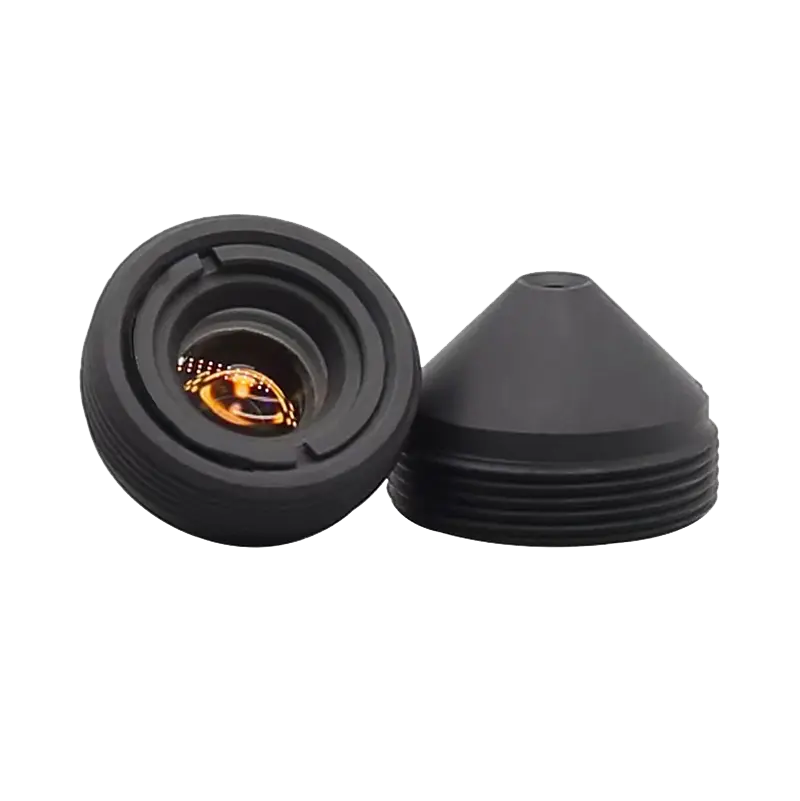
Mechanical Integration and Mounting: Specify the correct mount interface (such as M12, M8, or custom micro-threads) and back focal length to ensure the assembly fits within the physical limits of the device housing.
Frequently Asked Questions
Q1: What is the main benefit of using glass elements instead of plastic elements in a compact lens?
A1: Glass elements provide superior light transmission, greater scratch resistance, and excellent thermal stability. This prevents the lens from shifting focus when the device heats up or is exposed to fluctuating outdoor temperatures. Plastic elements are lighter and cheaper for mass production but are sensitive to temperature changes and have lower refractive indices.
Q2: How does Jinyuan control chromatic aberration in wide-angle lens designs?
A2: We resolve chromatic aberration by using achromat doublets (combining low-dispersion crown glass with high-dispersion flint glass) and optimizing the refractive indexes of the lens elements. This alignment ensures that different wavelengths of light focus on the same image plane, eliminating color fringing.
Q3: Can a hidden camera lens support high-definition resolutions like 4K?
A3: Yes. Supporting 4K resolution requires a lens design with a high spatial frequency response (measured in line pairs per millimeter) to resolve the small pixel sizes of modern 4K sensors. Jinyuan designs and manufactures custom high-MTF lens assemblies specifically for high-megapixel applications.
Q4: Why is matching the Chief Ray Angle (CRA) important for sensor integration?
A4: If the lens CRA is mismatched with the sensor's micro-lens array, light rays hit the edges of the sensor at too steep an angle. This causes light loss, vignetting, and color shading in the corners of the image. Custom matching the lens CRA to the sensor specification eliminates these issues.
Q5: What quality control measures are implemented during high-volume production?
A5: We utilize automated MTF testing equipment, wavefront analyzers, and active alignment machines to verify the optical performance of each lens during assembly. This ensures that every production batch meets the specified optical tolerances and performance standards.
Discuss Your Custom Optical Requirements with Jinyuan
Developing specialized imaging hardware requires a collaborative approach to design, testing, and system integration. Jinyuan possesses the engineering capabilities and manufacturing infrastructure required to translate your optical specifications into highly reliable physical products. Contact our engineering department today to discuss your project requirements, request detailed optical performance data, or schedule an engineering design review for your next-generation hardware platform.