
Modern Intelligent Transportation Systems (ITS) require flawless visual clarity across diverse environments. Automated Number Plate Recognition (ANPR/LPR), multi-lane speed enforcement, and real-time traffic analytics demand specialized optics. Off-the-shelf commercial lenses often fail under direct sunlight, continuous vibration, and rapid temperature swings.
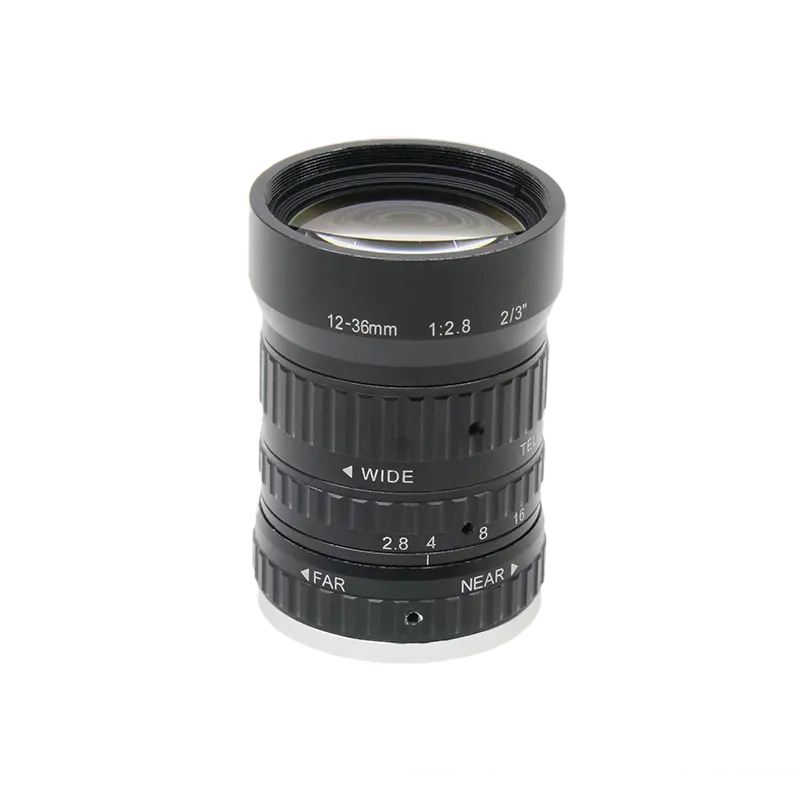
A standard catalog lens rarely matches specialized large-format sensors such as 1/1.8" or 2/3" formats. When image resolution drops at the frame edges, optical character recognition algorithms miss critical license plate details. This gap makes a dedicated 10-50mm High Resolution Traffic Lens the preferred choice for ITS camera integrators.
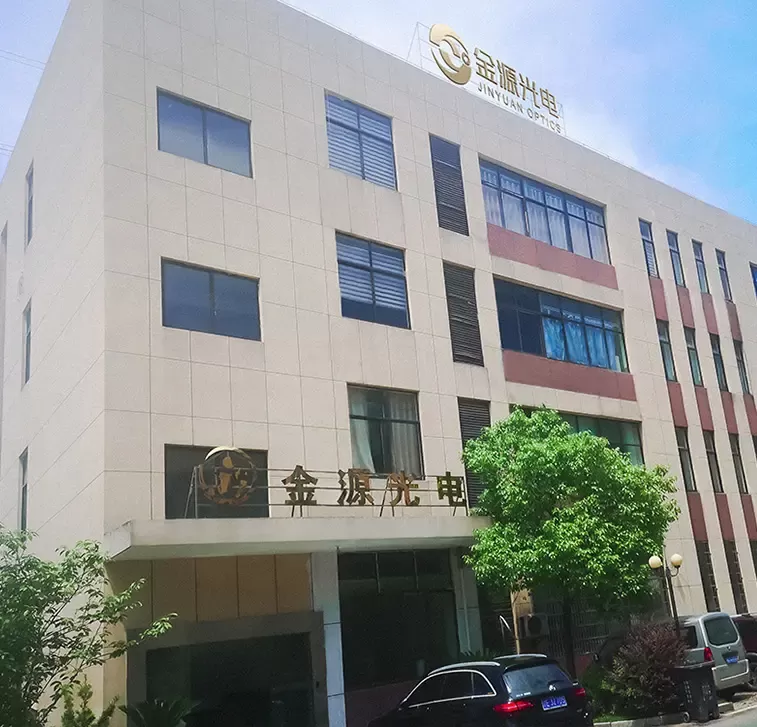
At Jinyuan, we bring over a decade of precision optical design and manufacturing experience to traffic vision systems. We help traffic system manufacturers transform initial optical requirements into field-ready prototypes and stable mass production.
Why the 10-50mm Focal Range Dominates Modern Traffic Monitoring
The 10-50mm varifocal configuration offers flexibility across diverse road setups. Instead of maintaining multiple fixed-focal-length lenses, traffic surveillance teams can deploy a single versatile platform.
At the 10mm wide-angle setting, the lens monitors up to four traffic lanes simultaneously. It provides situational awareness at intersections, captures vehicle movement, and tracks congestion patterns. Adjusting the focal length toward 50mm yields detailed telephoto magnification for long-distance vehicle capture, plate reading, and driver seat inspection.
Engineering a high-performance 10-50mm High Resolution Traffic Lens requires balancing several critical parameters:
Ultra-High Resolution: Resolving power supporting 4K, 8MP, and up to 12MP sensors to capture crisp details at high vehicle speeds.
Low Optical Distortion: Barrel and pincushion distortion kept under 1% to prevent geometric warping during algorithmic plate recognition.
True Day/Night Parfocal Tracking: Broadband anti-reflective coatings and advanced dispersion glass keep visible light (400–700nm) and near-infrared illumination (850nm/940nm) in identical focus.
Edge-to-Edge Sharpness: High Modulation Transfer Function (MTF) values across the entire field of view, preventing soft corners on wide sensor formats.
Phase 1: Custom Optical Design and Simulation (Concept to Prototype)
Every custom project begins with a clear technical specification. Jinyuan optical engineers work directly with your hardware team to evaluate sensor dimensions, pixel pitch, working distances, and mechanical enclosures.
Sensor Matching and Ray Tracing
Modern global shutter CMOS sensors feature small pixels that require precise optical alignment. We use industry-standard optical simulation platforms (such as Zemax and Code V) to optimize lens elements, air gaps, and curvature radii. Our engineers align the Chief Ray Angle (CRA) of the lens with the microlens structure of your sensor, preventing vignetting and color shading at wide angles.
Dynamic Aperture Control: P-Iris vs. DC-Iris
Outdoor traffic cameras operate in extreme lighting conditions. Glaring midday sun quickly gives way to dark nights broken only by headlights. We integrate motor-driven P-Iris or auto-adjusting DC-Iris modules into our lens assemblies.
Unlike standard auto-iris mechanisms that can over-close and cause severe diffraction, a stepper-motor-controlled P-Iris works directly with camera software. It maintains the aperture within its optical sweet spot, preserving deep depth of field and high contrast in shifting light.
Thermal Stability and Optomechanical Hardening
Outdoor traffic enclosures regularly experience temperatures between -40°C and +85°C. Uncompensated lenses suffer from thermal defocusing as metal barrels expand and optical glass indices shift.
Jinyuan applies optomechanical athermalization techniques. We combine positive and negative optical elements with balanced thermal expansion coefficients, housed in specialized alloy barrels. The focus remains sharp without active motorized refocusing, even during rapid weather changes.
Phase 2: Rapid Prototyping and Performance Verification
After finalizing optical simulations and mechanical tolerances, the project moves to physical prototyping. Fast sampling is vital for vision integrators facing tight client rollout schedules.
Jinyuan operates in-house CNC machining centers and cleanroom optical fabrication lines. We produce initial functional prototypes quickly, allowing your firmware and vision algorithms to begin testing right away.
Every prototype undergoes rigorous laboratory verification before leaving our facility:
Full-Field MTF Analysis: We test optical resolution on automated MTF test benches to verify center, middle, and corner sharpness across the 10mm to 50mm zoom range.
Stray Light and Flare Suppression: We test against strong off-axis light sources to eliminate ghosting and veiling glare caused by oncoming high-beam headlights.
Environmental Stress Screening: Prototypes endure thermal shock chambers, humidity tests, and random vibration tables that simulate real roadside pole mount conditions.
IP Rating Ingress Testing: We verify sealed mechanical structures to prevent internal dust buildup and moisture condensation.
Phase 3: Smooth Transition to Scale Mass Production
Building a single high-performing prototype in a lab is one thing; manufacturing thousands of identical units is another. A dependable 10-50mm High Resolution Traffic Lens requires strict manufacturing process controls.
Jinyuan manages production under an ISO 9001 certified quality system. We assemble and test all traffic lenses inside Class 1,000 and Class 100 cleanroom environments, preventing airborne dust from settling between glass elements.
Yield Control and Batch-to-Batch Consistency
We use automated optical alignment and active centering stations during assembly. Technicians align multi-axis element groups in real-time, monitoring live MTF readouts before applying UV-curable optical adhesives. This eliminates human error and guarantees that every lens leaving the line matches the approved prototype.
Integrated Supply Chain and Cost Efficiency
Because Jinyuan manages raw optical glass cutting, precision spherical grinding, multi-layer anti-reflection coating, and barrel machining internally, we maintain tight control over component costs and production timelines. This vertical integration protects your project against supply bottlenecks and provides competitive unit pricing for high-volume bids.
Why Vision Integrators Choose Jinyuan Optics
Selecting an optical manufacturing partner means choosing long-term product reliability. Over the past decade, Jinyuan has designed, manufactured, and delivered precision lenses for security, smart transportation, industrial automation, and aerial surveillance systems worldwide.
Our engineering and sales teams offer direct, responsive technical communication throughout your project. We assist with initial optical budget drafting, provide step-by-step mechanical drawings, deliver test data sheets with every sample, and support your camera firmware tuning.
Whether you need a specialized pilot run of 200 custom units or continuous deliveries of 50,000 units annually, our scalable manufacturing lines adjust to your deployment schedule.
Frequently Asked Questions (FAQ)
Q1: Why is a 10-50mm varifocal lens preferred over multiple fixed
focal length lenses for traffic installations?
A1: A 10-50mm varifocal lens gives field technicians the flexibility to fine-tune
viewing angles and focal distances directly at the installation site. It
eliminates the need to purchase, inventory, and swap different fixed lenses for
varying lane widths, pole heights, and setback distances.
Q2: How does a custom 10-50mm lens handle severe headlight glare
during night-time ANPR capture?
A2: Jinyuan applies
specialized broad-spectrum anti-reflective (AR) multi-coatings and internal
anti-glare barrel threading. These optical treatments minimize internal
reflections, preventing ghost images and flare when vehicles shine high-beam
headlights straight into the camera sensor.
Q3: Can Jinyuan customize the lens mount and mechanical dimensions
for our existing camera housing?
A3: Yes. We offer
standard CS-mount, C-mount, and customized board-level mounting interfaces. We
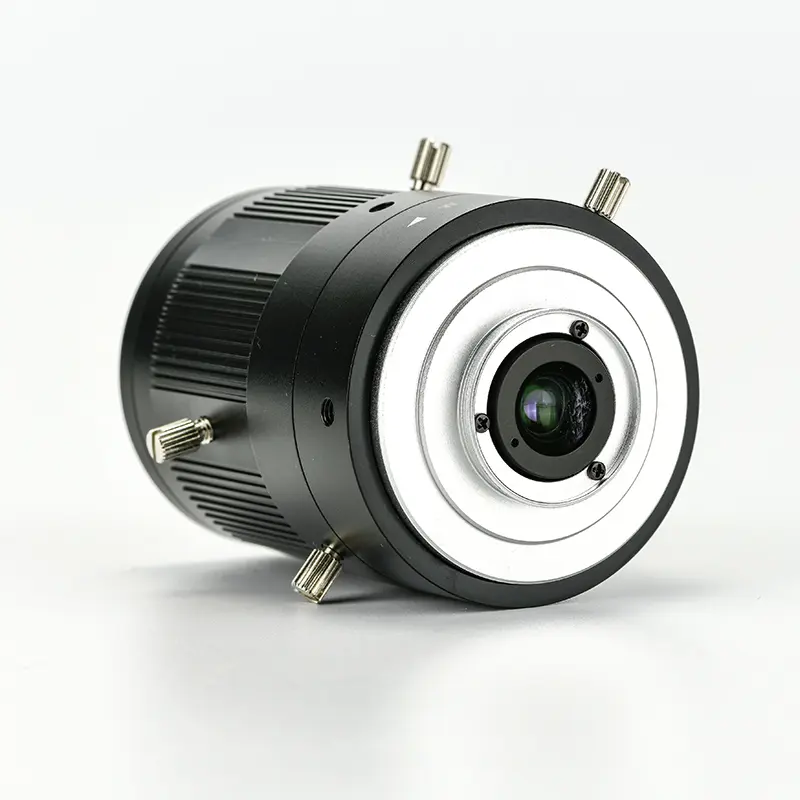
can also modify the outer barrel dimensions, focus/zoom locking screw
placements, and wiring harness lengths to fit inside your weatherproof
enclosure.
Q4: How does Jinyuan ensure that the lens focus does not drift during
temperature swings?
A4: We use an athermalized
optical architecture that pairs low-expansion optical glass elements with
precision-machined structural alloys. This optical formula balances thermal
expansion, keeping the image plane locked onto the sensor across temperatures
from -40°C to +85°C.
Q5: What is the typical lead time for a custom 10-50mm
prototype?
A5: After finalizing optical design
simulations and mechanical drawings, custom prototypes generally ship within 4
to 6 weeks. Standard modified optical designs with existing mechanical toolings
can ship even faster.
Start Your Custom Traffic Lens Project with Jinyuan
Deploying a successful traffic surveillance system starts with the right optical foundation. From initial optical prescription and prototype validation to high-volume assembly, Jinyuan delivers the performance, durability, and batch consistency your smart transportation projects demand.
Do you need an optimized 10-50mm High Resolution Traffic Lens built for your specific image sensor and environmental requirements? Contact the Jinyuan engineering team today to discuss your technical specifications, request optical test data, and receive a competitive prototype quotation.