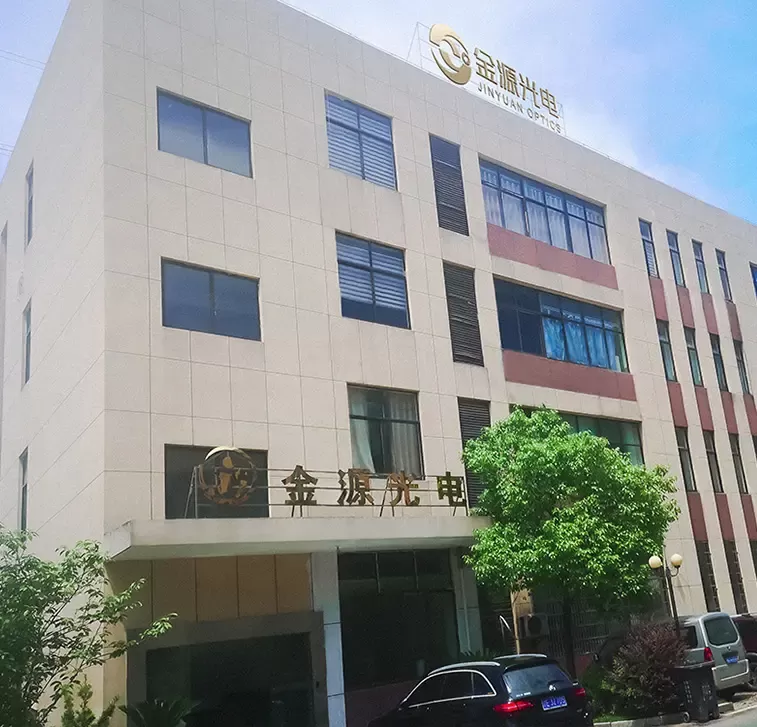

The video surveillance industry has evolved from simple analog cameras to high‑resolution IP networks with 4K, thermal, and multi‑sensor imagers. At the core of every security camera lies the lens—a component that determines field of view, low‑light performance, resolution sharpness, and IR consistency. Selecting a reliable optical partner is a strategic decision for OEMs, system integrators, and project distributors. A China CCTV lens manufacturer (the term appears throughout this technical article as China CCTV lens manufacturer) must balance mass production efficiency with stringent quality parameters: MTF (modulation transfer function) consistency, flare suppression, and environmental stability. This guide provides an engineering‑level overview of the design, coating, assembly, and validation processes that define a professional supplier, highlighting how partners like Jinyuan address common procurement pain points.
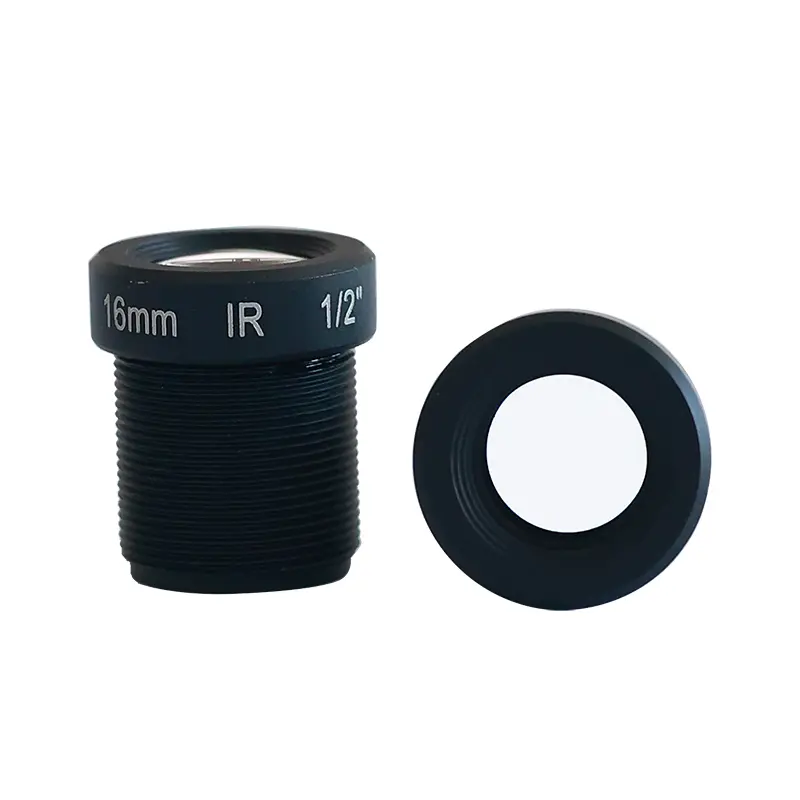
1. Core Technical Capabilities of a Professional China CCTV Lens Manufacturer
Unlike consumer optics, CCTV lenses demand round‑the‑clock reliability, wide operating temperatures (-30°C to +70°C), and resistance to humidity and vibration. A specialized China CCTV lens manufacturer structures its production around several key competencies:
In‑house optical design – Using Zemax or Code V to simulate ray tracing, minimize aberrations (coma, astigmatism, distortion), and optimize for specific sensor formats (1/2.7″, 1/1.8″, 1″).
Precision glass molding vs. traditional grinding – High‑volume aspheric lenses are produced by molding, achieving surface accuracy < 0.1 µm without expensive post‑polishing.
Multi‑layer anti‑reflection (AR) coating – Broadband AR stacks for 400–1000 nm, with residual reflectance ≤ 0.5% to reduce ghosting and improve contrast.
IR cut correction – Many designs incorporate a fixed or motorized IR‑cut filter switch mechanism, ensuring day/night focal plane shift remains below 0.02 mm.
Environmental sealing – IP67 rated lens barrels for outdoor dome cameras, with nitrogen purging options to prevent internal fogging.
Jinyuan operates a 5,000 sqm clean room assembly line where every lens barrel undergoes interferometric testing and centration check. Their technical team supports customization of focal lengths from 2.8 mm (ultra‑wide) to 100 mm (telephoto), as well as varifocal and motorized zoom configurations.
2. Key Application Areas Requiring High-Quality CCTV Lenses
Different surveillance scenarios impose contradictory requirements: a retail store needs a wide field with minimal distortion; a perimeter fence needs long‑range sharpness and IR illumination compatibility. Below are four segments where a capable China CCTV lens manufacturer adds quantifiable value.
2.1. City Surveillance & Traffic Monitoring
Urban security cameras often operate 24/7 with unpredictable lighting (direct sun, headlights, deep shadows). Lenses must have low F‑numbers (F1.2–F1.6) to capture usable images at night while maintaining resolution at the edges. Advanced designs include aspherical elements to correct spherical aberration, enabling consistent MTF across the entire sensor. A trusted China CCTV lens manufacturer provides measured MTF charts for each production batch, guaranteeing at least 0.3 lp/px contrast at 200 lp/mm for 4MP sensors.
2.2. Industrial Machine Vision
Factory automation uses CCTV‑style lenses for inspections, barcode reading, and robot guidance. Here, distortion control is more critical than light gathering: barrel distortion must be ≤ 1% for measurement accuracy. Telecentric lenses are a specialty sub‑category. While not every China CCTV lens manufacturer offers telecentric lines, mid‑volume orders can be fulfilled by those with flexible optical design teams.
2.3. Automotive & Mobile Surveillance (Buses, Trains, Police Vehicles)
Vibration resistance up to 10G, wide operating temperature, and anti‑fog coating are mandatory. Lenses are potted or sealed with O‑rings at every junction. Additionally, vehicles require lenses with a hydrophobic front coating to shed rain. A specialized China CCTV lens manufacturer conducts environmental stress screening (ESS) including rapid temperature cycling and salt spray testing per ISO 16750.
2.4. Thermal & Multi‑sensor Integration
Hybrid cameras combine visual and thermal sensors. The visual lens must be parfocal with the thermal imager across zoom ranges – a demanding alignment challenge. Only a China CCTV lens manufacturer with sub‑micron mechanical assembly precision can maintain pixel‑level registration between the two channels. Jinyuan has developed a dual‑band corrected lens series that reduces chromatic shift between visible and 850 nm/940 nm IR illumination, widely used in perimeter intrusion detection.
3. Optical Design Parameters: From Specification to Lens Drawing
Procurement managers often receive lens datasheets that lack key parameters. A professional China CCTV lens manufacturer provides at least the following:
Focal length & aperture range – Fixed (e.g., 6 mm) or varifocal (2.8–12 mm); F‑number (F1.4, F2.0) affects low‑light performance.
Image circle diameter – Must cover the sensor diagonal (e.g., 6.5 mm for 1/2.5″ sensor).
Back focal length (BFL) – mechanical clearance from lens mount to image plane; critical for filter or window integration.
Relative illumination (RI) – ratio of corner to center illuminance; should exceed 60% for uniform image.
TV distortion – measured as a percentage; below 2% for general surveillance, below 0.5% for metrology.
Beyond these, ask for a through‑focus MTF plot at multiple field points. A reliable China CCTV lens manufacturer shares this data without hesitation. Jinyuan provides a full optical report with every lens shipment, including measured values for EFL, Fno, distortion, and relative illumination, traceable to the individual production lot.
4. Manufacturing Quality Control: What Separates Premium from Commodity Lenses
Low‑cost lenses often suffer from centration errors (tilted elements), inconsistent coating thickness, and metal barrel dimensional variations. These defects cause blurry corners, focus shift with zoom, or IR hotspots. A rigorous China CCTV lens manufacturer implements the following QC gates:
Single lens inspection – Each glass or molded element is checked for bubbles, scratches, and surface roughness (MIL‑PRF‑13830B).
Centration measurement – Automatic alignment stations measure tilt and decenter of each group; acceptable tolerance is ≤ 30 arcseconds.
Active alignment – During assembly, the lens is focused on a collimator while a camera sensor captures the image; the final adjustment uses a 6‑axis manipulator to optimize MTF.
Environmental testing – Random samples undergo 48‑hour humidity (93% RH at 50°C), 24‑hour salt spray, and 100‑cycle thermal shock (-30°C to +70°C) to verify no haze or de‑lamination.
Flare & ghost analysis – A dedicated test bench with a high‑intensity point light source evaluates stray light performance; acceptance criteria require no visible ghost within the central 80% field.
Such procedures add cost but ensure field reliability. For projects with thousands of cameras, the failure rate difference between a certified China CCTV lens manufacturer and a general optics supplier can be 0.2% vs 5% after two years, translating directly to lower warranty and service expenses.
5. Common Industry Pain Points and Engineering Solutions
System integrators frequently encounter the following issues with uncertified lens suppliers. Each corresponds to a specific capability that an advanced China CCTV lens manufacturer must offer.
5.1. Focus Shift When Switching IR Cut Filter (Day/Night)
Many lenses designed for visible light have a different focal plane for 850 nm IR. At night the image becomes defocused. The solution: IR‑corrected lenses (also called IR‑optimized) that use special glass types (low‑dispersion, anomalous partial dispersion) to equalize focus across 400–950 nm. A qualified China CCTV lens manufacturer verifies this through a dedicated test: capture a resolution chart under 850 nm illumination and measure MTF drop. Jinyuan’s IR‑corrected series maintains MTF >0.4 at 100 lp/mm under IR, verified for every optical design.
5.2. Lens Fogging Due to Humidity Ingress
If nitrogen purging is not applied or seals fail, moisture condenses on inner elements. Prevention: O‑ring grooves with compressed radius, argon leak testing for each assembled lens, and silica gel packs inside the barrel. Additionally, a hydrophobic coating on the external surface reduces water adhesion. Ask your China CCTV lens manufacturer for leak rate certification (e.g., ≤ 1×10⁻⁸ Pa·m³/s for helium).
5.3. Inconsistent Zoom Tracking (Varifocal Lenses)
When a varifocal lens is adjusted, the focus point should remain constant (parfocal) but low‑end designs lose focus when changing focal length. This requires cam mechanism precision with cam slots machined to ±0.02 mm tolerance. A professional China CCTV lens manufacturer uses stainless steel cam pins and hardened aluminum barrels, then verifies parfocality on an automatic zoom test bench (focus drift ≤ 0.01 mm across the zoom range).
6. Optical Coatings for Specialized Environments
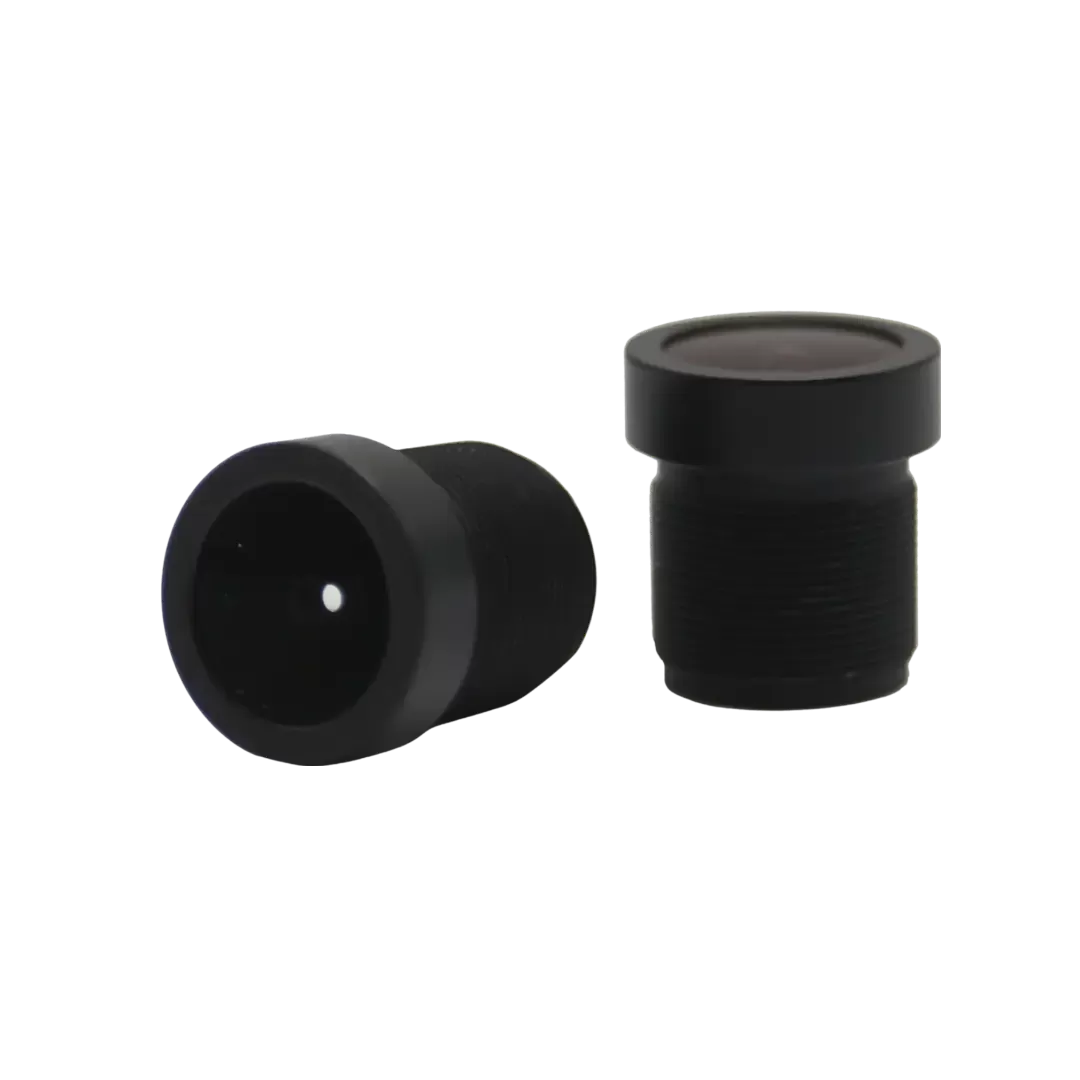
Beyond standard AR coatings, advanced CCTV lens manufacturers offer:
DLC (diamond‑like carbon) – For outdoor lenses exposed to sand abrasion; hardness > 2000 HV.
Oleophobic coating – Resists fingerprint and oil smudges, important for dome cameras in public areas.
Bandpass filter coating – 850 nm or 940 nm narrowband for active IR illumination, blocking visible light to reduce noise.
Jinyuan maintains an in‑house coating chamber with electron beam evaporation, capable of depositing up to 12 layers with ±2 nm thickness accuracy, meeting MIL‑C‑48497A specifications.
7. Frequently Asked Questions (Engineering & Procurement Focus)
Q1: What is the typical lead time for custom optical designs from a China CCTV lens manufacturer?
A1: For a modified focal length or aperture variant based on existing tooling, tooling modifications and sample production require 4–6 weeks. For an entirely new optical design with 5–8 elements, the timeline is 12–16 weeks, including optical design iterations, mechanical drawing, tool fabrication, and validation samples. Mass production lead times after approval are 4–6 weeks for volumes up to 10,000 units.
Q2: How do I verify the claimed MTF of a lens before ordering large quantities?
A2: Request an MTF test report measured on an OptiCentric or ImageMaster bench. Additionally, ask for a sample lens and perform your own test using a USAF 1951 resolution chart and a camera with the target sensor. Compare center and corner sharpness at full aperture and closed down one stop. A reputable China CCTV lens manufacturer will also accept third‑party lab verification as a condition in the quality agreement.
Q3: Can a China CCTV lens manufacturer produce lenses for 1.1″ sensor (4/3″) format?
A3: Yes, higher‑end manufacturers have expanded lens coverage for large sensors. The image circle must exceed 21.6 mm. These lenses often employ 9–12 elements including multiple aspheric and ED (extra‑low dispersion) glasses. Jinyuan offers a 16 mm fixed focal length lens for 1.1″ sensors used in traffic cameras, with 20 MP resolution capability.
Q4: What mounting interfaces are commonly available: M12, CS, C? Can we request custom threading?
A4: Standard options: M12 (board lens for compact cameras), CS mount (12.5 mm flange back), C mount (17.526 mm flange back). Some large‑format lenses use F‑mount or T‑flange. Most China CCTV lens manufacturers can customize thread dimensions (e.g., M30×0.5) for proprietary housings, provided the order volume exceeds 2,000 units. Minimum order quantity for custom threading is negotiable.
Q5: How does a manufacturer ensure that the lens does not create hotspots with 850 nm LED arrays?
A5: Hotspots arise from internal reflections between the lens and the sensor cover glass. To mitigate, the lens incorporates a 850 nm antireflection coating on both sides of every air‑glass interface, and the barrel interior has matte black anodizing with 5% gloss. A China CCTV lens manufacturer should provide a near‑infrared transmission spectrum and an image of a uniform white wall under 850 nm light to confirm uniformity. Jinyuan tests for hotspots using a integrating sphere and an IR‑sensitive camera.
8. Conclusion: Selecting a Technical Partner for Long‑Term Supply Stability
Moving beyond price‑driven sourcing, professional buyers evaluate a China CCTV lens manufacturer based on optical design capability, process control, environmental testing, and supply chain transparency. The right partner reduces field returns, simplifies camera integration, and enables differentiation through features like motorized zoom or p‑iris control. Jinyuan, as a dedicated optical solutions provider, offers OEM/ODM services with full in‑house production—from glass molding to final assembly. Request a technical package to review their lens roadmap and quality certifications.
Request a Lens Specification Review & Quotation
For surveillance system manufacturers, solution providers, or distributors seeking a reliable China CCTV lens manufacturer, submit your requirements to the Jinyuan engineering team: sensor format, resolution target (2MP/4MP/8MP), focal length range, environmental class, and estimated annual volume. We provide optical design consultation, sample approval, and production scheduling.
Inquiry contact: optics@jinyuanlens.com – Use subject line “CCTV Lens RFQ – [Project Code]” for a reply within 24 business hours. Volume discounts and lens‑camera matching services are available for qualified partners.
Jinyuan – Precision optics manufactured to specification.