
Selecting the right optical system for your photography workflow extends far beyond matching a mount to a camera body. The interaction between focal length, aperture mechanics, optical design, and image stabilization defines the final visual outcome. For photographers who demand precision, understanding these variables transforms the decision process from guesswork into informed strategy. This guide examines the full spectrum of camera lenses, including parameters often overlooked in standard overviews.
The Classification Framework: Fixed vs. Variable Focal Length
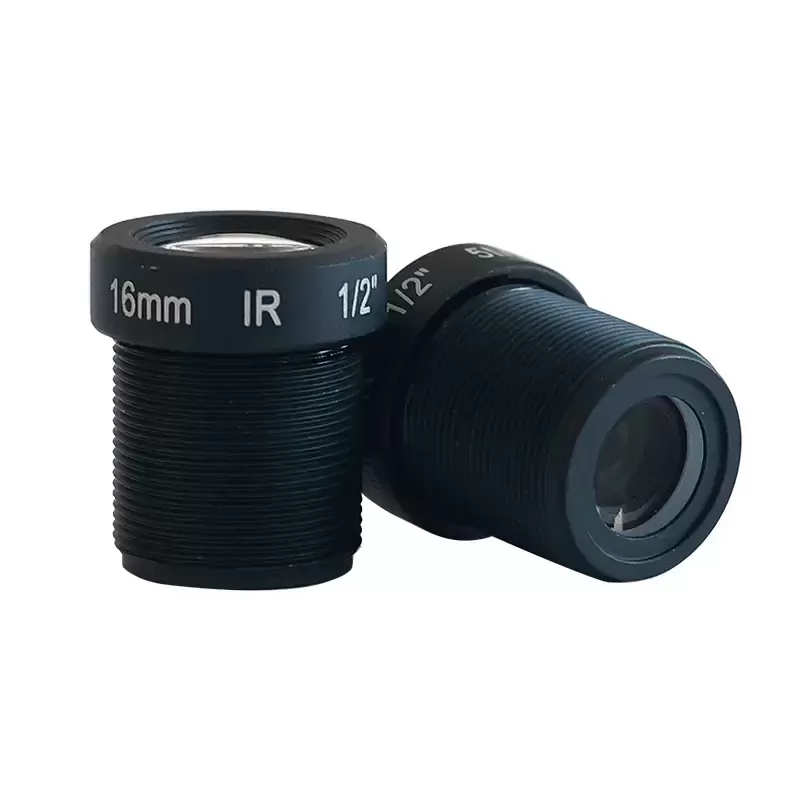
The fundamental division among camera lenses lies in focal length flexibility. Prime optics maintain a single focal length, delivering consistent angle-of-view and often superior light-gathering capability. Zoom optics provide variable focal ranges, offering compositional adaptability without changing glass. Each category serves distinct creative and operational requirements.
Prime Optics: Specialized Performance
Prime lenses are engineered around one specific focal length, allowing optical designers to optimize every glass element for that exact configuration. The result typically yields higher resolution at maximum aperture, reduced chromatic aberration, and more controlled distortion patterns compared to zoom counterparts covering similar ranges. Key prime lens categories include:
Wide-angle primes (14mm–24mm): Essential for architectural interiors, astrophotography, and environmental storytelling where foreground-background relationships matter.
Standard primes (35mm–50mm): Often described as the "nifty fifty," the 50mm f/1.8 delivers natural perspective and exceptional low-light performance, making it the most accessible entry into prime lens quality.
Short telephoto primes (85mm–105mm): Classic portraiture focal lengths that produce flattering compression and controlled depth-of-field.
Super telephoto primes (300mm–600mm): Wildlife and sports specialists where absolute sharpness and fast autofocus justify the physical size and cost.
Zoom Optics: Versatility and Convenience
Zoom camera lenses have evolved significantly, with modern designs approaching prime-level performance in many cases. The optical formula must correct aberrations across the entire zoom range, which introduces design compromises. However, the operational flexibility often outweighs these trade-offs for event, travel, and documentary photographers. Common zoom categories include:
Standard zooms (24–70mm, 24–105mm): The workhorse range covering wide to medium telephoto, suitable for 70% of general photography situations.
Ultra-wide zooms (14–24mm, 16–35mm): Landscape and architecture specialists that capture expansive scenes with controlled distortion at the wide end.
Telephoto zooms (70–200mm, 100–400mm): Event and wildlife tools offering reach with flexible framing options.
Super-zooms (18–200mm, 28–300mm): All-in-one solutions for travel where changing lenses is impractical, though optical quality typically suffers at extremes.
Beyond Focal Length: Optical Parameters That Define Image Quality
Focal length describes field-of-view but does not capture the complete optical performance picture. Aperture mechanics, glass composition, and lens coating technologies fundamentally influence the final image character. Professional photographers evaluate camera lenses by considering these factors alongside focal range.
Aperture and Light Transmission
Maximum aperture determines low-light capability and depth-of-field control. A lens with f/1.4 aperture transmits four times more light than an f/2.8 lens, enabling faster shutter speeds in dim conditions. Wide aperture also produces shallower depth-of-field, separating subjects from busy backgrounds. However, many zoom lenses have variable maximum apertures across the zoom range, meaning light transmission changes as you zoom. Constant-aperture zooms maintain consistent exposure throughout the focal range, a critical feature for controlled lighting environments.
Optical Coatings and Glass Elements
Lens coatings reduce flare, ghosting, and internal reflections, improving contrast in backlit conditions. Modern multi-coating technologies utilize nano-structures to minimize light loss at each air-to-glass surface. Additionally, specialized glass elements address specific aberrations:
ED (Extra-low Dispersion) glass: Reduces chromatic aberration, particularly noticeable as color fringing at high-contrast edges.
Aspherical elements: Correct spherical aberration and distortion, allowing more compact designs with fewer corrective elements.
Fluorite elements: Lightweight, low-dispersion material used in premium telephoto optics for improved color rendition and sharpness.
Autofocus Systems and Drive Mechanisms
The autofocus motor type significantly affects acquisition speed, tracking accuracy, and noise levels. Different applications prioritize different characteristics:
Ultrasonic Motors (USM, SSM, SWM): Fast, quiet, and suitable for still photography and video. Ring-type USM provides full-time manual override without switching modes.
Stepping Motors (STM): Optimized for smooth, silent continuous autofocus during video recording. Smaller and lighter than ultrasonic designs.
Linear Motors: Found in high-end mirrorless camera lenses, offering near-instantaneous focus response and silent operation.
DC Motors: Basic, audible focus mechanisms typically found in budget optics or older designs.
For sports and wildlife photographers, autofocus speed and tracking consistency are often more important than absolute resolution. The ability to maintain focus on erratic subjects with minimal hunting distinguishes professional-grade camera lenses from consumer alternatives.
Image Stabilization: Lens-Based vs. In-Body Systems
Camera lenses with optical image stabilization use floating lens elements to counteract hand movement, extending hand-holdable shutter speeds by three to five stops. This feature is particularly valuable with telephoto focal lengths where camera shake becomes more visible. In-body image stabilization (IBIS) achieves similar results by moving the sensor, offering stabilization for any attached lens. The two systems work cooperatively in many modern camera bodies, providing enhanced correction when both are engaged. When evaluating camera lenses for handheld use, consider:
Stabilization effectiveness at specific focal lengths
Compatibility with in-body stabilization systems
Power consumption impact on battery life
Performance with panning movements
Mount Compatibility and Sensor Format Considerations
Physical mount design determines lens-camera interoperability, but sensor format introduces an additional layer of compatibility consideration. A 50mm lens on an APS-C sensor provides a 75mm equivalent field-of-view due to the crop factor. This means standard lenses behave as short telephoto optics on smaller sensors, while wide-angle lenses appear more moderate. Professional camera lenses are increasingly designed for specific sensor sizes, with dedicated optical formulas for full-frame, APS-C, and Micro Four Thirds formats. When assembling a system, consider:
Whether the optical design covers the image circle required by your sensor
Weather-sealing compatibility with camera body
Electronic communication protocols for autofocus, aperture, and metadata
Adapter availability if mixing systems
Filter Threads and Hood Design
Practical considerations like filter thread diameter affect accessory compatibility and cost. Larger diameter front elements typically require more expensive filters. Lens hood design influences flare resistance and provides physical protection. Petal-shaped hoods are optimized for specific focal lengths, while cylindrical designs are more common on telephoto camera lenses. Professional photographers often standardize on a single filter size across their lens collection to minimize accessory costs and carrying weight.
Decoding Lens Specifications
Understanding lens nomenclature helps evaluate options beyond marketing claims. Key specifications include:
MTF (Modulation Transfer Function) charts: Show theoretical resolution performance across the image circle, indicating sharpness and contrast at different apertures.
Minimum focus distance and maximum reproduction ratio: Determine close-focusing capability, essential for product and macro photography.
Diaphragm blade count and shape: Affect bokeh quality and sunstar rendering at stopped-down apertures.
Focus breathing: Focal length changes during focusing, particularly relevant for video work where focus pulls alter framing.
The Optical Design Philosophy
Different manufacturers approach lens design with distinct philosophical priorities. Some prioritize absolute sharpness wide-open, accepting larger size and weight. Others emphasize portability while maintaining acceptable performance. Some camera lenses are optimized for resolution, others for bokeh character, and still others for distortion control. Understanding these design trade-offs helps match lenses to specific photographic styles. For instance, environmental portrait photographers might prefer a 35mm f/1.4 with smooth out-of-focus rendering, while landscape photographers may choose a 16-35mm f/4 zoom for edge-to-edge sharpness at f/8.
Jinyuan, a respected name in optical manufacturing, produces precision-engineered lenses that balance these competing demands through careful material selection and manufacturing tolerances. Their product line reflects a deep understanding of professional workflow requirements, offering solutions that address the real-world challenges photographers encounter.
Lens Maintenance and Long-Term Value
Camera lenses represent significant financial investments that maintain value differently across brands and models. Factors affecting resale include:
Optical quality reputation and sample variation
Build quality and weather-sealing durability
Availability of service and repair parts
System compatibility and manufacturer support
Proper maintenance extends lens lifespan and preserves image quality. Store camera lenses in temperature-controlled environments with silica gel to prevent fungal growth. Clean glass surfaces with appropriate tools and solutions—microfiber cloths and lens cleaning fluid designed for coated optics. Avoid disassembling camera lenses without specialized tools, as precise element alignment affects optical performance. When purchasing used lenses, inspect for:
Scratches, haze, or separation on glass surfaces
Smooth, consistent focusing and zoom ring movement
Even aperture blade operation without oil contamination
Mount contact condition and weather-sealing integrity
Color Rendition and Character
Optical design influences color response, contrast signature, and overall image character. Some camera lenses produce warmer, higher-contrast images, while others deliver cooler, more neutral output. These differences become evident in side-by-side comparisons, particularly in mixed lighting. Consistent color rendering across a lens collection simplifies post-processing workflow, as color correction becomes more predictable. Professional photographers often choose camera lenses based on this optical signature, matching lenses to preferred aesthetic outcomes.
Matching Lenses to Applications
The optimal lens choice depends on primary subject matter and working conditions. Consider these application-specific recommendations:
Architectural photography: Tilt-shift or perspective control lenses for keystone correction, typically 17mm to 24mm focal lengths with minimal distortion.
Product photography: Macro lenses with 1:1 reproduction ratio, allowing life-size capture of small objects. 50mm to 105mm focal lengths offer comfortable working distances.
Event photography: 24-70mm and 70-200mm zoom pair covering most situations without lens changes, fast constant aperture for indoor lighting.
Aviation and motorsport: 100-400mm or 200-600mm telephoto zooms with advanced autofocus and subject tracking capabilities.
Real estate photography: Ultra-wide zoom, 16-35mm, with controlled barrel distortion and consistent sharpness across the frame.
For studios and production houses requiring consistent optical performance across a fleet of equipment, standardizing on specific camera lenses simplifies workflow management and reduces post-production complexity. Jinyuan's manufacturing consistency ensures minimal sample variation, making their optics a reliable choice for professionals who depend on predictable results shoot after shoot.
Navigating the Second-Hand Market
Used camera lenses offer significant value but require careful evaluation. Auction sites, private sellers, and dealer inventory all present opportunities, each with different risk profiles. Key evaluation points:
Shutter count or wear indicators (mount wear, paint condition)
Optical condition inspection with a flashlight for internal dust, haze, or fungus
Autofocus motor responsiveness and noise
Zoom ring smoothness and resistance consistency
Lens firmware version (for mirrorless systems)
Reputable dealers often provide warranty coverage on used camera lenses, offering protection against hidden defects. Private sales typically offer lower prices but transfer all risk to the buyer. Test used optics thoroughly before finalizing the purchase, ideally with your camera body to verify compatibility and performance.
Common Questions About Camera Lenses
Q1: How does aperture affect depth-of-field and low-light performance in camera lenses?
A1: A wider aperture (lower f-number) reduces depth-of-field, isolating subjects against blurred backgrounds while allowing faster shutter speeds in dim light. Aperture also influences lens size and weight, as larger glass elements are required to achieve wider openings. The optical design must correct aberrations that become more pronounced at full aperture, explaining why wide-aperture camera lenses often cost considerably more than their slower counterparts.
Q2: What is the practical difference between full-frame and crop-sensor camera lenses?
A2: Full-frame lenses project a larger image circle that covers 35mm sensors, while crop-sensor lenses project smaller circles optimized for APS-C or Micro Four Thirds formats. Using a full-frame lens on a crop body works correctly (though with reduced field-of-view), but crop-sensor lenses on full-frame bodies produce heavy vignetting or dark corners. Additionally, crop-sensor lenses often incorporate optical corrections tailored to the smaller sensor's size, potentially affecting performance when adapted.
Q3: Why do some camera lenses have fixed maximum apertures while others vary with zoom?
A3: Constant-aperture zoom lenses maintain the same f-number throughout the zoom range, requiring more complex mechanical and optical designs. Variable-aperture zooms reduce maximum aperture at longer focal lengths, simplifying the optical formula and reducing cost. Constant aperture allows consistent exposure settings across the zoom range, critical for video and studio work where lighting changes complicate production.
Q4: How significant is lens stabilization when camera bodies already have in-body stabilization?
A4: Lens-based stabilization coordinates with in-body systems in many modern cameras, providing enhanced correction beyond what either system achieves alone. Lens stabilization also stabilizes the viewfinder image, improving composition and focus accuracy. However, in-body stabilization works with any attached lens, offering some benefit even for non-stabilized camera lenses. The choice depends on camera system capabilities and your primary shooting conditions.
Q5: What signs indicate a used camera lens requires professional servicing?
A5: Symptoms include visible haze or fogging between elements, sticky or grinding focus ring action, inconsistent autofocus performance, aperture blades that hesitate or stick, and visible oil on aperture surfaces. Internal dust is generally acceptable and does not affect image quality unless substantial. Send camera lenses with these issues to authorized service centers rather than attempting DIY repairs, as misalignment during reassembly degrades optical performance permanently.
Q6: What makes certain camera lenses more suitable for video work than others?
A6: Video-oriented camera lenses prioritize quiet, smooth autofocus, minimal focus breathing, and parfocal design (maintaining focus through zoom range). Stepper motors and linear motors provide silent continuous autofocus, while dedicated cinema lenses offer geared focus rings, consistent aperture across ranges, and minimal focus shift during focal length changes. Additionally, de-clicked aperture rings allow stepless exposure transitions during video recording, avoiding audible clicks.
Q7: How does lens sharpness vary across the aperture range?
A7: Most camera lenses perform slightly stopped down (one to two stops from maximum aperture) where aberrations are controlled while diffraction remains minimal. Wide-open performance often shows reduced sharpness at image corners, while f/16 and smaller apertures introduce diffraction softening that reduces overall resolution. The optimal aperture balance between aberrations and diffraction depends on the specific optical design and sensor resolution.
For professional production teams and studios configuring comprehensive imaging systems, Jinyuan provides customized lens solutions tailored to specific project parameters. Their engineering team works directly with clients to specify optical characteristics, mount configurations, and durability requirements for demanding environments. Contact Jinyuan's optical specialists to discuss your camera lens requirements and receive personalized recommendations based on your workflow and quality standards.