
Modern traffic management demands flawless visual data. Municipalities and transport authorities rely on automated systems to manage congestion, enforce speed limits, and capture vehicle plates at high speeds. These operations leave no room for blurred images or optical distortion.
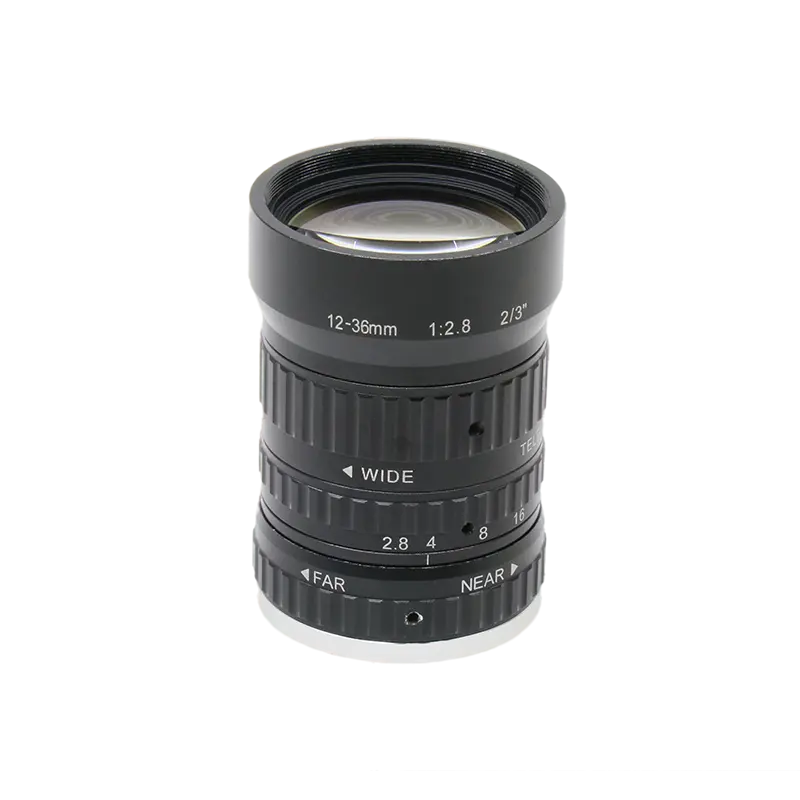
Off-the-shelf security lenses often fail under demanding road conditions. Variable distances, extreme sunlight, and vehicle speeds exceeding 120 km/h require specialized optical designs. High-performance traffic cameras zoom lenses provide the focal precision, large sensor coverage, and low-light throughput necessary for high-accuracy recognition.
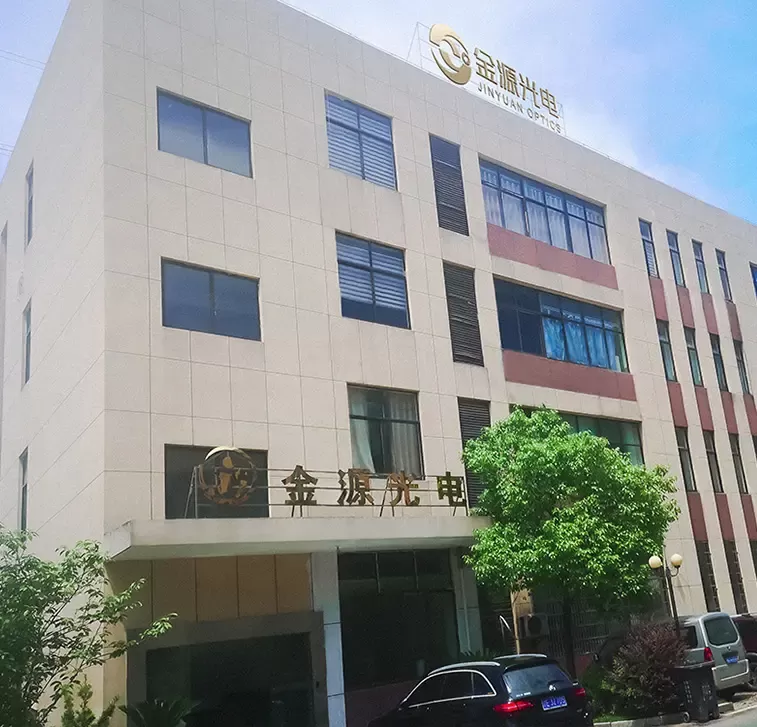
As an optical manufacturer with over a decade of industry experience, Jinyuan engineers custom OEM and ODM optical assemblies. This guide examines the engineering requirements for traffic-specific optics and outlines how custom manufacturing solves complex integration challenges for Intelligent Transportation Systems (ITS).
Why Standard Lenses Fall Short in Intelligent Transportation Systems (ITS)
Standard security lenses work well for static indoor environments or wide-angle parking lot surveillance. However, highway and urban traffic capture introduces physical and optical variables that standard commercial lenses cannot manage.
1. High-Speed Motion and Insufficient Light Intake
Capturing a vehicle traveling at highway speeds requires exposure times as short as 1/1000 to 1/2000 of a second. Short exposures drastically limit the photons reaching the image sensor.
Standard lenses often exhibit high F-numbers at longer focal lengths, resulting in dark, noisy frames. Custom traffic lenses utilize large physical apertures (low F-numbers across the entire zoom range) to deliver clear images to the sensor without inducing motion blur.
2. Extreme Day/Night Light Fluctuations and Glare
Traffic cameras face harsh direct headlights, retro-reflective license plates, and low-angle sun glare. Standard coatings create internal flare and ghosting, washing out critical license plate characters.
Custom traffic cameras zoom lenses feature specialized anti-reflective (AR) broadband multi-coatings. These coatings optimize light transmission between 400 nm and 950 nm, suppressing stray reflections and glare.
3. Harsh Outdoor Operating Environments
Roadside camera enclosures absorb severe solar radiation, engine heat, and freezing winter temperatures. Standard lenses with plastic barrels or non-compensated optical groups lose focal accuracy as temperatures shift.
Custom ITS lenses incorporate optothermal compensation. Using matched optical glass and metal alloy housings, these lenses maintain focus across an operational range of -40°C to +80°C while resisting continuous traffic vibrations.
4. Changing Multi-Lane Installation Geometries
A single camera model may be deployed on a 6-meter gantry over a single lane, or on a 15-meter roadside mast monitoring four lanes 50 meters away. Fixed focal lenses require system integrators to stock dozens of hardware variants.
Motorized zoom lenses let operators adjust the field of view (FOV) remotely during setup. This adaptability reduces hardware inventory while delivering the exact pixel density required per lane.
Key Technical Factors to Consider for Traffic Camera Zoom Lenses
Engineering an optical system for automated number plate recognition (ANPR) and traffic monitoring involves balancing several optical and mechanical parameters.
Optical Zoom vs. Digital Zoom for ANPR/LPR
Digital zoom crops the incoming image, reducing pixel count and degrading resolution. For long-distance license plate recognition (LPR), digital zoom often renders alphanumeric characters unreadable.
True optical zoom changes the physical focal length of the glass elements. This maintains full sensor resolution across the target vehicle, preserving the sharp contrast necessary for optical character recognition (OCR) algorithms.
Large Sensor Format Compatibility
Modern ITS cameras use 1/1.8", 1/1.2", 1", and larger image sensors to increase dynamic range and low-light sensitivity. A lens designed for a smaller 1/3" sensor produces heavy vignetting and soft edges on these larger sensors.
High-grade traffic cameras zoom lenses provide an expanded image circle that covers large-format sensors. They deliver uniform edge-to-edge sharpness and balanced illumination across every captured traffic lane.
Ultra-Low Optical Distortion and 4K Resolution
Traffic enforcement cameras used for speed calculation, lane discipline, and red-light violations need geometrically accurate images. Optical barrel or pincushion distortion can warp speed-calibration grids and skew measurement data.
Low Distortion: Optical distortion must remain below 1% to 2% to ensure accurate algorithmic measurements.
High Resolving Power: Custom optics support 4K (8MP to 12MP) sensors, delivering higher line pairs per millimeter (lp/mm) across the field.
Achromatic Doublets: Advanced glass combinations minimize chromatic aberration (color fringing) along high-contrast plate borders.
IR Day/Night Confocal Performance
Most traffic cameras run in visible light during the day and switch to 850 nm or 940 nm infrared (IR) illumination at night. Standard lenses shift their focal point between visible and IR spectrums, resulting in blurry nighttime captures.
IR confocal optical designs align visible and infrared light onto the exact same focal plane. The camera maintains razor-sharp focus 24 hours a day without requiring mechanical refocusing during day/night switching.
Motorized Stepper Motors and Precise Auto-Focus
Remote maintenance saves substantial traffic control costs. Lenses equipped with integrated stepper motors allow traffic operators to fine-tune zoom, focus, and iris directly from the central traffic operations center.
Preset position feedback (using potentiometers or Hall sensors) allows the lens to return to exact focus points instantly after preset patrols or environmental checks.
Tailored Optical Solutions: The Jinyuan OEM/ODM Advantage
Customizing optical systems bridges the gap between theoretical camera capabilities and real-world roadside performance. Jinyuan Optical provides custom design and manufacturing services to meet targeted ITS specifications.
10+ Years of Optical R&D and Engineering
Jinyuan maintains a dedicated team of optical and mechanical engineers. We design lenses from the ground up, utilizing advanced Zemax optical modeling and CAD mechanical simulation to predict real-world performance before cutting metal.
One-Stop Custom Manufacturing
We manage every phase of the production process under one roof. Our capabilities cover:
Custom optical glass grinding, polishing, and centering
Multi-layer anti-reflective broadband coatings
High-precision CNC metal barrel machining
Custom motorized drive and control board integration
ISO9001 Quality Control and Testing
Quality consistency is vital when deploying hundreds of traffic cameras across highway networks. Jinyuan operates under strict ISO9001 certified quality management systems.
Every custom lens batch undergoes comprehensive Modulation Transfer Function (MTF) testing, eccentricity measurement, temperature cycling tests (-40°C to +80°C), and vibration drop simulations before shipping.
Direct Factory Cost Efficiency
Working directly with an optical manufacturer removes intermediary markups and simplifies engineering communications. Jinyuan provides rapid prototyping cycles, manageable minimum order quantities (MOQs), and dependable production lead times.
Step-by-Step OEM Process: How Jinyuan Builds Your Custom Traffic Lens
Our OEM/ODM process ensures predictable results, transparent milestones, and custom optical performance tailored to your camera platform.
Requirement Definition & Optical Specifications
We work with your engineering team to define sensor format, focal range, F-number, target working distance, mount type (C, CS, M12, or custom), and size limitations.Optical and Mechanical Design
Our engineers simulate lens layouts in Zemax, optimizing MTF curves, controlling aberration, and designing thermal-compensated mechanical barrels.DFM Review & Prototyping
We run a Design for Manufacturability (DFM) review, fabricate precision glass elements, assemble mechanical prototypes, and provide evaluation samples for bench testing.Field Validation & Refinement
Your team tests samples on actual road gantries. We adjust torque, coating layers, or motor drive firmware based on real-world test results.Mass Production & Quality Assurance
Upon sign-off, we commence mass assembly in Class 10,000 cleanrooms, with 100% MTF and optical centering verification before final delivery.
Broad Applications of Custom Optics in Modern Mobility
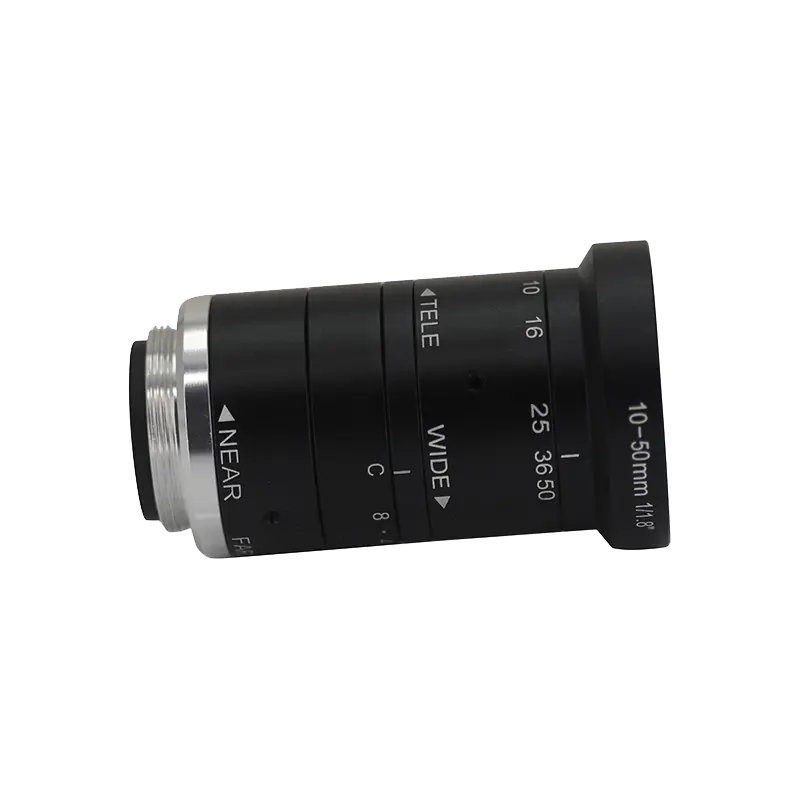
Custom optical engineering supports a wide range of smart mobility and road safety infrastructures.
Highway Automated Number Plate Recognition (ANPR/LPR)
Capturing clean plate numbers across multiple high-speed lanes requires long focal lengths and fast zoom response. Custom traffic cameras zoom lenses maintain sharp edge contrast, enabling OCR algorithms to operate at peak accuracy rates.
Urban Electronic Police and Red-Light Enforcement
Urban intersections present complex lighting conditions with neon signs, streetlights, and crossing vehicles. Low-distortion zoom optics capture both wide contextual intersection views and detailed driver-seat close-ups with a single camera.
Mobile Patrol and UAV Traffic Monitoring
Police cruisers and aerial traffic drones require lightweight, compact motorized zoom modules. Custom optics deliver powerful zoom capabilities in rugged, weight-optimized housings resistant to road shocks and aerial vibration.
Tunnel and Low-Light Surveillance
Tunnels present dim lighting, heavy exhaust soot, and sudden transitions into glaring daylight. Custom large-aperture lenses with wide dynamic range coatings ensure clear visual output in these variable underground conditions.
Frequently Asked Questions (FAQ)
Q1: Why is an IR confocal lens necessary for traffic
cameras?
A1: Standard glass refracts visible light
and infrared light at different angles, shifting the focal point when switching
from daytime color to night IR illumination. An IR confocal lens eliminates this
focal shift, keeping images sharp 24/7 without refocusing.
Q2: What sensor sizes do custom traffic camera zoom lenses typically
support?
A2: Most modern ITS cameras utilize
1/1.8", 1/1.2", or 1" sensors for superior dynamic range. Jinyuan designs custom
zoom optics with enlarged image circles to match these larger formats without
edge vignetting or resolution loss.
Q3: How does optical zoom compare to digital zoom in speed
enforcement cameras?
A3: Optical zoom physically
adjusts the lens elements to magnify distant vehicles while maintaining full
optical resolution on the sensor. Digital zoom merely crops pixels, degrading
image detail and drastically lowering the success rate of plate recognition
software.
Q4: Can Jinyuan customize the lens mount and mechanical
dimensions?
A4: Yes. We engineer optical systems
with standard C, CS, or M12 mounts, as well as fully customized mechanical
housings, stepper motor interfaces, and connector pinouts to fit your
proprietary camera enclosures.
Q5: What is the typical lead time for custom optical
prototypes?
A5: Once optical and mechanical designs
are finalized, functional optical prototypes generally ship within 4 to 6 weeks.
Mass production lead times typically range from 6 to 8 weeks, depending on batch
quantities and material specifications.
Build Your Custom Traffic Lens with Jinyuan
High-accuracy traffic enforcement, tolling systems, and ANPR networks demand optical components built specifically for road conditions. Generic commercial lenses limit your system's performance.
Jinyuan Optical designs and manufactures custom traffic cameras zoom lenses that meet your exact sensor, resolution, and environmental requirements. Contact our optical engineering team today to review your project specifications, request an optical evaluation, or order custom prototypes.