
In industrial imaging and intelligent surveillance, the capacity to maintain consistent image exposure under fluctuating light conditions separates robust optical systems from mediocre ones. The automatic aperture lens (often referred to as auto-iris lens) achieves this by dynamically adjusting the iris diaphragm based on real-time illumination feedback. For B2B integrators and equipment manufacturers, selecting or customizing such a lens requires deep knowledge of its driving architectures, key optical specifications, and environmental adaptability. This article offers a systematic breakdown of automatic aperture lens technology, covering control distinctions, critical parametric indices, and scenario-specific engineering considerations, while highlighting how Jinyuan supports bespoke optical projects.
1. Core Control Technologies: Distinguishing Automatic Aperture Lens Architectures
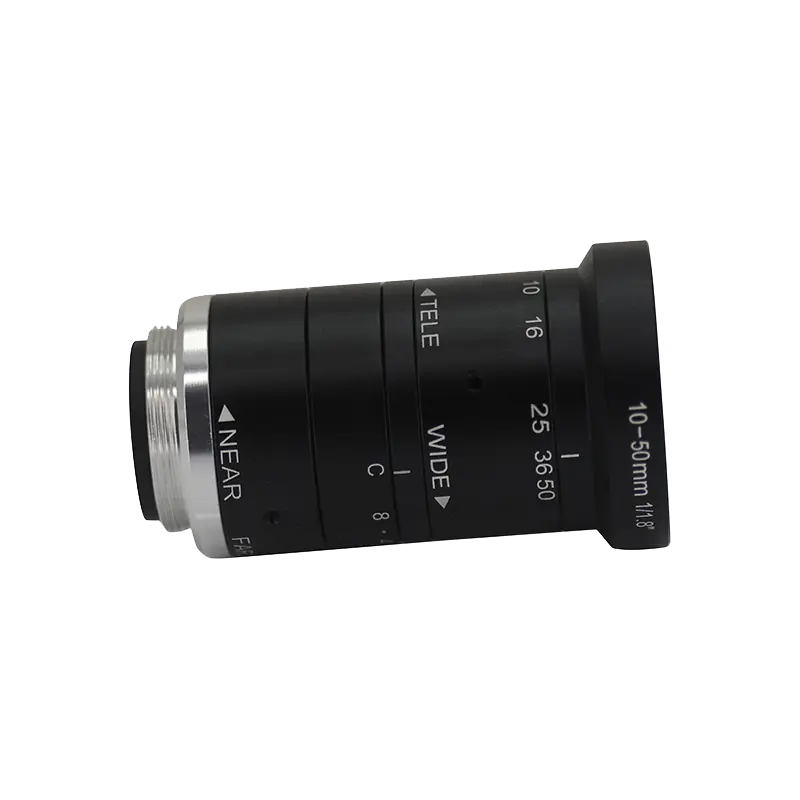
Unlike manual or fixed-aperture lenses, an automatic aperture lens relies on an electromechanical actuator that adjusts the iris opening without operator intervention. The industry recognizes two dominant control methods: video drive (also called "video iris") and DC drive (direct current iris). Understanding their differences is essential for proper system integration.
Video Drive (Amplifier-Integrated) Mechanism
Video-drive auto-iris lenses incorporate a small amplifier inside the lens housing. This amplifier receives a composite video signal (often from the camera’s video output) and extracts the luminance level to regulate the iris motor. The lens actively works to keep the video signal amplitude within a defined window. Such lenses are commonly found in analog CCTV systems and older machine vision setups. Characteristics include:
Integrated driver circuit – simplifies camera lens interface (typically 4-pin connector).
Slower response due to internal signal processing (suitable for gradual lighting shifts).
Generally lower cost but limited precision for extreme dynamic scenes.
DC Drive (Direct Voltage) Mechanism
DC-drive automatic aperture lenses omit the internal amplifier. Instead, the camera provides a DC control voltage (or PWM signal) directly to two coils that open or close the iris. This architecture has become prevalent in modern IP cameras and smart industrial sensors because of its faster reaction and finer granularity. Key features:
No built-in electronics – lens contains only the motor assembly, offering better thermal stability.
Faster settling time (typically < 50 ms for a full open-to-close transition).
Linear control via variable voltage levels; ideal for applications with abrupt light changes (e.g., tunnel entry/exit).
Requires a camera with a dedicated DC-iris driver circuit.
From an OEM perspective, Jinyuan often engineers DC-drive auto-iris lenses for high-speed inspection platforms, where consistent exposure across each millisecond is mandatory. The choice between video and DC drive forms the first specification gate when designing a custom automatic aperture lens module.
2. Critical Specification Parameters for Automatic Aperture Lens Customization
Beyond the drive type, seven optical and mechanical parameters define the performance envelope of any auto-iris lens. When working with an optical design house like Jinyuan, these variables are adjusted to match the target imaging pipeline.
2.1 F-Number Range (F/#)
The F/# indicates the lens’s maximum light-gathering ability and the smallest aperture diameter. A typical automatic aperture lens for surveillance might range from F/1.4 (wide open) to F/360 (pinhole stop). For machine vision, a narrower range (F/1.8 – F/16) is common due to depth-of-field constraints. Customization involves optimizing the iris diaphragm leaf shape to achieve consistent F-stop transitions without introducing diffraction artifacts.
2.2 Iris Response Speed and Linearity
Defined as the time required for the iris to move from fully closed to fully open (or vice versa). High-speed production inspection (e.g., bottle label scanning) demands < 30 ms response, while intelligent traffic cameras may accept 100 ms. DC-drive designs with low-inertia rotary magnets achieve superior linearity—the relationship between control voltage and aperture area should be monotonic and predictable. Jinyuan’s engineering team provides characterization reports for custom auto-iris lenses, ensuring closed-loop algorithm compatibility.
2.3 Sensor Coverage (Image Circle)
The lens must project an image circle covering the camera’s sensor diagonal. Common formats include 1/1.8″, 1/2.5″, 2/3″. An automatic aperture lens designed for a 1/1.8″ sensor will produce severe vignetting on a larger 1″ sensor. Custom designs often extend the image circle while maintaining aperture uniformity across field angles.
2.4 Optical Back Focus and Flange Distance
Back focal length (BFL) affects IR cut filter placement and the possibility of adding additional optics. Many C-mount and CS-mount auto-iris lenses have standard flange back distances (17.526mm for C-mount, 12.5mm for CS-mount). However, when integrating into compact housings, a customized BFL is sometimes required. Adjusting BFL while preserving auto-iris functionality demands precise mechanical re-engineering.
2.5 Modulation Transfer Function (MTF) Stability Across Aperture
A quality automatic aperture lens maintains MTF contrast at both wide and stopped-down settings. Poor designs show severe resolution loss when the iris is small due to diffraction. Lenses intended for high-resolution sensors (4K or 12MP) require MTF > 0.3 at Nyquist frequency even at F/8. For B2B buyers, ask for MTF plots at three aperture positions: fully open, middle, and near-closed.
2.6 Relative Illumination and Shading
Even with auto-iris control, corner shading (falloff) can cause exposure inconsistency across the image. Custom optical formulas using aspheric elements can raise relative illumination from 50% to > 75%. This parameter is especially critical for flat-field applications such as document scanning or PCB inspection.
2.7 Electrical Connector and Pin Assignment
For DC-drive auto-iris lenses, the standard 4-pin (or sometimes 2-pin) configuration must match the camera’s driver board. Custom pinouts, cable lengths, or board-to-board connectors are frequently requested by OEMs. Jinyuan offers fully customizable interconnect solutions for volume projects.
3. Tailored Optical Design: Customization Levers for Automatic Aperture Lenses
Standard catalog lenses may not satisfy unique operational constraints. Below are the most requested custom modifications that B2B clients specify when procuring an automatic aperture lens in quantity.
Wavelength-specific coatings: Broadband anti-reflection (AR) coatings for 400-700nm visible range, or narrowband for 850nm/940nm NIR applications. Automated iris function must remain stable under monochromatic illumination.
Aperture blade materials: Blackened stainless steel for reduced internal reflection; or polymer blades for silent, low-friction operation in medical devices.
Environmental sealing: IP67-rated front barrel with the auto-iris mechanism isolated from moisture – critical for outdoor PTZ cameras.
Mechanical interfaces: Custom flanges for board-level cameras (M12 mounts with auto-iris), special locking screws, or vibration-resistant assemblies for drones.
Manual override with automatic mode: Some systems require a hybrid solution where users can manually limit maximum aperture while still allowing automatic control – achievable via a secondary cam mechanism.
For projects requiring unique form factors or optical performance outside standard catalogs, Jinyuan provides full design-to-manufacturing services, including prototyping of the auto-iris actuator control loop.
4. Application-Specific Considerations for Automatic Aperture Optics
The value of an automatic aperture lens is best demonstrated in environments with volatile lighting. We examine three representative scenarios and their technical implications.
4.1 Factory Automation & High-Speed Inspection
On a production line, parts may vary in reflectivity (e.g., polished metal versus dark rubber) and line speed creates rapidly changing exposure windows. Here, a DC-drive auto-iris lens combined with a global shutter camera ensures each part is correctly exposed. Key parameters: response time < 20 ms, low F/# for short exposure times, and ruggedized mechanics to withstand continuous vibration. Jinyuan has supplied auto-iris modules for barcode verifiers and pharmaceutical blister inspection systems, where exposure stability directly correlates with detection accuracy.
4.2 Intelligent Traffic Systems (ITS) and ANPR
Vehicles transition from direct sunlight into tunnel shadows, creating 100:1 illumination ratios. An automatic aperture lens must adjust within the inter-frame interval (typically 33 ms for 30 fps). Additionally, for automated license plate recognition (ANPR), the lens should maintain sharp focus across the iris range—requiring careful chromatic aberration correction. Many ITS integrators specify lenses with built-in stepper motors for zoom, but auto-iris remains essential for dynamic exposure control.
4.3 Remote Surveillance & Border Monitoring
Outdoor surveillance faces dawn-to-dusk light levels, fog, and backlit scenes. An auto-iris lens with a wide F-stop range (F/1.4 – F/360) allows the camera to preserve details in both low-light nighttime conditions and bright daytime. Additionally, coatings that repel water and dust are necessary. Some long-range surveillance systems couple auto-iris with electronic gain control (AGC) to minimize noise.
5. Performance Verification: Testing Standards for Automatic Aperture Lenses
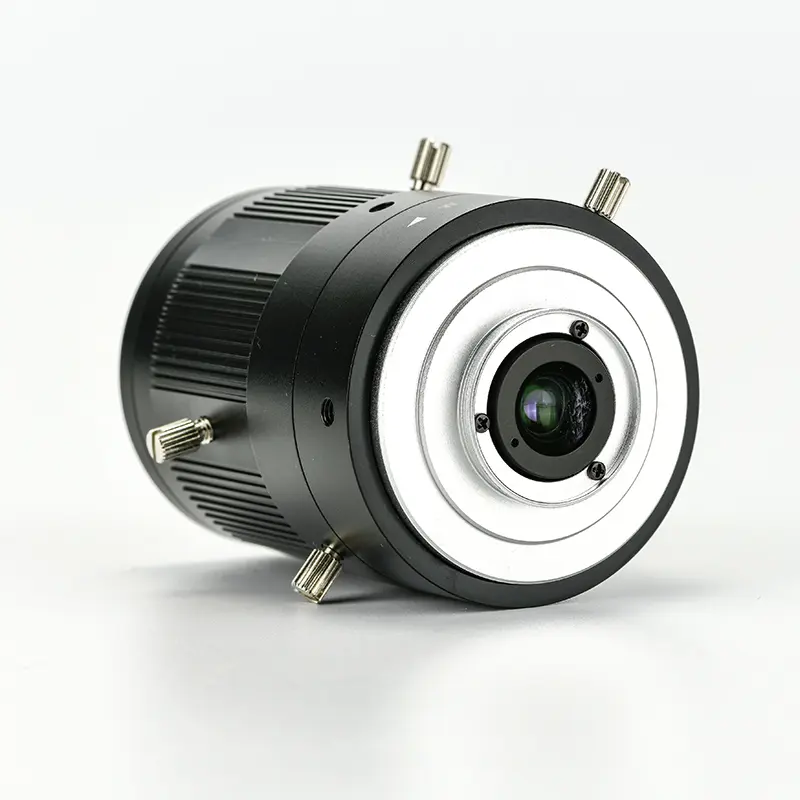
B2B buyers should demand evidence of reliability. Common qualification tests include:
Endurance cycling: The iris mechanism should survive ≥ 1 million open-close cycles without drifting F-stop calibration.
Temperature & humidity: Operation from -30°C to +70°C with non-condensing humidity, verifying no iris stiction or motor stall.
Vibration & shock: IEC 60068-2-6 testing (10-500 Hz, 2G) for industrial environments.
Aperture linearity deviation: Measured control voltage vs. actual iris opening area; deviation ≤ 5% across range.
When sourcing from a manufacturer like Jinyuan, clients receive detailed verification reports for each production batch, ensuring the automatic aperture lens meets both optical and mechanical specifications.
6. Optical Integration: Matching Auto-Iris Lens with Camera Modules
Even a high-quality automatic aperture lens can underperform if mismatched with the camera’s auto-iris driver. Important electrical compatibilities:
Voltage/current requirements: DC iris lenses typically operate at 3V – 5V coils with currents up to 60mA. Camera outputs must supply enough current.
Drive signal type: Analog voltage (0–3V) vs. PWM. Some lenses require differential signals for bidirectional control.
Feedback potentiometer (optional): High-end auto-iris lenses include a potentiometer that reports the current aperture position to the camera, enabling closed-loop control.
Jinyuan offers design assistance to match the lens’s electrical interface with the main processor or sensor board, reducing development risk for system integrators.
Frequently Asked Questions (FAQ) – Automatic Aperture Lens Engineering
Q1: What is the practical difference between DC-drive and video-drive
automatic aperture lens in terms of control
precision?
A1: DC-drive lenses offer faster, more
linear control because the camera directly modulates voltage to the iris coils,
achieving step-less aperture adjustment. Video-drive lenses rely on an internal
amplifier and analog video level detection, which introduces hysteresis and
slower response (often >100 ms). For applications requiring precise exposure
tracking (e.g., high-speed sorting), DC-drive is strongly recommended.
Q2: Can I retrofit an automatic aperture lens onto a standard C-mount
camera that lacks auto-iris control circuits?
A2: No. Without a compatible drive signal (either video or DC control), the lens
will remain at its default state (usually fully closed or fully open depending
on design). Some cameras feature a “DC-iris” connector; others may require an
external controller board. Always check the camera specifications for “auto-iris
support” before integration.
Q3: How does the F-stop range of an automatic aperture lens affect
depth of field in machine vision?
A3: A lens with a
wider range (e.g., F/1.4 to F/16) gives flexibility: at F/1.4 depth of field is
shallow, suitable for isolating small objects; at F/16 depth of field expands
but diffraction reduces sharpness. The automatic feature ensures the camera
chooses the optimal F-stop based on illumination, but for consistent depth of
field, some engineers restrict the maximum F-number via software.
Q4: What optical coating options are available for custom automatic
aperture lenses, and do they affect the iris
mechanism?
A4: Common coatings include MgF₂
(single-layer), multi-layer broadband AR (reflectivity <0.5% over 400-700nm),
and DLC (diamond-like carbon) for scratch resistance. The coating is applied to
individual lens elements and does not interfere with the iris motor or blades.
Jinyuan supports custom spectral specifications, such as enhanced red/NIR
transmission for medical endoscopy.
Q5: Is it possible to design an automatic aperture lens with a fixed
focal length but integrated manual focus
adjustment?
A5: Yes. Many fixed-focal auto-iris
lenses come with a manual focus ring that does not affect the iris control. This
hybrid design is popular for surveillance cameras, allowing operators to set the
working distance while maintaining automatic exposure. The lens barrel includes
separate mechanisms for focus (helical cam) and iris (actuator-driven
blades).
Q6: What typical lifespan can be expected from the actuator inside an
automatic aperture lens under continuous
operation?
A6: High-quality auto-iris actuators
(brushless or moving-coil designs) achieve over 2 million cycles before F-stop
accuracy degrades beyond ±10%. For 24/7 applications with aperture changes every
10 seconds, this translates to ~230 days of continuous use. For longer life,
manufacturers can use reinforced bearings and low-friction blade pivots. Jinyuan
offers extended-life options for high-duty-cycle installations.
Moving Forward with Custom Automatic Aperture Optics
Selecting or developing an automatic aperture lens demands balancing drive architecture, optical specifications (F/# range, MTF stability, sensor coverage), and the application’s environmental challenges. From factory automation to traffic surveillance, the right auto-iris design directly impacts image consistency and system reliability. As a specialized optical manufacturer, Jinyuan provides comprehensive custom services for automatic aperture lenses, including tailored coating, iris response tuning, and mechanical adaptation. Whether upgrading an existing camera line or creating a new imaging product, partnering with an experienced optics team ensures that your lens meets rigorous performance benchmarks.
Ready to specify your next automatic aperture lens project? Share your requirement details (target sensor size, lighting range, mount type, and intended environment) with Jinyuan’s optical engineering group. Our team delivers ISO-compliant prototypes, full documentation, and volume production. Send your inquiry now to discuss a customized automatic aperture lens solution that aligns precisely with your system architecture.
For inquiries, please contact Jinyuan’s optical solutions desk: clair-li@jylens.com / allen-zhang@jylens.com – Provide your technical specs for a prompt design feasibility review.