

In optical system design, lens geometry—including both surface profile and peripheral contour—is not determined arbitrarily but is rigorously derived from fundamental optical principles, aberration theory, mechanical integration constraints, and application-specific functional requirements. The deliberate differentiation among lens geometries—such as spherical, aspherical, meniscus (concave-convex), Fresnel, freeform, circular, square, and custom-contour variants—constitutes a cornerstone of high-performance optical engineering. This geometric diversification enables precise control over light propagation, effective correction of monochromatic and chromatic aberrations, optimization of optical throughput and resolution, and critical advancements in system miniaturization, weight reduction, and packaging efficiency. These benefits underpin widespread deployment across diverse domains, including consumer imaging, automotive vision systems, infrared sensing, laser processing, augmented/virtual reality (AR/VR) displays, and industrial machine vision.
The primary optical rationale for varying surface profiles lies in their distinct capabilities for aberration correction and wavefront modulation. Spherical lenses—characterized by surfaces defined by constant radius of curvature—offer manufacturing simplicity and cost-effectiveness, rendering them suitable for legacy or low-specification applications such as basic illumination optics, entry-level magnifiers, and rudimentary surveillance modules. However, their inherent symmetry imposes fundamental limitations: pronounced spherical aberration, field curvature, and coma—particularly under wide-field or large-aperture conditions—resulting in degraded edge sharpness, geometric distortion, and compromised image fidelity.
To overcome these constraints, aspherical lenses employ non-uniform curvature distributions—typically described by high-order polynomial surfaces—that systematically compensate for spherical aberration, coma, and astigmatism. A single aspherical element can replace multiple spherical components, thereby enhancing transmittance, improving modulation transfer function (MTF) performance, and significantly reducing overall optical path length and module volume. Consequently, aspherical lenses have become indispensable in compact, high-resolution systems—including smartphone cameras, professional interchangeable-lens cameras, and advanced driver-assistance system (ADAS) camera modules.
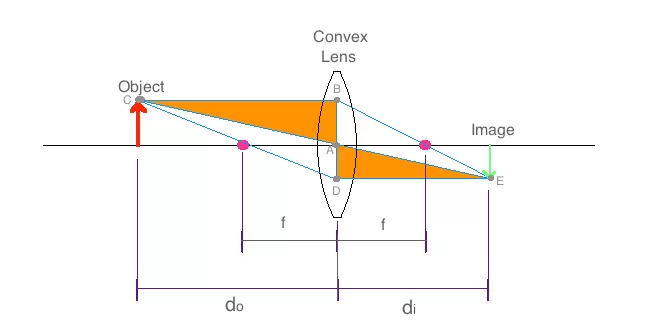
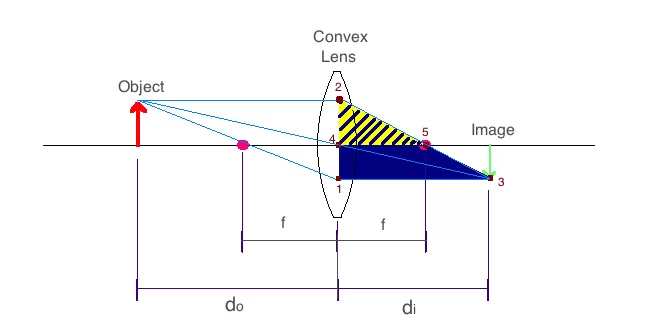
Beyond conventional convex-concave configurations, specialized surface geometries address targeted optical challenges. Meniscus lenses—featuring one concave and one convex surface—enable balanced correction of field curvature and longitudinal chromatic aberration, making them especially valuable in infrared confocal systems and all-weather night-vision modules requiring consistent focus stability across thermal and visible spectra. Planar-convex and planar-concave lenses serve well-defined roles: the former efficiently focuses collimated light and is widely adopted in projection optics and laser alignment instrumentation; the latter provides controlled beam divergence and is standard in laser beam expansion systems. Fresnel lenses, through discretized concentric annular structures, preserve refractive functionality while drastically reducing thickness, mass, and material usage—making them ideal for infrared thermography, passive infrared (PIR) motion sensors, and automotive lighting where stringent weight and space constraints prevail.
Freeform surfaces represent the current frontier of optical design sophistication. Defined by spatially variant, non-rotationally symmetric curvature—often parameterized via Zernike polynomials or B-spline representations—freeform lenses simultaneously correct multiple aberrations with unprecedented precision. They enable distortion-free ultra-wide-angle imaging, extended depth-of-field rendering, and highly efficient off-axis light redirection—critical for next-generation AR/VR near-eye displays, high-accuracy 3D metrology systems, and vehicle surround-view camera arrays.
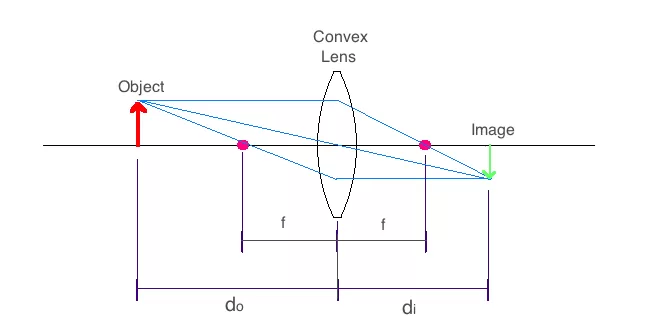
Contour differentiation—i.e., the external shape of the lens blank—serves complementary mechanical and photonic objectives. Circular contours remain dominant due to compatibility with standardized lens barrels and rotational symmetry in mounting and alignment. In contrast, square and irregularly shaped lenses optimize spatial utilization within constrained enclosures—such as mobile device camera modules and embedded automotive vision units—while minimizing vignetting and stray-light generation by eliminating unused peripheral areas. Moreover, tessellated square lenses facilitate scalable, high-density lens array fabrication for structured-light 3D sensing and multi-point machine vision projection.
In summary, the strategic diversification of lens geometry reflects a rigorous synthesis of physical optics, precision manufacturing capability, and application-driven system engineering. Surface-profile differentiation directly addresses core optical challenges—including wavefront error correction, spectral fidelity, and light-efficiency optimization—whereas contour-shape differentiation responds to packaging imperatives, thermal-mechanical stability, and novel illumination architectures. As computational optical design, ultra-precision fabrication, and adaptive materials continue to evolve, lens geometry will grow increasingly application-specific, enabling further breakthroughs in resolution, compactness, robustness, and functional integration across the optical technology landscape.