
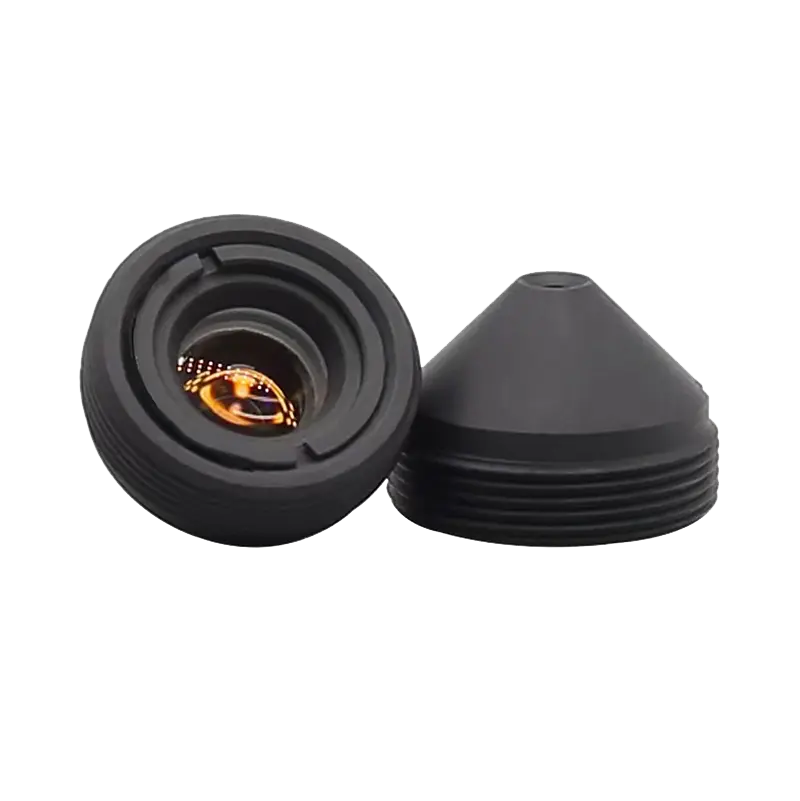
Modern video surveillance networks demand high-precision optical components to match the capabilities of high-resolution digital sensors. While digital processing engines handle image compression, color balancing, and data transmission, the physical collection of light remains the foundation of image clarity. Selecting a high-quality Hd Ip Camera Cctv Lens determines whether a security system captures identifiable details or merely generic shapes. For commercial, industrial, and municipal installations, optical clarity is a fundamental requirement for reliable video analytics, license plate recognition, and facial identification. Jinyuan manufactures precision-engineered optical components designed to meet these rigorous industrial requirements.
The Physics of Light Transmission and Sensor Matching
To understand how an Hd Ip Camera Cctv Lens functions within a digital surveillance network, one must look at the direct physical relationship between the glass elements and the silicon image sensor. A common misstep in surveillance system design is pairing a high-megapixel sensor with a lens that cannot resolve that level of detail. This mismatch leads to wasted bandwidth and poor image quality.
Sensor Size Compatibility
Lenses are designed to project a specific image circle diameter that must fully cover the active area of the image sensor. Common sensor formats in industrial IP cameras include 1/2.7-inch, 1/1.8-inch, and 2/3-inch formats. If a lens designed for a smaller sensor format is mounted on a larger sensor, the image circle will fail to cover the corners of the sensor, resulting in severe vignetting or complete darkness at the periphery. Conversely, using a larger-format lens on a smaller sensor utilizes only the center portion of the glass. While this central area often provides excellent sharpness, it narrows the effective field of view, meaning the system designer must recalculate focal lengths to maintain the desired coverage area.
Resolving Power and Megapixel Ratings
A standard-definition lens cannot distribute light precisely enough for modern high-density sensors. An 8-megapixel (4K) sensor features millions of individual pixels, often measuring under 2.0 microns in width. The lens must possess a high resolving power, quantified in line pairs per millimeter, to project distinct details onto these miniature pixels without creating optical blur. If the optical resolution of the glass is lower than the pixel density of the sensor, adjacent pixels receive overlapping light information, resulting in a soft image that digital sharpening algorithms cannot correct.
Aperture and Photometric Performance
The F-number of a lens defines its light-gathering capacity, which is a major factor in low-light surveillance. An aperture of F1.2 or F1.4 allows significantly more light to reach the sensor than an F2.0 aperture. In night monitoring scenarios, a larger aperture allows the camera to maintain color video longer before switching to monochrome mode, or reduces the need for digital gain. Lowering digital gain directly minimizes sensor noise and prevents motion blur, which is vital when capturing fast-moving targets in poor lighting conditions.
Overcoming Optical Challenges in High-Resolution Surveillance
Industrial security operators face persistent image degradation issues caused by environmental variables and optical limitations. Solving these problems requires advanced manufacturing tolerances and specialized optical designs.
Focus Shift in Multi-Spectrum Operations
Visible light (400-700 nm) and near-infrared light (700-1000 nm) refract at different angles when passing through standard optical glass. This refractive difference causes visible and infrared wavelengths to focus on different planes, a phenomenon known as chromatic aberration. In security systems that transition from daytime visible light to nighttime infrared illumination, this results in a severe focus shift. A camera focused perfectly during the day becomes blurry at night. To resolve this, an IR-corrected Hd Ip Camera Cctv Lens utilizes Extra-low Dispersion glass and custom multi-layer coatings to bring both light spectrums to the exact same focal plane, ensuring 24-hour clarity without manual refocusing.
Thermal Drift and Environmental Stability
Outdoor cameras are subjected to extreme temperature fluctuations, ranging from direct solar heating in summer to sub-zero temperatures in winter. These thermal shifts cause the metal or polycarbonate housing of the lens to expand or contract. This physical movement shifts the distance between individual glass elements, resulting in focus drift. Jinyuan addresses this challenge by utilizing temperature-compensated mechanical designs and high-stability optical glass. These materials maintain precise spacing of the internal elements across a wide operating temperature range, keeping images sharp without relying on continuous autofocus adjustments.
Geometric Distortion Correction
Wide-angle lenses are frequently deployed to maximize coverage areas, but they are highly susceptible to barrel distortion, where straight lines appear curved outward. In forensic security, this distortion complicates the estimation of physical distances and hinders the performance of video analytics software. Integrating precision aspherical glass elements into the lens assembly corrects these optical aberrations, providing a flat field of view where straight lines remain straight across the entire image sensor.
Tailored Optical Customization for System Integrators
Standard off-the-shelf optical components do not always meet the unique requirements of specialized security projects. For custom housing limitations, specific focal ranges, or precise environmental certifications, customized optical engineering is necessary. Jinyuan collaborates with system integrators to design and manufacture lenses tailored to specific sensor characteristics and deployment environments.
The customization process starts with computer-aided optical modeling, where designers evaluate the Modulation Transfer Function curves to balance contrast and resolution. Engineers model the physical pathway of light to eliminate internal reflections, flare, and ghosting, which commonly occur when cameras face direct light sources such as oncoming vehicle headlights or bright street lighting.
During manufacturing, precise glass polishing and active alignment techniques ensure that the optical elements are centered with micrometer-level accuracy. Even a fractional tilt of a single lens element can cause asymmetric blurring across the image frame, making one side of the video feed unreadable. Strict quality control protocols guarantee that each customized Hd Ip Camera Cctv Lens delivers uniform resolution from the center to the very edge of the frame.
Selecting the Appropriate Lens Based on Application Scenarios
Surveillance environments present diverse challenges, meaning a lens optimized for one scenario may perform poorly in another. Matching the optical specifications to the physical environment is key to system performance.
Intelligent Traffic Systems (ITS): These installations require rapid shutter speeds to capture clear images of fast-moving vehicles. This demand requires large-aperture lenses to maximize light input. Additionally, longer focal lengths with minimal geometric distortion are required to read license plates accurately across multiple lanes of traffic.
Perimeter Protection and Large-Area Surveillance: Warehouses, airports, and shipping ports require wide-area coverage to eliminate blind spots. Varifocal lenses are preferred here, allowing field installers to adjust the field of view manually to match the specific physical boundaries of the site.
Access Control and Facial Recognition: Entry points require high-contrast, high-resolution imagery at close to medium ranges. Fixed focal length lenses, optimized for specific working distances, provide the highest level of optical sharpness, allowing facial recognition algorithms to operate with maximum accuracy.
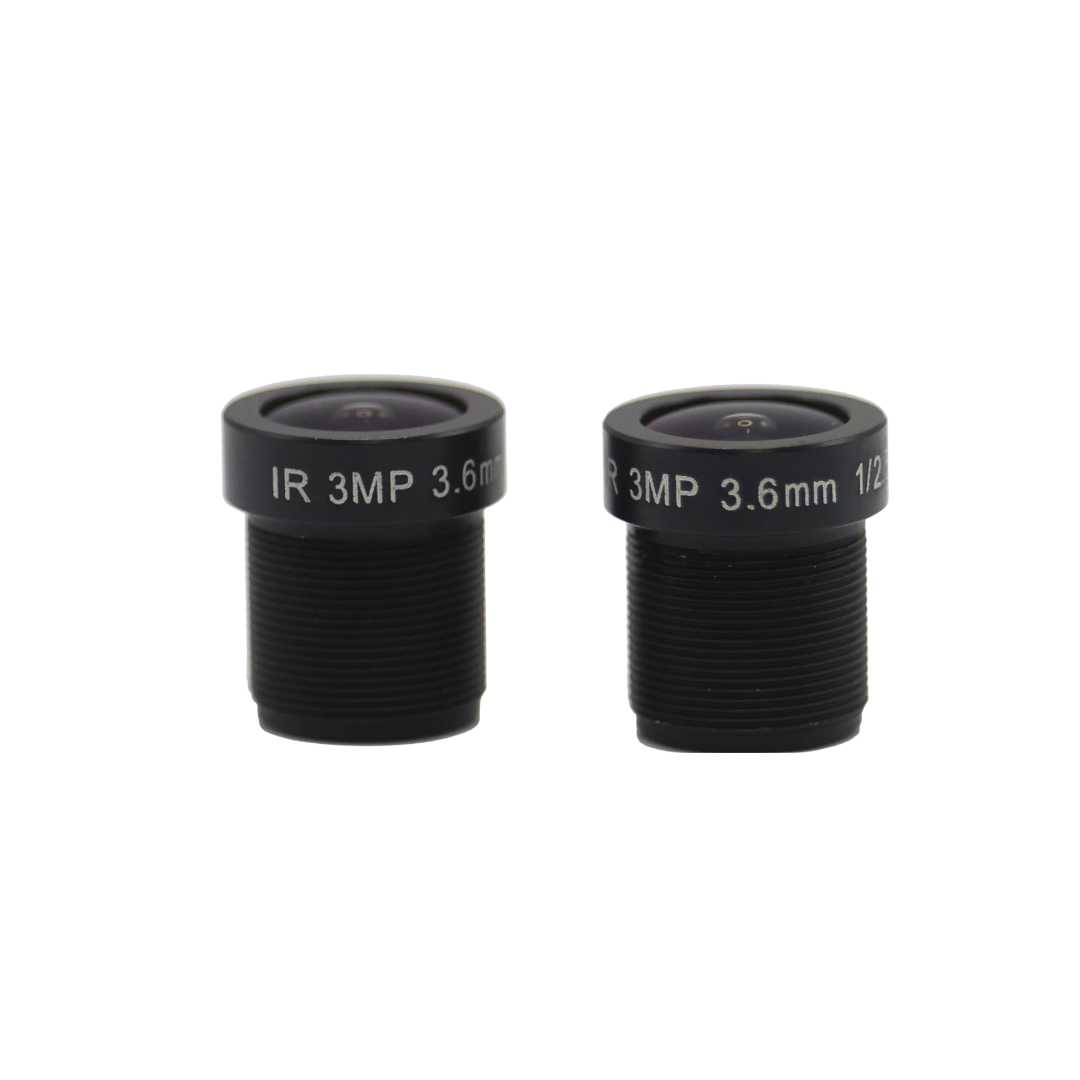
Optical Performance Comparison
The following table outlines the structural and optical differences between different grades of lenses used in professional surveillance applications:
| Lens Classification | Typical Resolution Support | Glass Type & Coatings | Environmental Tolerance | Primary Application |
|---|---|---|---|---|
| Standard Grade | 2 Megapixel (1080p) | Standard optical glass, basic single-layer AR coating | Moderate; prone to thermal focus shift | Indoor commercial spaces, general monitoring |
| Professional Grade | 4MP to 5MP | Low-dispersion glass, multi-layer AR coating, partial IR correction | High; stabilized housing components | Outdoor perimeters, day/night security lanes |
| Ultra-High Definition Grade | 8MP (4K) and higher | Extra-low dispersion glass, specialized IR-corrective coatings, aspherical elements | Excellent; fully compensated thermal chassis | Intelligent traffic systems, critical infrastructure facial recognition |
Frequently Asked Questions
Q1: What is the difference between a CS-mount and a C-mount lens?
A1: The primary difference is the flange focal distance, which is the physical distance from the lens mounting shoulder to the image sensor plane. A C-mount lens has a flange focal distance of 17.526 mm, whereas a CS-mount lens has a distance of 12.5 mm. A C-mount lens can be mounted on a CS-mount camera by using a 5 mm spacer ring, but a CS-mount lens cannot be used on a C-mount camera because it cannot be positioned close enough to the sensor to achieve focus.
Q2: Why does an image lose focus at night when using infrared illuminators?
A2: This occurs because different wavelengths of light bend at different angles as they pass through glass. Infrared light has a longer wavelength than visible light, focusing slightly behind the sensor plane when a standard lens is used. To maintain consistent focus throughout day and night transitions, you must use an IR-corrected Hd Ip Camera Cctv Lens that utilizes special optical glass to focus both visible and infrared light onto the exact same plane.
Q3: What does the megapixel rating of a lens represent?
A3: The megapixel rating indicates the optical resolving power of the lens, representing its ability to project fine details onto a sensor. A higher megapixel lens has tighter tolerances and superior glass quality, allowing it to resolve fine details to match the small pixel sizes of high-resolution sensors. Using a low-megapixel lens on a high-resolution sensor results in a bottlenecked, blurry image.
Q4: How does the F-number affect low-light video performance?
A4: The F-number represents the ratio of the lens focal length to the entrance pupil diameter. A lower F-number (such as F1.2) means the lens has a larger aperture and collects more light. This allows the camera sensor to receive more photons, which improves low-light image quality, decreases electronic noise, and permits faster shutter speeds to reduce motion blur.
Q5: Can a lens designed for a 1/3-inch sensor be used on a 1/1.8-inch sensor?
A5: No, using a lens designed for a smaller sensor on a larger sensor will result in vignetting. The image circle projected by a 1/3-inch lens is too small to cover the physical area of a 1/1.8-inch sensor, causing the corners of the video feed to be cut off or completely dark. Always ensure the lens format specification is equal to or larger than the camera sensor format.
Partner with Jinyuan for Your Optical Requirements
For system integrators, equipment manufacturers, and distributors requiring high-resolution optical solutions, Jinyuan offers a diverse portfolio of security lenses. From standard high-definition installations to specialized, custom-engineered optical projects, our engineering team ensures that every Hd Ip Camera Cctv Lens matches your exact physical, optical, and environmental requirements.
If you have upcoming projects requiring custom focal lengths, specialized housing designs, or specific sensor integrations, please submit your detailed specifications to our sales department. Contact us today to receive a detailed technical proposal and quotation for your development needs.