
In the field of security and remote observation, hidden monitoring has shifted from standard daytime observation to continuous day-and-night coverage. Security systems require specialized optical components that can capture high-resolution imagery without drawing attention. A specialized component like the pinhole cctv lens ir plays a significant role in meeting these demands, especially where covert operations must continue in low-light or dark environments. These miniature lenses allow cameras to remain hidden behind small apertures, often less than two millimeters in diameter, while retaining the capability to register near-infrared light.
For B2B procurement managers and optical system integrators, selecting the correct lens is not merely a matter of finding a small footprint. It involves understanding how light behaves when passing through extremely narrow entry pupil diameters, and how different wavelengths of light focus on the imaging sensor. This analysis explores the optical designs, mechanical structures, and material innovations that make these covert lenses effective for demanding applications.
Optical Design Principles of Pinhole Optics
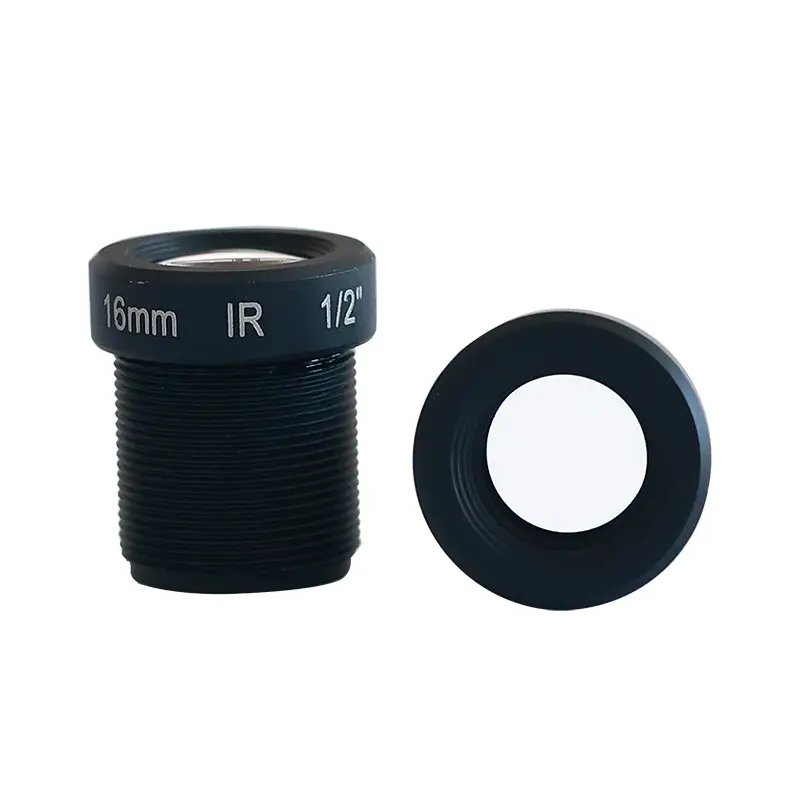
Standard security camera lenses rely on wide front elements to gather as much ambient light as possible. Miniature covert optics, however, operate under tight physical limitations. The optical design of a pinhole lens utilizes a narrow front cone that tapers down to a small entrance pupil. This design presents specific challenges regarding light transmission, diffraction, and sensor integration.
Aperture Sizes and Light Transmission
The primary hurdle in pinhole optical engineering is the F-number, which represents the ratio of the lens focal length to the diameter of the entrance pupil. Because the entrance pupil of a pinhole lens is incredibly small, the F-number is naturally higher, typically ranging from F2.0 to F4.0.
F2.0 to F2.8: These apertures allow more light to reach the sensor, making them suitable for low-light applications. However, they require more complex glass elements to control aberrations.
F3.0 to F4.0: These lenses offer a greater depth of field and are easier to manufacture with minimal distortion, but they require highly sensitive image sensors or supplementary infrared illumination to produce clear images in dark environments.
A typical pinhole cctv lens ir balances these parameters by utilizing high-refractive-index glass materials to maximize light throughput while keeping the physical size of the lens assembly as small as possible.
Sensor Format Compatibility
Pinhole lenses must project a clean image circle that covers the active area of the image sensor without causing vignetting (dark corners). Most modern covert cameras use 1/3-inch or 1/2.7-inch CMOS sensors. If a lens is designed for a 1/4-inch sensor but is mounted on a 1/2.7-inch sensor, severe corner shadowing will occur. Modern manufacturing processes ensure that the image circle is sufficiently wide and flat to match modern high-resolution sensors, preventing loss of detail at the edges of the frame.
Integrating Infrared Capabilities in Covert Surveillance
Visible light spans wavelengths from approximately 400nm to 700nm, while near-infrared (NIR) light used in security systems operates between 850nm and 940nm. Standard optical glass bends different wavelengths of light at different angles. This physical phenomenon leads to a major issue in day/night cameras: focus shift.
The Challenge of Focus Shift
When a camera transitions from daytime (visible light) to nighttime (infrared light), the point of focus shifts along the optical axis. Without proper correction, an image that appears sharp during the day will become blurry at night.
The design of a pinhole cctv lens ir must accommodate both visible spectrum light and infrared wavelengths. This is achieved through IR correction, which involves pairing specific convex and concave glass elements made of different dispersion materials (such as crown and flint glass). Optical manufacturers like Jinyuan address these chromatic aberrations by utilizing extra-low dispersion glass elements within the lens stack, ensuring that both 550nm (visible green) and 850nm (infrared) light focus on the exact same sensor plane.
Day/Night Dual-Band Coatings
To maximize light transmission across different spectral bands, the lens surfaces must be treated with anti-reflective coatings. Standard coatings are only effective for visible light and may reflect a high percentage of infrared light, leading to ghosting and reduced sensitivity at night. Dual-band multi-layer coatings are applied to ensure that both visible and NIR wavelengths pass through the lens with minimal reflection loss, typically keeping transmission rates above 95% across both bands.
Industry Pain Points and Engineered Solutions
Implementing covert surveillance systems in commercial, banking, or industrial environments introduces several practical challenges. Optical engineers have developed target-specific solutions to address these limitations.
1. Loss of Resolution at the Edges (Vignetting and Blur)
Due to the steep angles at which light rays exit the rear element of a pinhole lens and strike the sensor, the edges of the image often suffer from reduced resolution and brightness. To mitigate this, engineers design lenses with high relative illumination (often exceeding 60% at the corners). The use of precision-molded glass aspherical elements helps guide off-axis light rays more directly onto the sensor pixels, maintaining sharpness from the center to the extreme corners of the image.
2. Severe Barrel Distortion
Because pinhole lenses often require a wide field of view (FOV) to monitor entire rooms from a single hidden point, they are prone to severe barrel (fisheye) distortion. While digital distortion correction can resolve this in software, it often degrades image resolution. Advanced optomechanical designs incorporate specialized corrector elements in the middle of the lens stack to reduce optical distortion to acceptable levels (often under 15% for wide-angle models) before the light ever reaches the sensor.
3. Thermal Instability in Enclosed Environments
Covert cameras are frequently installed inside confined spaces, such as automated teller machines (ATMs), wall cavities, or electrical boxes. These environments can experience significant heat build-up. As temperature rises, glass elements expand, and the refractive index changes, causing focus drift. To ensure consistent performance in the field, Jinyuan employs precise optical alignment during the assembly of these miniature assemblies, utilizing metal barrels (such as aluminum or brass) with low thermal expansion coefficients to hold the glass elements in place, maintaining focus even in poorly ventilated installations.
Application Scenarios in Industrial and Security Sectors
The unique physical structure of the pinhole cctv lens ir makes it indispensable across several specialized industries where standard camera housings are impractical or obtrusive.
Automated Teller Machines (ATMs) and Financial Terminals
In banking security, capturing high-resolution facial images of users is necessary for fraud prevention. Cameras must be integrated into the bezel of the terminal without being visible to users. A pinhole lens with infrared capability allows the system to capture clear facial details even when the surrounding lobby lights are turned off or when strong backlighting occurs behind the user.
Discrete Industrial Process Monitoring
In manufacturing plants, some production areas are hazardous, highly confined, or sensitive to ambient light. Miniature cameras equipped with infrared pinhole optics can be placed inside machinery or containment chambers to monitor mechanical movements or chemical reactions without interfering with the process or exposing bulky camera equipment to harsh conditions.
Public Transit and Ticket Kiosks
Transit systems require compact, vandal-resistant surveillance systems. Pinhole cameras integrated into the metal frames of ticket machines or bus shelters can withstand physical impacts while monitoring ticketing areas. The infrared capability ensures that these outdoor locations remain monitored during overnight hours when street lighting may be unreliable.
Selecting the Right Specifications for B2B Procurement
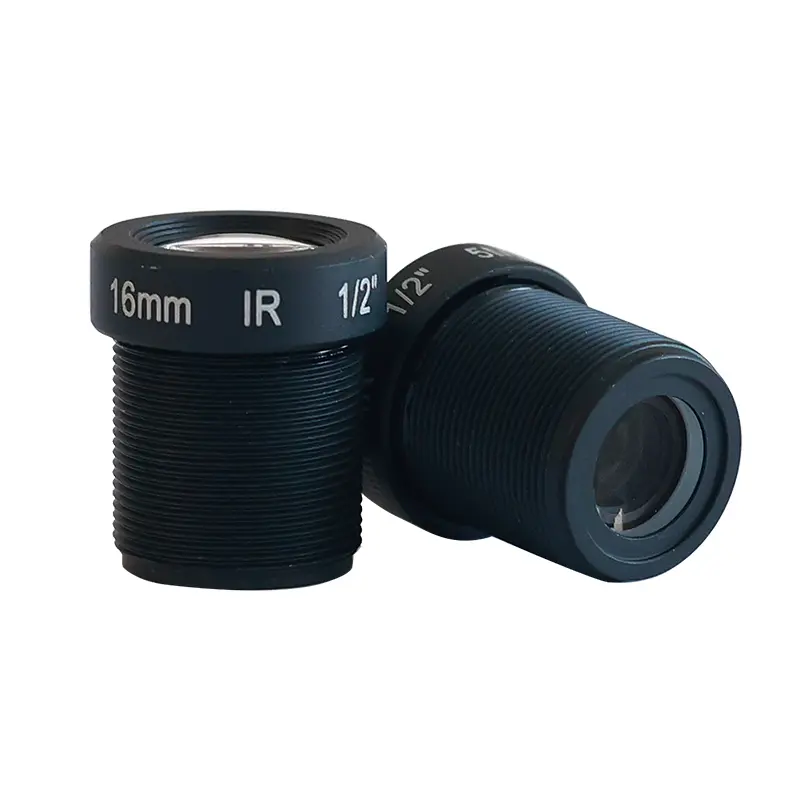
When sourcing optical components for volume production or integration projects, purchasing managers must match the optical specifications with their specific application demands.
| Specification Parameter | Standard Option | High-Performance Option | Application Impact |
|---|---|---|---|
| Focal Length | 3.7mm - 4.3mm | 2.8mm - 3.0mm | Determines the field of view; shorter focal lengths provide wider viewing areas but higher distortion. |
| Aperture (F-No.) | F3.0 - F4.0 | F2.0 - F2.5 | Lower F-number improves low-light performance without relying heavily on IR illumination. |
| IR Correction | None (Visible Only) | Full IR Correction (850nm/940nm) | Prevents focus shift when transitioning from daylight to infrared night vision. |
| Mount Type | M12 Threaded | M9 / Custom Mount | Determines physical compatibility with the camera board assembly. |
When sourcing high-precision lenses, choosing a manufacturer like Jinyuan ensures access to customized focal length adjustments and custom mount types to fit precise mechanical housings.
Frequently Asked Questions
Q1: Why does a pinhole cctv lens ir require infrared correction?
A1: Infrared light has a longer wavelength than visible light, causing it to refract differently when passing through optical glass. Without infrared correction, the light waves focus on different planes, resulting in a blurry image when the camera switches to night-vision mode. Infrared correction ensures both visible and infrared light focus on the same sensor plane, keeping images sharp at all times.
Q2: What is the difference between 850nm and 940nm infrared compatibility in pinhole optics?
A2: 850nm infrared light is semi-covert, meaning the IR LEDs emit a faint red glow visible to the human eye, but it offers longer range and higher sensitivity for the sensor. 940nm light is completely invisible to humans, making it fully covert, but it requires a lens with highly efficient transmission coatings at that specific wavelength to avoid dark, noisy images.
Q3: Can a pinhole lens be used behind thick glass or plastic covers?
A3: Yes, but the lens must be placed as close to the cover material as possible to prevent internal reflections. If there is a gap, the infrared light emitted by nearby LEDs can reflect off the cover glass back into the lens, causing severe glare and washing out the image. Utilizing a flat-front pinhole cone helps minimize this issue.
Q4: How does the field of view of a pinhole lens compare to standard CCTV lenses?
A4: Pinhole lenses can range from narrow pinhole designs (around 45-degree field of view) to wide-angle designs (up to 90 degrees or more). Because the front opening is small, achieving a very wide angle without high distortion requires specialized optical geometry, which typically increases the complexity of the lens design.
Q5: What are the main mechanical mount options for pinhole lenses?
A5: The most common mount is the M12 thread (12mm diameter), also known as an S-mount. For extremely small camera boards, smaller mounts like M9 or M11 are used. Some specialized industrial cameras require custom thread pitches or bayonet mounts to meet specific housing requirements.
Inquiry and Custom Optical Solutions
Selecting the correct optical components for covert monitoring systems requires careful consideration of focal lengths, aperture sizes, sensor compatibility, and infrared performance. Standard off-the-shelf options may not always align with unique mechanical designs or environmental demands.
If your project demands specific optical parameters, custom mechanical mount designs, or specialized dual-band coatings, please contact our engineering team. We welcome inquiries regarding bulk specifications, prototyping, and customized manufacturing services to support your integration requirements.