
In the field of optical design and surveillance technology, miniature imaging systems require specialized components that balance physical space constraints with optical performance. For applications where space is limited or where the camera must remain completely unobtrusive, the selection of a pinhole board lens is a primary factor in achieving success. These miniature lenses, designed to mount directly onto printed circuit boards (PCBs), utilize a very small front aperture to capture light while keeping the lens body and camera housing hidden behind a surface.
Selecting the appropriate miniature optics involves a detailed understanding of optical physics, mechanical tolerances, and sensor compatibility. For equipment manufacturers and system integrators, securing a component that matches the exact sensor format and resolution demands is a priority. Jinyuan provides customized optical solutions designed to address these specific technical requirements in diverse operating environments.
The Mechanical and Optical Structure of a Pinhole Board Lens
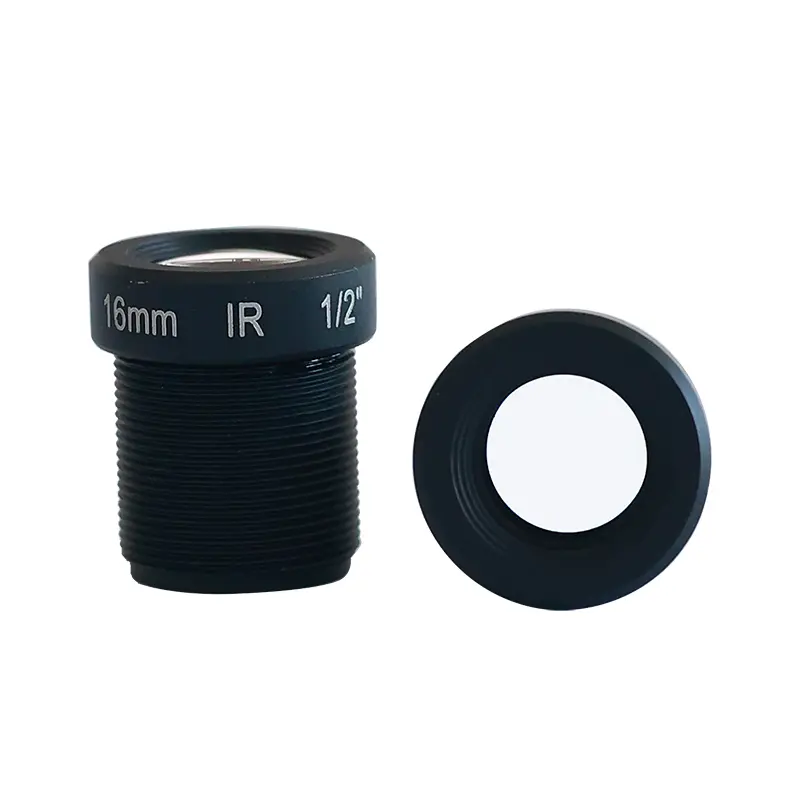
A pinhole board lens differs significantly from standard miniature lenses, such as standard M12 board lenses, in its physical profile and light-gathering mechanism. The most notable difference lies in the front element. Standard lenses have a exposed front glass element that corresponds to the field of view (FOV). In contrast, this specialized lens features a tapered front cone or a flat tip with an extremely small entrance pupil, often measuring less than 2 mm in diameter.
This structural shape allows the lens to observe a wide field through a tiny opening in a wall, panel, or enclosure. The internal optical design typically consists of multiple glass elements arranged to bend the light rays entering through the narrow aperture and project them accurately onto the image sensor. The mechanical housing is generally threaded, with M12 x 0.5 or M9 x 0.5 thread pitches being the industry standards, allowing for precise focus adjustments when threaded into the camera board mount.
Optical Parameters and Performance Considerations
When specifying a lens for an industrial or surveillance system, several optical parameters must be balanced to ensure acceptable image quality. Because the entrance pupil is small, these lenses present unique optical characteristics that system designers must manage carefully.
Focal Length and Field of View
The focal length of the lens determines both the magnification and the field of view. Typical focal lengths for pinhole board lens designs range from 2.5 mm to 5.0 mm. A shorter focal length yields a wider field of view, which is useful for close-up monitoring in confined spaces. However, shorter focal lengths can introduce optical distortion, particularly barrel distortion, where straight lines near the edge of the frame appear curved.
Aperture and Light Transmission
Due to the small physical size of the entrance aperture, these lenses usually have higher F-numbers (typically F/2.0 to F/3.5 or higher) compared to standard miniature lenses. A higher F-number means less light reaches the sensor, which can affect image quality in low-light environments. Designers must select a camera sensor with high sensitivity or incorporate auxiliary infrared illumination when deploying these optics in dark conditions.
Sensor Compatibility and Image Circle
The lens must project an image circle that fully covers the active area of the image sensor. Common sensor formats in compact cameras include 1/2.7-inch, 1/3-inch, and 1/4-inch CMOS sensors. If the image circle produced by the lens is smaller than the sensor format, vignetting will occur, resulting in dark corners in the captured image. Jinyuan designs optics to match specific sensor architectures, preventing vignetting and maintaining high relative illumination across the entire sensor surface.
Resolving Industry Pain Points in Compact Optical Design
Integrating miniature optics into industrial machinery or security terminals presents several engineering challenges. Addressing these issues early in the system design phase prevents costly redesigns and ensures long-term operational stability.
Low-Light Image Degradation: As noted, the small aperture limits light throughput. To counter this, optical engineers use high-index optical glass and multi-layer anti-reflective coatings on internal lens elements. These coatings increase light transmission through the lens assembly, mitigating some of the light loss caused by the small physical aperture.
Optical Distortion: Wide-angle pinhole designs often suffer from geometric distortion. By utilizing advanced optical design software, manufacturers can optimize the curvature of the internal lens elements to correct for distortion, ensuring that the captured image remains geometrically accurate for machine vision or surveillance analysis.
Thermal Drift and Focus Instability: Temperature variations in enclosed spaces, such as inside an automated teller machine (ATM) or industrial machine, can cause thermal expansion in the lens housing and glass elements. This expansion can shift the focal plane, resulting in blurred images. Utilizing metal housings, such as aluminum or brass, along with temperature-stable optical glass, helps maintain focus stability across a wide temperature range.
Key Applications of a Pinhole Board Lens
The unique form factor of these lenses makes them suitable for applications where space is constrained, or where the camera system must remain unobtrusive to prevent vandalism or protect system integrity.
Banking and Self-Service Terminals
Automated teller machines (ATMs), smart vending machines, and information kiosks utilize integrated cameras for user identification, transaction security, and fraud prevention. A pinhole board lens allows the camera module to be mounted safely behind the front metal panel of the machine. Only a tiny opening is exposed to the exterior, protecting the camera assembly from physical tampering and environmental elements while capturing a clear view of the user.
Discrete Security and Surveillance
In retail loss prevention, commercial buildings, and secure facilities, visible cameras can sometimes be bypassed or vandalized. Hidden security cameras equipped with miniature optics can be integrated into walls, ceilings, exit signs, or other fixtures. This setup provides continuous monitoring without altering the aesthetics of the space or alerting unauthorized individuals to the presence of surveillance equipment.
Industrial Machine Vision and Inspection
Modern production lines and automated assembly systems require inspection cameras to monitor processes in tight spaces. For example, in robotic pick-and-place systems or internal machinery monitoring, a standard camera assembly may be too bulky. A compact board camera fitted with a pinhole lens can be positioned close to the moving components or integrated directly into the machine frame to monitor processes without interfering with mechanical operations.
Selecting the Right Optical Partner for Customization
Standard off-the-shelf optics may not always meet the precise requirements of highly specialized industrial applications. Factors such as unique mounting constraints, non-standard sensor sizes, or specific environmental demands require custom optical engineering.
Jinyuan specializes in the design and production of custom optical lenses, including high-resolution board lenses for various industries. By collaborating closely with system integrators, engineering teams can customize parameters such as focal length, aperture size, mechanical housing dimensions, and lens coatings to match the exact operational requirements of the project. This collaborative approach ensures that the optical component integrates smoothly into the larger system design, minimizing compatibility issues during assembly.
Technical Questions and Answers
Q1: What is the main difference between a pinhole board lens and a standard M12 lens?
A1: The primary difference lies in the design of the front element and the physical profile. A standard M12 lens has a wider front glass element exposed to the environment, whereas a pinhole version features a narrow, tapered cone or flat tip with a tiny entrance pupil. This allows the pinhole lens to capture images through a very small opening, hiding the main body of the lens behind a panel or surface.
Q2: How does the small aperture of these lenses affect performance in low-light environments?
A2: The small aperture (higher F-number) restricts the amount of light reaching the image sensor. This can lead to increased image noise or a dark picture in low-light conditions. To address this, system designers should pair the lens with highly sensitive image sensors, use active infrared (IR) illumination, or utilize lenses with high-quality anti-reflective coatings to maximize light transmission.
Q3: Can these lenses support high-definition resolutions like 1080p or 5 Megapixels?
A3: Yes, modern optical manufacturing techniques allow for the production of high-resolution miniature lenses. By using precision-ground glass elements and maintaining tight manufacturing tolerances, these lenses can support high-pixel-density sensors, delivering clear, sharp images suitable for digital zoom and detailed analysis.
Q4: Why is sensor format compatibility important when selecting a board lens?
A4: The lens must produce an image circle that matches or exceeds the diagonal measurement of the camera sensor. If a lens designed for a 1/4-inch sensor is mounted on a camera with a 1/2.7-inch sensor, the edges of the sensor will not receive light, resulting in severe vignetting (dark corners). Ensuring compatibility prevents this issue and preserves full image coverage.
Q5: What mechanical mounting options are available for these miniature lenses?
A5: The most common mounting option is the M12 mount (S-mount), which has a thread diameter of 12 mm and a thread pitch of 0.5 mm. Some ultra-compact camera modules utilize smaller mounts, such as M9 or M8 threads. Custom housings can also be manufactured to meet unique mechanical integration requirements of specific system enclosures.
Submit an Inquiry for Custom Optical Solutions
Selecting the ideal optical configuration requires careful analysis of your system's optical, mechanical, and environmental constraints. If you are developing a new compact camera system, updating an existing product line, or require a custom optical solution tailored to your exact specifications, Jinyuan is ready to assist. Contact our engineering and sales teams today to discuss your technical requirements, request detailed specifications, or obtain a project quote. Let us help you find the right configuration for your specific application.