
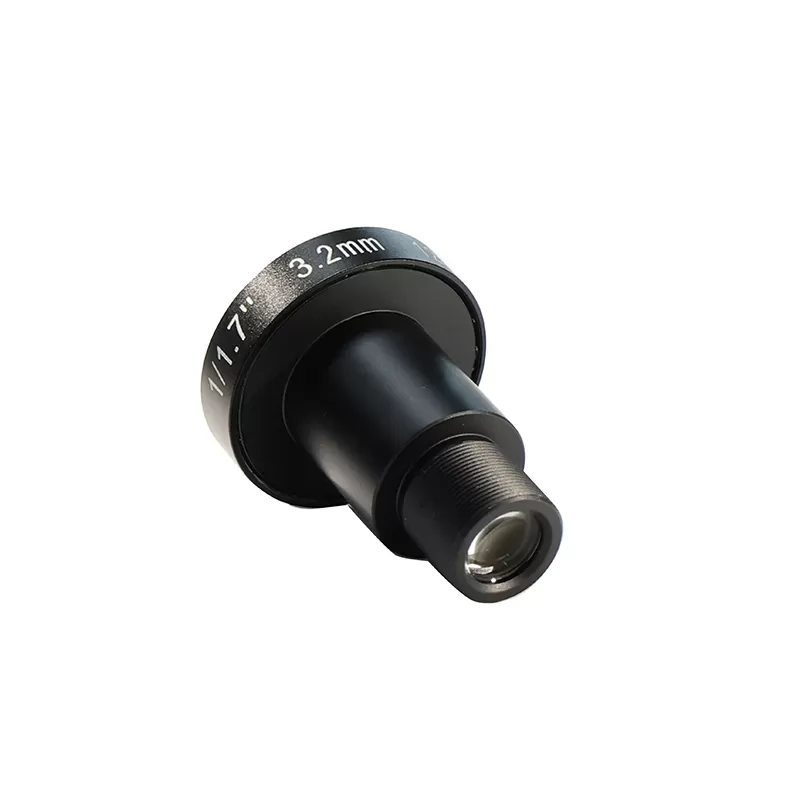
Optical design in modern vision platforms demands a precise balance between field of view, light throughput, and image sharpness. Incorporating a Wide Angel Camera Lens into an automated visual inspection unit, autonomous vehicle platform, or high-definition surveillance housing requires evaluating structural physics and sensor interface mechanics. Expanding the horizontal and vertical field of view introduces dynamic optical trade-offs, particularly regarding optical distortion, relative illumination, and chief ray angle alignment.
System designers must move beyond simple focal length numbers to examine element geometry, lens barrel construction, and coating specifications. A failure to match the mechanical tolerances of the optical assembly with the electronic characteristics of the image sensor results in optical vignetting, resolution loss at the image boundaries, and processing errors in software analytics. Understanding these factors allows procurement teams and optical engineers to streamline component sourcing while maintaining operational standards across demanding operational environments.
Optical Parameters Governing Wide-Field Optics
Designing optics with broad field coverage requires managing light paths at extreme incident angles. As light passes through outer spherical or aspherical elements, refraction angle severity increases, making light ray control at the focal plane difficult.
Field of View and Focal Length Mechanics
The relationship between effective focal length (EFL) and sensor diagonal size determines the total field of view (FOV). Short focal lengths yield wider viewing angles, but extreme wide fields demand specialized element arrangements. True wide-field optical assemblies typically incorporate negative optical power in the front element group to bend off-axis rays toward the optical center, followed by positive element groups to focus light onto the sensor plane. This inverted telephoto or retrofocus arrangement provides the back focal distance required to clear physical elements such as optical filters and sensor glass cover plates.
Managing Optical and TV Distortion
Distortion is an inherent physical phenomenon in wide-angle imaging optics. Barrel distortion occurs when magnification decreases toward the image circle periphery, causing straight lines to bow outward. Optical engineers measure this parameter via two primary metrics:
Optical Distortion: Calculated based on the difference between the actual image height and the predicted paraxial image height, expressed as a percentage.
TV Distortion: A standardized measurement evaluating the curvature of horizontal lines along the top and bottom edges of the captured frame, often utilized in security and industrial inspection metrics.
While software algorithms can mathematically correct barrel distortion, software stretching reduces effective spatial resolution at the image margins. Incorporating precision precision-molded aspheric glass elements directly inside the optical assembly suppresses distortion physically, preserving pixel density across the full frame prior to sensor capture.
Chief Ray Angle (CRA) Compatibility
The Chief Ray Angle defines the angle at which the central ray of a light cone hits the image sensor surface. CMOS sensor micro-lenses are engineered to accept light within specific angle limits. If the exit pupil of a Wide Angel Camera Lens creates a CRA that exceeds the sensor design tolerances, light fails to focus efficiently into the micro-lens photodiode cavity. This misalignment creates noticeable image degradation:
Relative Illumination Falloff: Severe darkening around the perimeter of the frame (vignetting).
Color Shifting: Spectral crosstalk where short-wavelength light spills into adjacent pixel wells, causing inconsistent color reproduction across the field.
Modulation Transfer Function (MTF) Requirements
Modulation Transfer Function curves define optical resolution by measuring contrast retention at distinct spatial frequencies (line pairs per millimeter, lp/mm). Broad-angle optics face sharp MTF drops off-axis due to coma, field curvature, and astigmatism. Evaluating MTF charts at center, 0.5 field, and 0.8 field positions across both sagittal and tangential planes ensures the selected lens maintains necessary detail resolution for machine vision edge detection or automated image interpretation.
Application Scenarios Across Industrial Platforms
Wide-angle optical designs are deployed in platforms where wide spatial coverage is mandatory, eliminating the expense and mechanical points of failure associated with physical pan-tilt mechanisms.
Automated Optical Inspection and Machine Vision
In high-speed assembly and surface evaluation operations, space constraints often force vision hardware close to target objects. Broad field-of-view lenses allow short working distances while covering broad spatial regions. Maintaining low distortion and uniform spatial resolution from frame center to edge is vital for accurate dimensional measurements and defect categorization.
Automotive and Autonomous Systems
Advanced Driver Assistance Systems (ADAS) and autonomous field equipment rely on wide field coverage for perimeter awareness, blind spot monitoring, and surround-view processing. Optics deployed on vehicle exteriors face severe vibration, temperature shifts, and debris impact. Lenses built with rugged metal barrels and hydrophobic exterior coatings maintain optical clarity across diverse operating environments.
Panoramic Security and Smart Infrastructure
Commercial monitoring installations use wide-angle assemblies to track broad spaces with fewer cameras. Combining high-resolution sensors with custom wide optics enables continuous panoramic coverage, providing situational monitoring without blind spots.
Engineering Challenges in Custom Wide Angel Camera Lens Manufacturing
Producing reliable wide-angle assemblies involves detailed mechanical design, material science, and optical glass selection. Custom manufacturing demands strict quality control measures to prevent performance degradation over prolonged use.
Thermal Drift and Mechanical Stabilization
Environmental thermal changes cause optical elements to expand or contract, altering radius profiles and spatial spacing within the lens barrel. Barrel materials expand at varying rates (Coefficient of Thermal Expansion, CTE). Uncontrolled thermal shifts move the focal plane away from the sensor, blurring captured imagery. Optomechanical solutions include a thermal passive compensation design, using a combination of aluminum, brass, and specific optical elements to offset dimensional variation across extended operational ranges (-40°C to +85°C).
Advanced Optical Coatings
Wide incident light angles increase internal reflections between glass surfaces, causing flare, ghosting, and reduced image contrast. Multi-layer anti-reflective (AR) coatings applied through physical vapor deposition (PVD) maximize light transmission through each surface element. Specialized coatings include:
Broadband Anti-Reflective (BBAR): Reduces reflection across visible and near-infrared (NIR) spectrums to below 0.5%.
Diamond-Like Carbon (DLC): Applied to outer glass surfaces to withstand abrasion, salt spray, and physical weathering in exterior deployments.
IR-Cut Filters: Integrated into internal element groups to block non-visible infrared spectrum interference during daylight imaging operations.
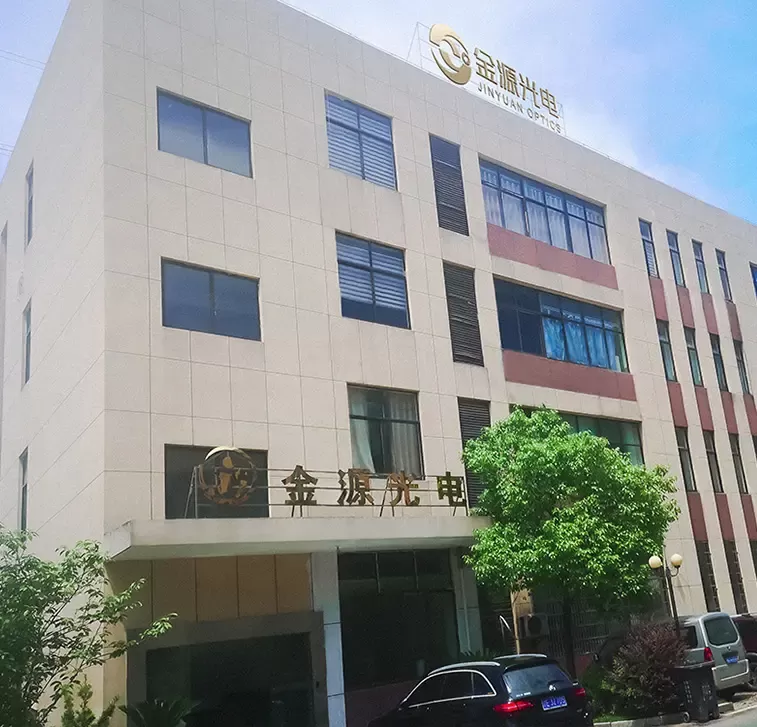
Precision Manufacturing Capabilities by Jinyuan
Addressing complex optical challenges requires comprehensive engineering support and precision production machinery. Modern optical assembly lines must achieve micrometer-level centering and positioning accuracy during lens manufacturing.
Through dedicated design methodologies and state-of-the-art production environments, Jinyuan delivers tailored optical solutions for demanding industrial configurations. By utilizing active alignment protocols, internal element positioning is fine-tuned while observing live MTF readouts, eliminating tilt and decenter errors across the optical channel.
Customization options offered by Jinyuan encompass specialized glass selection, customized thread designs (such as M12, C-mount, CS-mount, or custom mechanical interfaces), and targeted optical tuning optimized for client sensor choices. Whether matching a wide-angle design with a high-resolution Sony IMX sensor format or engineering high-density thermal housing, precise manufacturing guarantees reliable operational performance.
Testing Protocols and Quality Control Procedures
Verifying optical assembly integrity before deployment prevents system failure in final commercial units. Optical laboratories execute multi-point test regimes to validate performance metrics against engineering specifications.
Interferometric and Surface Metrology
Laser interferometry measures surface contour accuracy of individual glass and plastic optical elements down to sub-micron fractions. Ensuring aspheric element curvature compliance minimizes high-order spherical aberrations before assembly.
Automated MTF Bench Testing
Fully automated optical benches evaluate fully assembled lenses across their entire field angle spectrum. Targets placed along radial and tangential coordinates measure actual optical output against software-modeled MTF targets, confirming contrast preservation across all field zones.
Environmental and Mechanical Testing
Optics engineered for field deployment undergo rigorous mechanical testing protocols:
Thermal Shock Cycling: Exposing assemblies to rapid temperature fluctuations to verify adhesive stability and optical centering.
Sinusoidal and Random Vibration: Testing structural integrity to prevent element shift under industrial equipment operation.
Ingress Protection Verification: Seal testing to certify water and dust resistance up to IP67/IP68 standard ratings.
Frequently Asked Questions
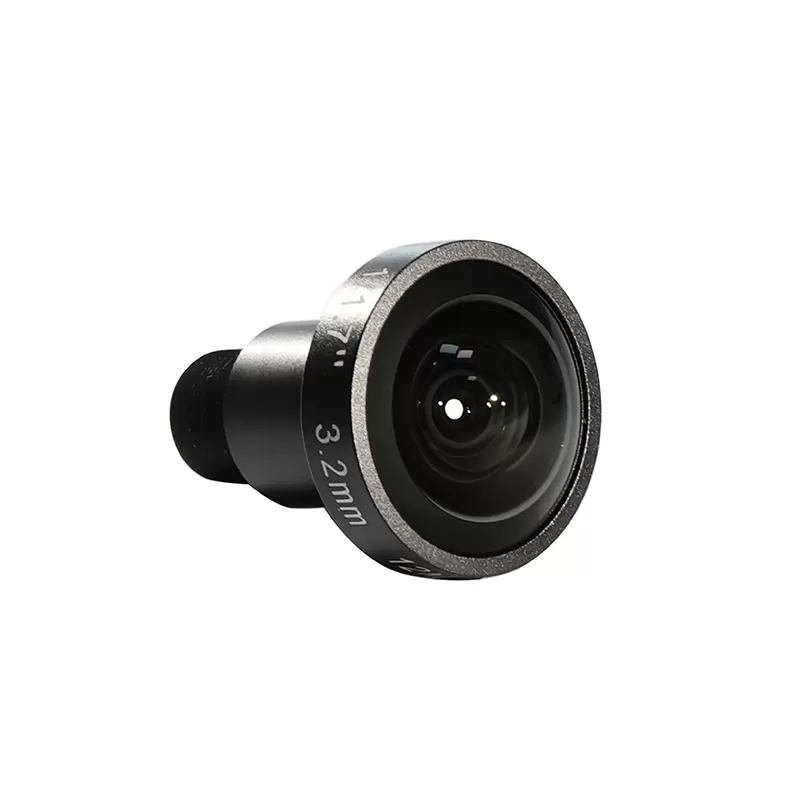
Q1: What defines a Wide Angel Camera Lens in industrial vision system
design?
A1: An optical assembly is generally classified as a
wide-angle system when its field of view exceeds 80 degrees horizontally,
achieved through specialized short focal length element configurations
engineered to map wide angles onto planar image sensors.
Q2: How does barrel distortion affect image processing accuracy in
machine vision?
A2: Barrel distortion compresses spatial pixels near
frame edges, altering object shape metrics. While image algorithms can re-map
pixels linearly, resolution loss occurs in stretched areas unless mitigated
through physical optical aspheric element correction.
Q3: Why is Chief Ray Angle (CRA) matching critical when choosing a
lens for a CMOS sensor?
A3: Matching the lens CRA to the sensor
specification ensures light hits each sensor pixel micro-lens within acceptable
acceptance angles. Mismatched angles result in peripheral vignetting, reduced
signal-to-noise ratio, and spectral color crosstalk.
Q4: What housing materials are recommended for wide-angle optics in
high-vibration settings?
A4: Anodized aluminum or brass barrels are
preferred over plastics. Metal structures maintain spatial spacing between glass
elements under vibration and provide mechanical stability across changing
thermal conditions.
Q5: Can custom optical coatings assist with outdoor environmental
operational challenges?
A5: Yes. Applying hydrophobic coatings to
outer elements prevents water droplet accumulation, while Diamond-Like Carbon
(DLC) coatings provide physical protection against grit, scratching, and
corrosive environmental exposure.
Commercial Specifications and Inquiries
Selecting the correct Wide Angel Camera Lens requires aligning mechanical interfaces, sensor formats, spectral requirements, and optical parameters to fulfill specific operational goals. Off-the-shelf options frequently compromise on image edge clarity, distortion limits, or housing durability under harsh operating environments.
The optics team at Jinyuan assists system architects, product engineers, and procurement specialists with custom engineering designs, active alignment manufacturing, and comprehensive optical testing. Detailed technical datasheets, optical modeling files (Zemax format), and prototype evaluation units are available upon request. Submit your specific sensor specifications, mechanical envelope constraints, and optical targets to initiate a formal optical inquiry and engineering review.