
In the field of embedded vision, compact optical assemblies are fundamental to the performance of digital imaging systems. Among the various standards available, the S-mount interface, commonly referred to as the Mtv Board Lens, has established itself as a reliable standard for compact, lightweight, and cost-effective camera designs. These lenses utilize an M12 x 0.5 metric screw thread, which allows for precise thread-in focusing on compact printed circuit board (PCB) cameras. For industrial vision integrators, security camera manufacturers, and medical device developers, selecting the correct optical characteristics of an S-mount assembly is necessary to achieve high-quality image capture under diverse environmental conditions.
As a specialized manufacturer of precision optical components, Jinyuan focuses on providing tailored optical solutions that address the specific engineering constraints of modern camera modules. Understanding the optical and mechanical variables of these lens systems allows optical engineers to make informed decisions that directly influence resolution, field of view, and overall system reliability.
Mechanical and Thread Specifications of the S-Mount Format
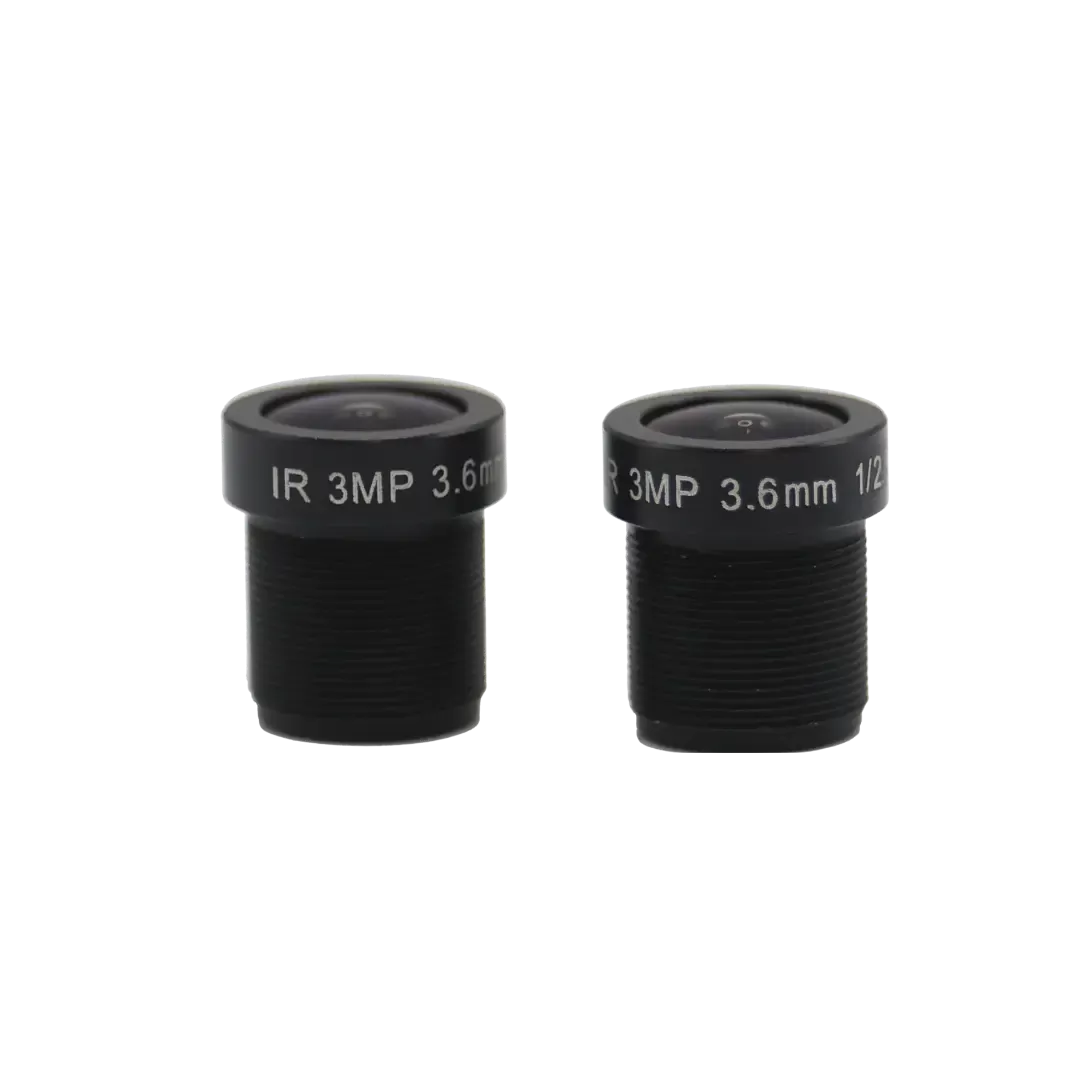
The term Mtv Board Lens traditionally refers to lenses designed to mount directly onto miniature camera boards. The mechanical footprint is characterized by its standardization, which enables interchangeability across different camera sensors and housing designs. The core specifications include:
Thread Standard: M12 nominal diameter with a 0.5 mm thread pitch (M12x0.5). This fine thread allows for precise back focal length adjustment during manual focusing.
Compact Form Factor: With outer diameters typically ranging from 12 mm to 16 mm, these lenses fit easily into tight enclosures where traditional C or CS-mount lenses would be too bulky.
Direct Board Integration: The lens screws directly into a plastic or metal holder mounted over the image sensor, minimizing the distance between the rear optical element and the silicon surface.
Because the lens holder is mounted directly to the PCB, mechanical alignment tolerances are tight. A minor tilt in the lens holder can lead to asymmetric defocusing, where one side of the captured image appears sharp while the opposite side is blurred. This is why high-precision manufacturing of both the holder and the lens barrel is required to maintain optical axis perpendicularity relative to the active sensor plane.
Key Optical Parameters of an Mtv Board Lens
Selecting or designing an S-mount lens requires balancing several optical parameters. Each choice involves trade-offs between physical dimensions, light transmission, and field of view.
Focal Length and Field of View (FOV)
The focal length of an Mtv Board Lens determines the angle of view on a given sensor format. Since these lenses are used on sensors ranging from 1/4-inch to 1/1.8-inch formats, the actual field of view varies significantly. For instance, a 3.6 mm lens on a 1/3-inch sensor provides a wide-angle view suitable for indoor surveillance, whereas an 8 mm or 12 mm lens narrows the field of view to capture finer details at longer distances. Optical designers must calculate the focal length based on the target object distance and the active area of the sensor to prevent vignetting, which occurs when the image circle produced by the lens is smaller than the diagonal of the sensor.
Aperture and Low-Light Sensitivity
The F-number (relative aperture) defines the light-gathering capability of the lens system. A lower F-number, such as F1.6 or F2.0, allows more light to reach the sensor, which is beneficial for low-light applications such as outdoor night security or high-speed industrial inspection. However, a larger aperture reduces the depth of field, making the system more sensitive to positioning tolerances and focus drift. Jinyuan designs S-mount lenses with carefully calculated apertures to maintain a balance between low-light performance and acceptable depth of field for the intended application.
Resolution and Modulation Transfer Function (MTF)
With the rise of high-megapixel sensors (such as 5MP, 8MP, and 4K resolutions) in small formats, the demands on lens resolving power have increased. The spatial resolution of an Mtv Board Lens is evaluated using the Modulation Transfer Function (MTF) curves, which measure contrast at different line-pair frequencies. Achieving high contrast at the edges of a high-resolution sensor requires advanced optical designs, including the use of multiple glass elements with high refractive indices to minimize spherical and chromatic aberrations.
Addressing Common Optical Aberrations and Environmental Challenges
In real-world applications, S-mount lenses must perform consistently across varying temperatures, lighting conditions, and mechanical stresses. Addressing these challenges requires careful material selection and optical design.
Geometric Distortion
Wide-angle board lenses often suffer from optical distortion, most notably barrel distortion, where straight lines curve outward near the edges of the image. For security monitoring, moderate distortion is often acceptable. However, for industrial inspection, robotic navigation, and barcode reading, low-distortion or rectilinear designs are required. Jinyuan utilizes complex multi-element configurations to correct geometric distortion to under 1%, ensuring that the captured image accurately represents the physical dimensions of the target object.
Thermal Focus Drift
Outdoor security cameras and automotive cameras are exposed to wide temperature ranges, often from -20°C to +60°C. Since plastic optical elements and plastic lens barrels expand and contract with temperature variations, the refractive index changes, leading to focus drift. To prevent this, industrial-grade lenses utilize all-glass optical elements housed in metal barrels (such as aluminum or brass). This mechanical structure ensures that the focus remains stable across the entire operating temperature range, eliminating the need for periodic manual refocusing.
Spectral Transmission and IR-Cut Filters
Many surveillance systems operate in dual-band modes, using visible light during the day and infrared (IR) illumination (850nm or 940nm) at night. Standard glass lenses focus visible and infrared light at different focal points due to chromatic aberration, resulting in blurry night images. To solve this, IR-corrected lenses use extra-low dispersion (ED) glass to ensure both visible and IR light focus on the same sensor plane. Additionally, depending on the application, an integrated 650nm IR-cut filter or a dual-band pass filter can be mounted directly on the rear element of the Mtv Board Lens to ensure accurate color reproduction under daylight.
Custom Optical Solutions by Jinyuan
Standard off-the-shelf lenses do not always meet the unique mechanical constraints or optical performance requirements of specialized B2B projects. Jinyuan provides comprehensive OEM and ODM services for S-mount assemblies, offering customized designs that fit specific application profiles. This customization workflow involves several key phases:
Specification Alignment: Collaborating with clients to define parameters such as sensor format, target resolution, working distance, spatial constraints, and environmental durability.
Optical Design and Simulation: Utilizing professional optical design software to model lens performance, analyze tolerance levels, and minimize aberrations before manufacturing.
Mechanical Integration: Designing custom lens barrels, mount adapters, or integrated filter assemblies to match the client's camera housing and PCB layout.
Quality Control and Metrology: Testing manufactured lens batches for MTF, geometric distortion, focal shift, and environmental endurance to ensure consistent performance across production runs.
This systematic approach allows Jinyuan to deliver reliable optical modules that align with the rigorous standards of industrial automation, medical imaging, and intelligent transportation systems.
Key Application Areas for S-Mount Board Lenses
The versatility and compact size of S-mount optics make them suitable for a wide range of industries where space is limited but image quality cannot be compromised.
Surveillance and Smart Security
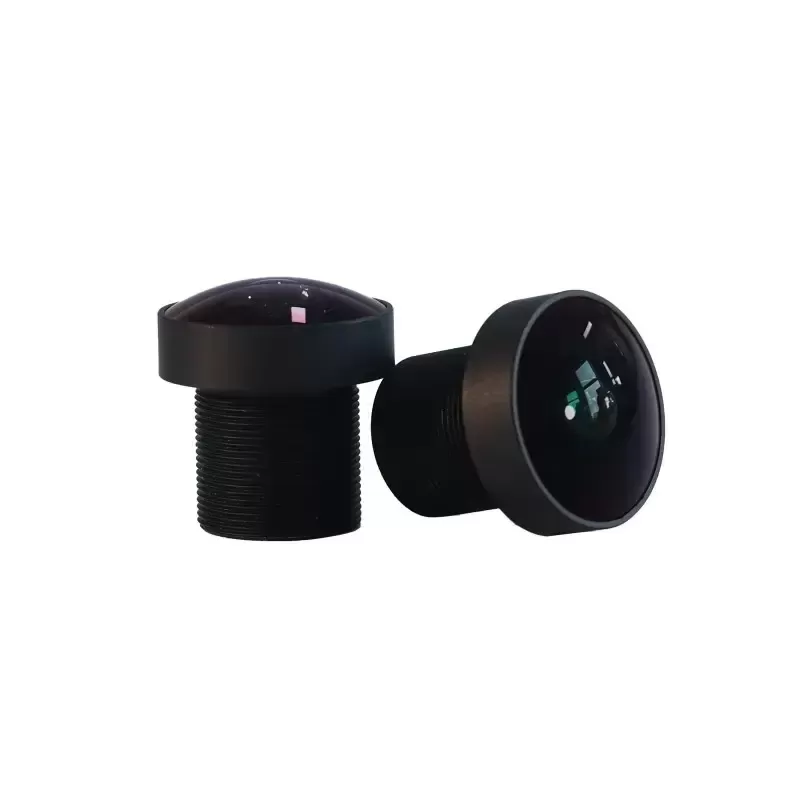
In dome cameras, bullet cameras, and video doorbells, the S-mount lens is the standard choice. The demand for wider viewing angles, high-megapixel clarity, and low-light performance has driven the development of advanced wide-angle and fisheye Mtv Board Lens options that cover large areas with minimal blind spots.
Robotics and Machine Vision
Compact automated guided vehicles (AGVs), drones, and robotic arms rely on embedded vision systems for navigation, obstacle detection, and object sorting. In these applications, low-distortion lenses are required to feed accurate spatial data into computer vision algorithms. The lightweight nature of S-mount lenses also prevents adding unnecessary weight to moving robotic components.
Automotive Sensing and ADAS
Advanced Driver Assistance Systems (ADAS), backup cameras, and driver monitoring systems require robust camera modules that can withstand constant vibration and extreme temperatures. All-glass, metal-bodied board lenses are well-suited for these environments, providing the durability and reliable optical performance needed for safety-critical automotive applications.
Selecting the Appropriate Optical Components
When specifying an S-mount lens for a new camera design, system integrators should follow a structured selection process:
Confirm the sensor size (e.g., 1/2.7", 1/3", 1/4") to ensure the lens image circle covers the active area without causing dark corners.
Determine the required field of view (horizontal, vertical, and diagonal) based on the target working distance.
Evaluate the environmental conditions (temperature extremes, moisture, vibration) to decide between plastic-composite or all-glass-and-metal construction.
Identify if IR illumination is needed, which dictates the requirement for IR-corrected optics and matching filters.
By systematically addressing these criteria, engineering teams can avoid common integration issues and ensure that their finished camera modules perform reliably in the field.
Frequently Asked Questions
Q1: What is the main difference between an S-mount lens and a C-mount lens?
A1: The primary difference lies in the mounting thread and physical size. An S-mount lens (often called an M12 lens) uses an M12x0.5 thread and is designed for small, embedded board cameras. A C-mount lens uses a 1-inch (25.4 mm) thread with 32 threads per inch, has a much larger flange focal distance, and is typically used for larger industrial cameras with bigger sensors.
Q2: Can an Mtv Board Lens support 4K or high-megapixel sensors?
A2: Yes, modern S-mount lenses are engineered with precision optical glass to match the high pixel density of 5MP, 8MP, and 4K sensors. It is important to check the specified resolution or MTF performance of the lens to ensure it matches the sensor's pixel pitch.
Q3: How do I adjust the focus on an M12 board lens?
A3: Focus is adjusted by rotating the lens thread within its holder, which changes the distance between the rear optical element and the image sensor. Once the image is sharp, the lens is typically secured in place using a set screw or a locking ring on the holder.
Q4: Why does my board lens show dark corners, and how can I resolve this?
A4: Dark corners, or vignetting, occur when the lens image circle is smaller than the diagonal of the image sensor. To resolve this, you must select a lens designed for a sensor format equal to or larger than the format of your current sensor.
Q5: Can I get an S-mount lens with an integrated infrared filter?
A5: Yes, many board lenses can be customized with a 650nm IR-cut filter coated onto the rear element, or a dual-band filter that allows both visible light and specific IR wavelengths (like 850nm) to pass through for day/night camera applications.
Inquiry and Custom Optical Consultations
Developing high-performance camera modules requires a seamless alignment between the imaging sensor, mechanical housing, and the optical assembly. At Jinyuan, we leverage our manufacturing experience to design, prototype, and mass-produce Mtv Board Lens solutions that satisfy your precise application requirements. Whether you are developing smart security devices, automated industrial machinery, or compact medical systems, our engineering team is ready to assist you in selecting or designing the correct optical components. Contact Jinyuan today to discuss your project specifications and request a detailed technical quotation.