




In daily life, individuals frequently rely on photography to document their physical appearance. Whether for social media sharing, official identification purposes, or personal image management, the authenticity of such images has become a subject of increasing scrutiny. However, due to inherent differences in optical properties and imaging mechanisms among various lenses, portrait photographs are often subject to varying degrees of geometric distortion and chromatic aberration. This raises a critical question: which type of lens most accurately captures an individual’s true facial characteristics?
To address this inquiry, it is necessary to examine the technical attributes of commonly used photographic lenses and their impact on facial representation. Front-facing cameras, rear-facing smartphone cameras, and professional-grade lenses differ significantly in focal length, field of view, and distortion correction capabilities. For instance, many smartphones utilize wide-angle front-facing lenses to maximize the visible area during selfies. While functionally advantageous, this design introduces pronounced peripheral stretching—particularly affecting central facial features such as the nose and forehead—leading to the well-documented "fisheye effect," which systematically distorts facial geometry and undermines perceptual accuracy.
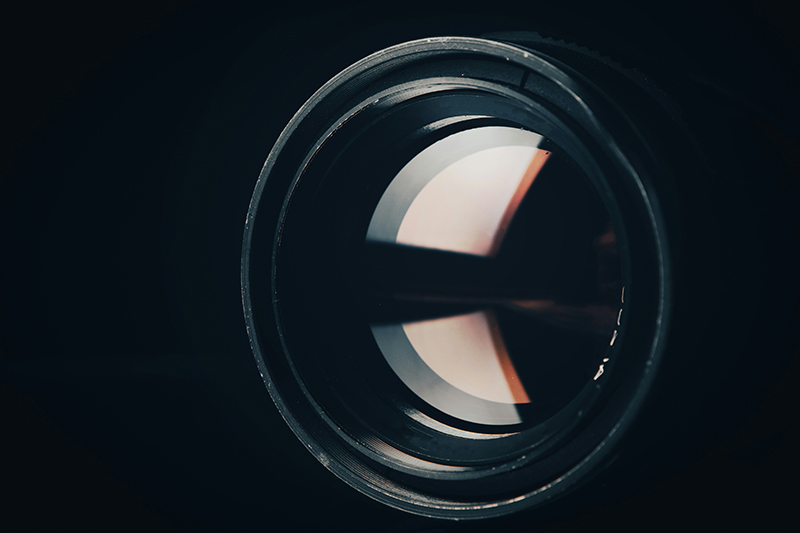
By contrast, a standard prime lens with a focal length of approximately 50mm (relative to full-frame sensors) is widely regarded as aligning closely with human visual perception. Its moderate angle of view produces natural perspective rendering, minimizing spatial distortion and preserving anatomically accurate facial proportions. As a result, 50mm lenses are extensively employed in professional portrait photography, particularly in applications demanding high fidelity, such as passport photographs, academic profiles, and corporate headshots.
Furthermore, medium-telephoto lenses (85mm and above) are considered the gold standard in professional portraiture. These lenses compress spatial depth while maintaining edge-to-edge sharpness, yielding a pleasing background blur (bokeh) that isolates the subject and further mitigates perspective distortion. Although less practical for self-portraiture due to their narrow field of view, they deliver superior representational accuracy when operated by a photographer at an optimal distance.
It is also imperative to recognize that lens choice alone does not determine image authenticity. Key variables—including shooting distance, lighting configuration, and post-capture processing—exert substantial influence on visual realism. Specifically, shorter distances exacerbate magnification distortion, particularly in near-field imaging. Diffuse, frontally oriented illumination enhances facial texture and three-dimensional structure while reducing cast shadows that may distort facial perception. Moreover, minimally processed or unedited images—free from aggressive skin smoothing, facial reshaping, or color grading—are more likely to preserve objective likeness.
In conclusion, achieving a faithful photographic representation requires more than technological convenience; it demands deliberate methodological choices. Images captured using standard (e.g., 50mm) or medium-telephoto (e.g., 85mm) lenses, at an appropriate working distance and under controlled lighting conditions, yield significantly higher representational accuracy than those obtained through wide-angle smartphone selfies. For individuals seeking authentic visual documentation, the selection of appropriate optical equipment and adherence to established photographic principles are essential.
Post time: Dec-16-2025