




The number of lens elements is a critical determinant of imaging performance in optical systems and plays a central role in the overall design framework. As modern imaging technologies advance, user demands for image clarity, color fidelity, and fine detail reproduction have intensified, necessitating greater control over light propagation within increasingly compact physical envelopes. In this context, the number of lens elements emerges as one of the most influential parameters governing optical system capability.
Each additional lens element introduces an incremental degree of freedom, enabling precise manipulation of light trajectories and focusing behavior throughout the optical path. This enhanced design flexibility not only facilitates optimization of the primary imaging path but also allows for targeted correction of multiple optical aberrations. Key aberrations include spherical aberration—arising when marginal and paraxial rays fail to converge at a common focal point; coma aberration—manifesting as asymmetric smearing of point sources, particularly toward the image periphery; astigmatism—resulting in orientation-dependent focus discrepancies; field curvature—where the image plane curves, leading to sharp center regions with degraded edge focus; and geometric distortion—appearing as barrel- or pincushion-shaped image deformation.
Furthermore, chromatic aberrations—both axial and lateral—induced by material dispersion compromise color accuracy and contrast. By incorporating additional lens elements, especially through strategic combinations of positive and negative lenses, these aberrations can be systematically mitigated, thereby improving imaging uniformity across the field of view.
The rapid evolution of high-resolution imaging has further amplified the importance of lens complexity. In smartphone photography, for instance, flagship models now integrate CMOS sensors with pixel counts exceeding 50 million, some reaching 200 million, alongside continuously diminishing pixel sizes. These advancements impose stringent requirements on the angular and spatial consistency of incident light. To fully exploit the resolving power of such high-density sensor arrays, lenses must achieve higher Modulation Transfer Function (MTF) values across a broad spatial frequency range, ensuring accurate rendering of fine textures. Consequently, conventional three- or five-element designs are no longer adequate, prompting the adoption of advanced multi-element configurations such as 7P, 8P, and 9P architectures. These designs enable superior control over oblique ray angles, promoting near-normal incidence on the sensor surface and minimizing microlens crosstalk. Moreover, the integration of aspheric surfaces enhances correction precision for spherical aberration and distortion, significantly improving edge-to-edge sharpness and overall image quality.
In professional imaging systems, the demand for optical excellence drives even more complex solutions. Large-aperture prime lenses (e.g., f/1.2 or f/0.95) used in high-end DSLR and mirrorless cameras are inherently prone to severe spherical aberration and coma due to their shallow depth of field and high light throughput. To counteract these effects, manufacturers routinely employ lens stacks comprising 10 to 14 elements, leveraging advanced materials and precision engineering. Low-dispersion glass (e.g., ED, SD) is strategically deployed to suppress chromatic dispersion and eliminate color fringing. Aspheric elements replace multiple spherical components, achieving superior aberration correction while reducing weight and element count. Some high-performance designs incorporate diffractive optical elements (DOEs) or fluorite lenses to further suppress chromatic aberration without adding significant mass. In ultra-telephoto zoom lenses—such as 400mm f/4 or 600mm f/4—the optical assembly may exceed 20 individual elements, combined with floating focus mechanisms to maintain consistent image quality from close focus to infinity.
Despite these advantages, increasing the number of lens elements introduces significant engineering trade-offs. First, each air-glass interface contributes approximately 4% reflectance loss. Even with state-of-the-art anti-reflective coatings—including nano-structured coatings (ASC), sub-wavelength structures (SWC), and multi-layer broadband coatings—cumulative transmittance losses remain unavoidable. Excessive element counts can degrade total light transmission, lowering signal-to-noise ratio and increasing susceptibility to flare, haze, and contrast reduction, particularly in low-light environments. Second, manufacturing tolerances become increasingly demanding: the axial position, tilt, and spacing of each lens must be maintained within micrometer-level precision. Deviations can induce off-axis aberration degradation or localized blur, elevating production complexity and reducing yield rates.
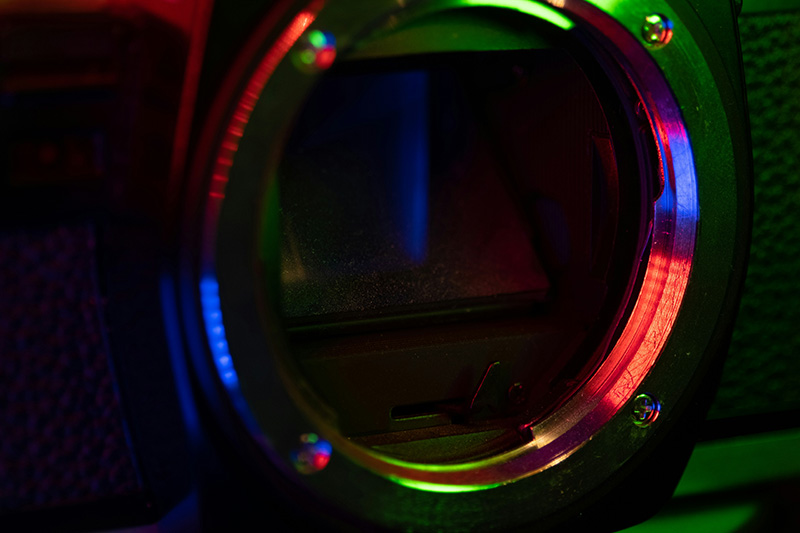
Additionally, a higher lens count generally increases the system’s volume and mass, conflicting with the miniaturization imperative in consumer electronics. In space-constrained applications such as smartphones, action cameras, and drone-mounted imaging systems, integrating high-performance optics into compact form factors presents a major design challenge. Furthermore, mechanical components such as autofocus actuators and optical image stabilization (OIS) modules require sufficient clearance for lens group movement. Overly complex or poorly arranged optical stacks can constrain actuator stroke and responsiveness, compromising focusing speed and stabilization efficacy.
Therefore, in practical optical design, selecting the optimal number of lens elements requires a comprehensive engineering trade-off analysis. Designers must reconcile theoretical performance limits with real-world constraints including target application, environmental conditions, production cost, and market differentiation. For example, mobile camera lenses in mass-market devices typically adopt 6P or 7P configurations to balance performance and cost-efficiency, whereas professional cinema lenses may prioritize ultimate image quality at the expense of size and weight. Concurrently, advances in optical design software—such as Zemax and Code V—enable sophisticated multivariable optimization, allowing engineers to achieve performance levels comparable to larger systems using fewer elements through refined curvature profiles, refractive index selection, and aspheric coefficient optimization.
In conclusion, the number of lens elements is not merely a measure of optical complexity but a fundamental variable that defines the upper bound of imaging performance. However, superior optical design is not achieved through numerical escalation alone, but through the deliberate construction of a balanced, physics-informed architecture that harmonizes aberration correction, transmission efficiency, structural compactness, and manufacturability. Looking forward, innovations in novel materials—such as high-refractive-index, low-dispersion polymers and metamaterials—advanced fabrication techniques—including wafer-level molding and freeform surface processing—and computational imaging—through co-design of optics and algorithms—are expected to redefine the paradigm of "optimal" lens count, enabling next-generation imaging systems characterized by higher performance, greater intelligence, and improved scalability.
Post time: Dec-16-2025